A Quiet Room Inside the Auditorium
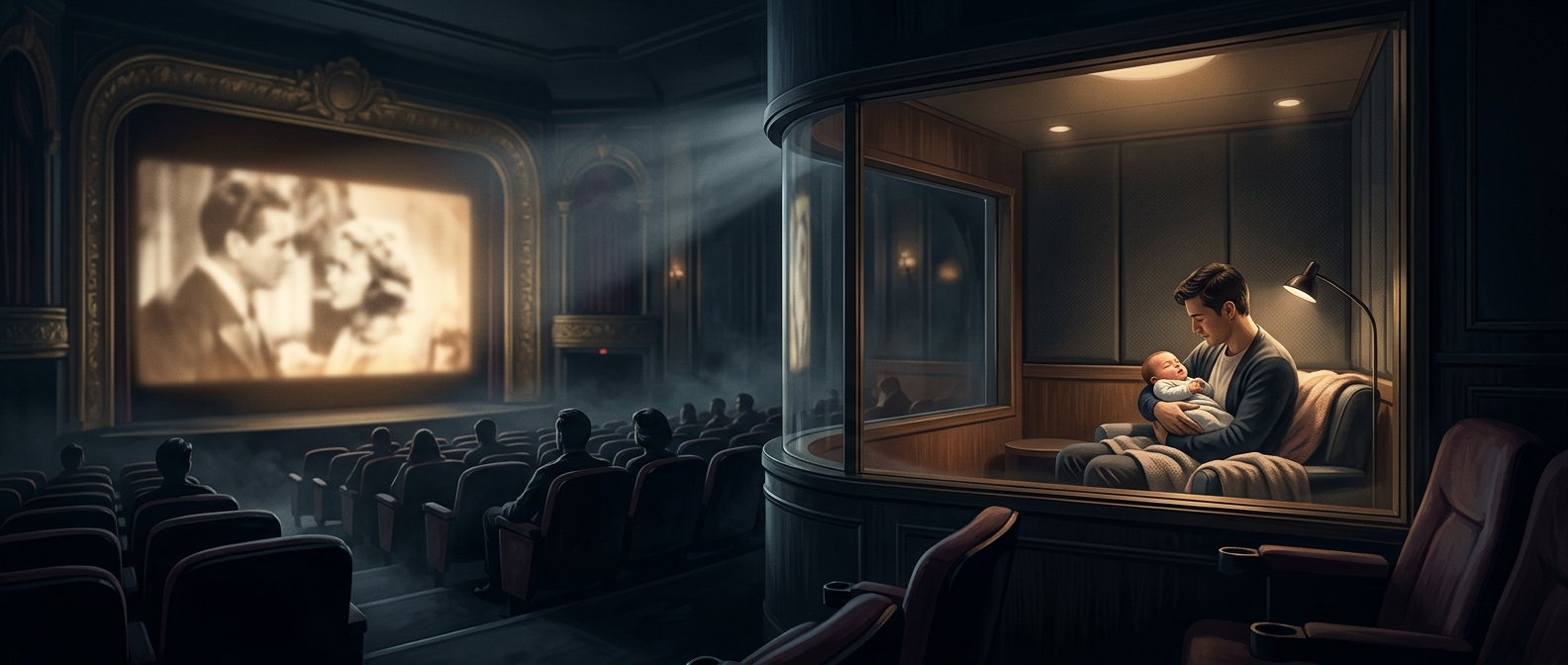
A crying baby can make a theater’s central promise—shared attention to a film—hard to keep for everyone in the room. Some cinemas addressed that problem with a glass-enclosed room at the back of the auditorium, giving parents a place to care for a child without having to leave the screening entirely.
The design separates sound in both directions. The enclosure helps keep a baby’s cries from carrying into the main auditorium, while speakers inside let parents hear the movie. Glass preserves a view of the screen, so the room is not simply a waiting area where the film disappears from sight.
An Acoustic Compromise
“Soundproof” here describes the room’s purpose, not a guarantee that no sound can ever pass through. The practical goal is to reduce the disruption enough that the main audience can keep watching, while parents retain access to the film’s soundtrack. The speakers solve an important weakness of an isolated room: blocking noise would also block the movie unless its audio were brought in separately.
The arrangement makes a tradeoff rather than removing one. Parents can respond to a baby without stepping out of the theater, and other viewers get more separation from the crying—but the family watches from behind glass, with the film’s sound reproduced through speakers rather than experienced in the same acoustic space as the auditorium. It turns a difficult moment into a manageable one without asking either the baby or the rest of the audience to behave as if the theater were silent.