Laughter Turns an Anecdote Into a Shared Moment
A celebrity story on a talk show is not quite the same as a story told among friends. The guest may have shaped it in advance—choosing a clear setup, a vivid detail, and a punch line that will land in a short segment. The host’s job is to make that prepared moment feel spontaneous and enjoyable rather than like a speech.
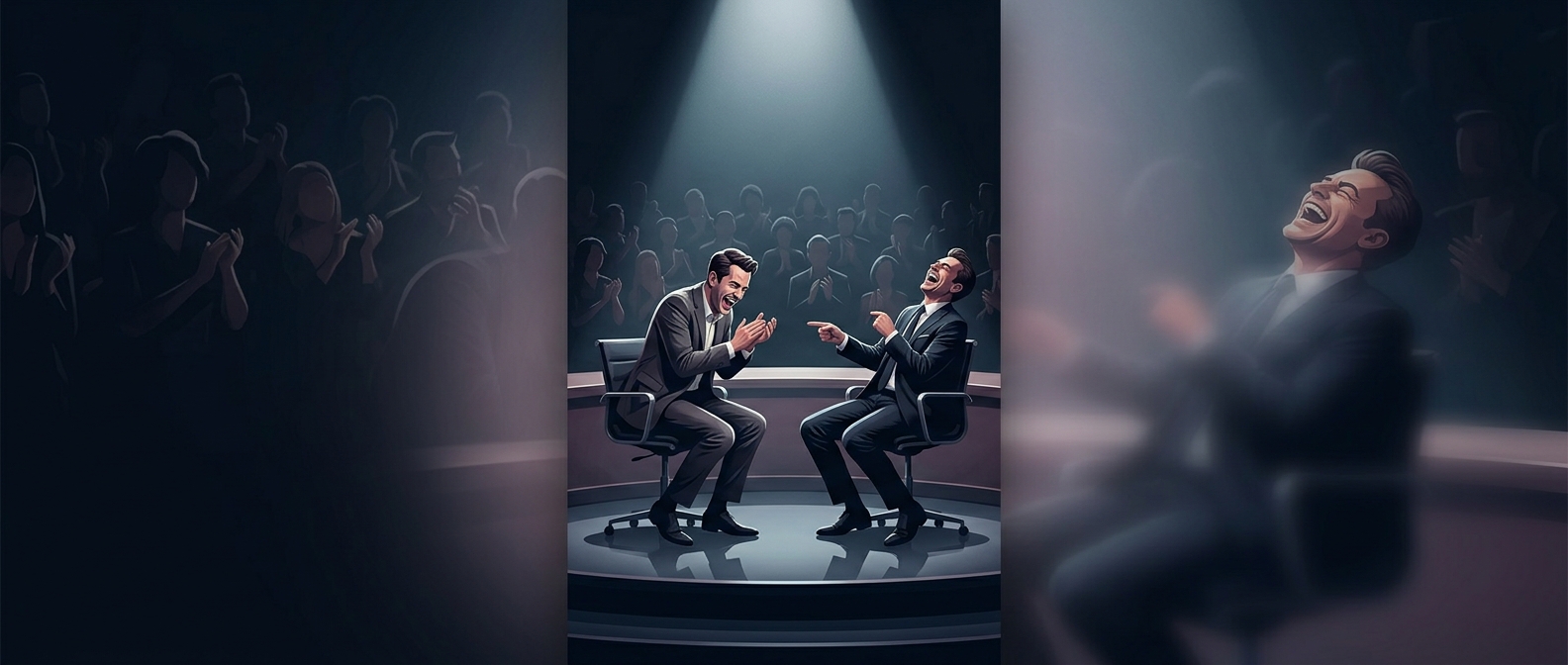
Laughter does several things at once. It signals that the story is meant to be funny, rewards the guest for delivering it, and gives the studio audience permission to join in. When the host laughs broadly, the response can help a roomful of strangers settle into the same upbeat mood. It also gives the guest a beat to pause before continuing, so the story’s rhythm remains easy to follow.
The Host Helps Shape the Performance
Hosts are not only listening; they are guiding the exchange. A laugh can mark the point of a story, cover a brief pause, or keep the conversation buoyant when the guest is telling something only mildly amusing. A follow-up question can then steer toward the next detail or punch line. The result is a compact performance built for television’s limited time, not an unstructured conversation.
That does not mean every laugh is fake or every anecdote is scripted word for word. A guest can be genuinely funny, and a host can genuinely enjoy the story. But the format rewards visible enthusiasm: a subdued reaction may make a polished anecdote feel flat, while an energetic one gives both the guest and audience a clear cue that the moment has landed.
The host’s laughter is therefore part of the storytelling—not just a reaction to it. It helps turn a practiced celebrity anecdote into a scene that feels lively in the studio and inviting to viewers at home.