The pin sits beyond a right-hander’s usual path
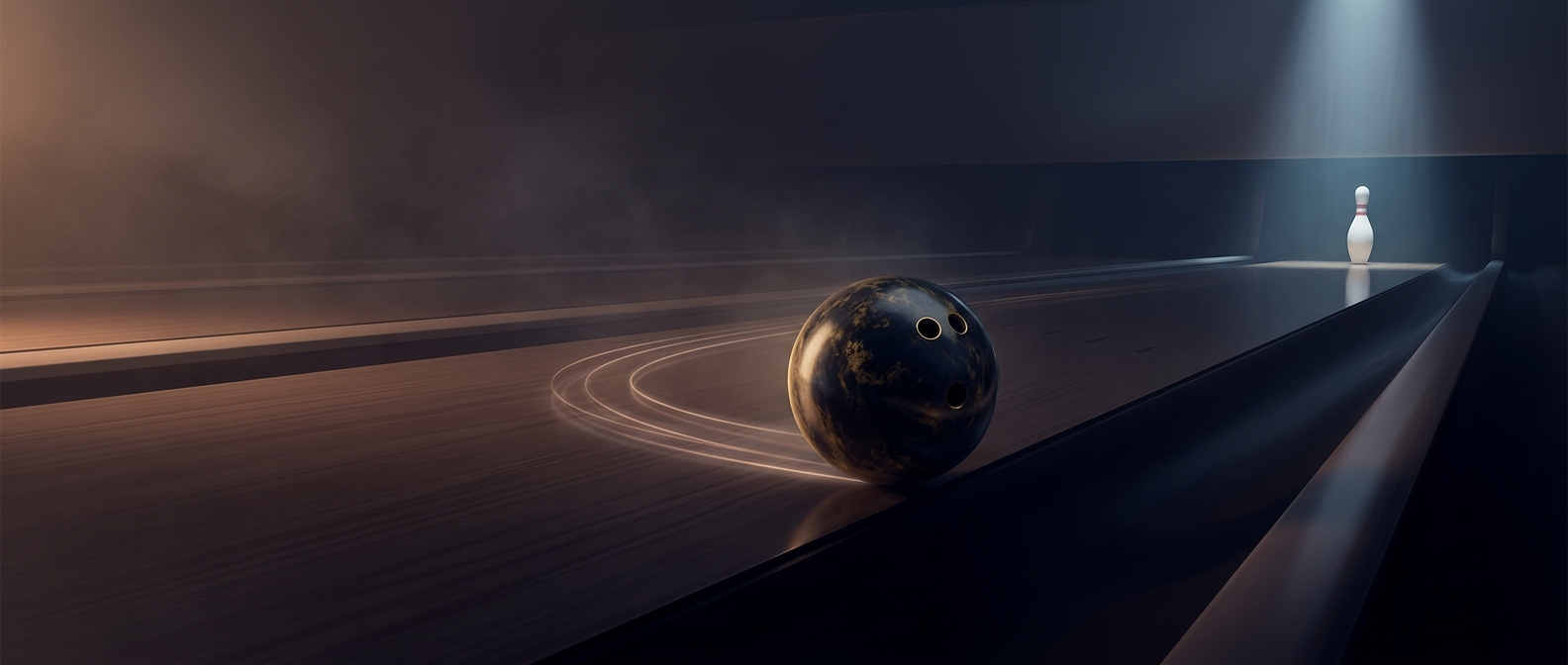
A right-handed bowler’s hook usually moves from right to left as it travels down the lane. That curve helps the ball reach the “pocket”—the gap between the head pin and the pin beside it on the right—at an angle that can topple the rack. But the back-right pin, known as the 10 pin, is outside that path. The ball can strike the pocket while its sideways motion carries it away from the corner.
Pin action can leave the corner untouched
A strike depends on more than the ball hitting the head pin: the pins must pass energy along the rack in useful directions. A ball entering the pocket can send pins flying across the deck, yet the 10 pin may remain if none reaches it with enough force. The pin’s position at the far right makes it especially vulnerable to a gap in that chain of collisions.
Spare shots favor control over hook
When the 10 pin is left standing, bowlers often change their line rather than repeat the strike shot. A right-hander may aim across the lane from the left side, giving the ball a route toward the right corner. Reducing the ball’s hook helps it hold that line instead of curving back left.
That is the tradeoff: the hook that creates a powerful strike angle can make a single corner pin harder to reach. Spare shooting is often about taking that curve out of the equation.