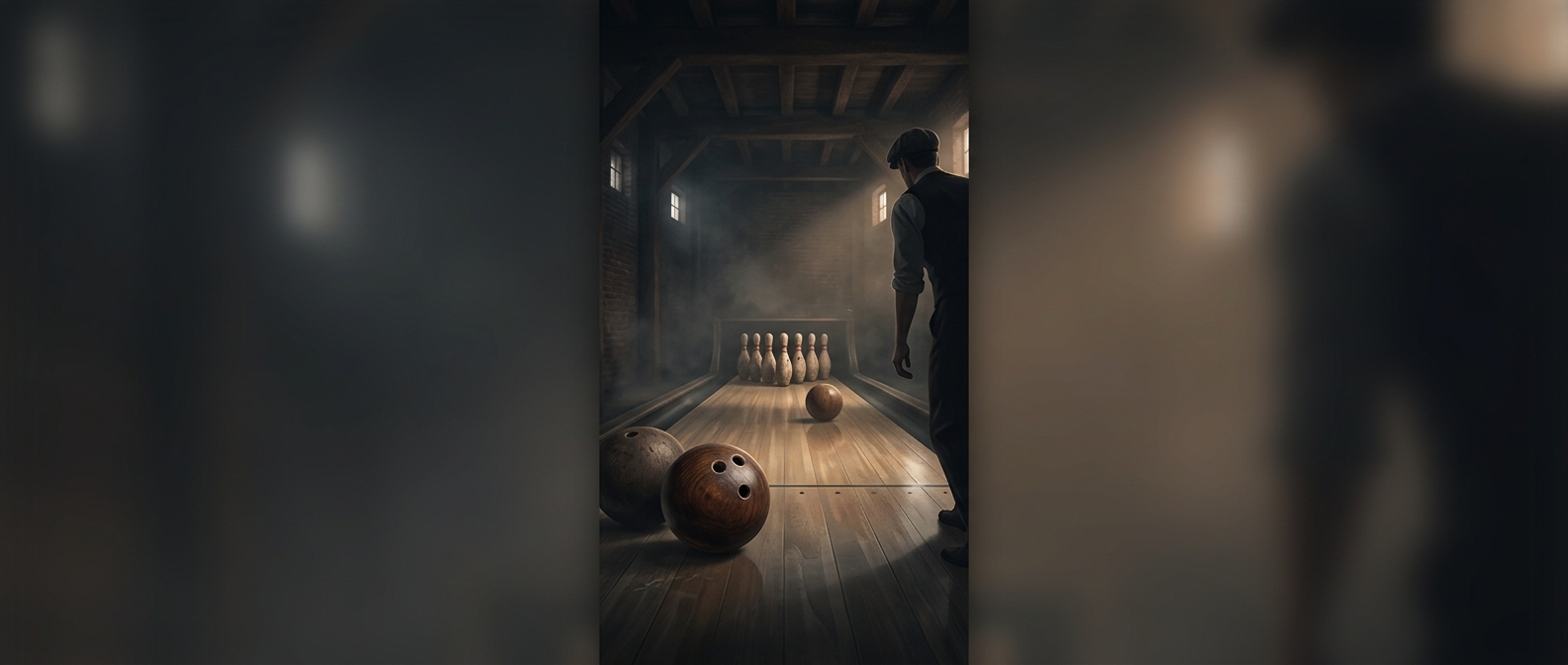
Before the Ramp, Skee-Ball Was a Lofting Game
The early alley asked players to do more than aim. With no raised track to guide a ball toward the scoring rings, a player had to lift and release it so it traveled through the air and landed in a target. The challenge was closer to tossing a ball toward a mark than rolling one along a predictable lane.
That changes what skill the game rewards. A lofted throw depends on both direction and height: too low, and the ball may fall short; too high or off line, and it can miss the intended ring. Players had to judge the throw by feel, adjusting their release rather than relying on a fixed path.
A Ramp Makes the Throw More Repeatable
A launch ramp gives the ball a guided route before it reaches the targets. Instead of supplying all the lift and direction by hand, the player sends the ball up a surface that shapes its motion. The game still involves judgment, but the key task shifts toward choosing a release and aiming for a scoring ring.
That simple piece of equipment changes the character of the play. The early version demanded a toss; the familiar version turns the alley into a controlled launch. The ramp is not just a convenience—it is what makes the ball’s approach to the targets more consistent from turn to turn.