Why the Lane Is Oiled
The oil is not there simply to make the lane slippery. It reduces friction between the ball and the wood or synthetic surface, limiting wear and helping the ball travel predictably through the first part of its path. Farther down the lane, the ball encounters less oil and begins to grip. That change lets a player steer the ball with spin: it can skid early, then curve toward the pins as friction takes hold.
The oil is laid in a pattern, so its placement affects which paths are easier or harder to play. A small change in where the ball first finds traction can shift where it turns, making lane reading part of the challenge—not just aiming at the pins.
What the Ball Does at the Pins
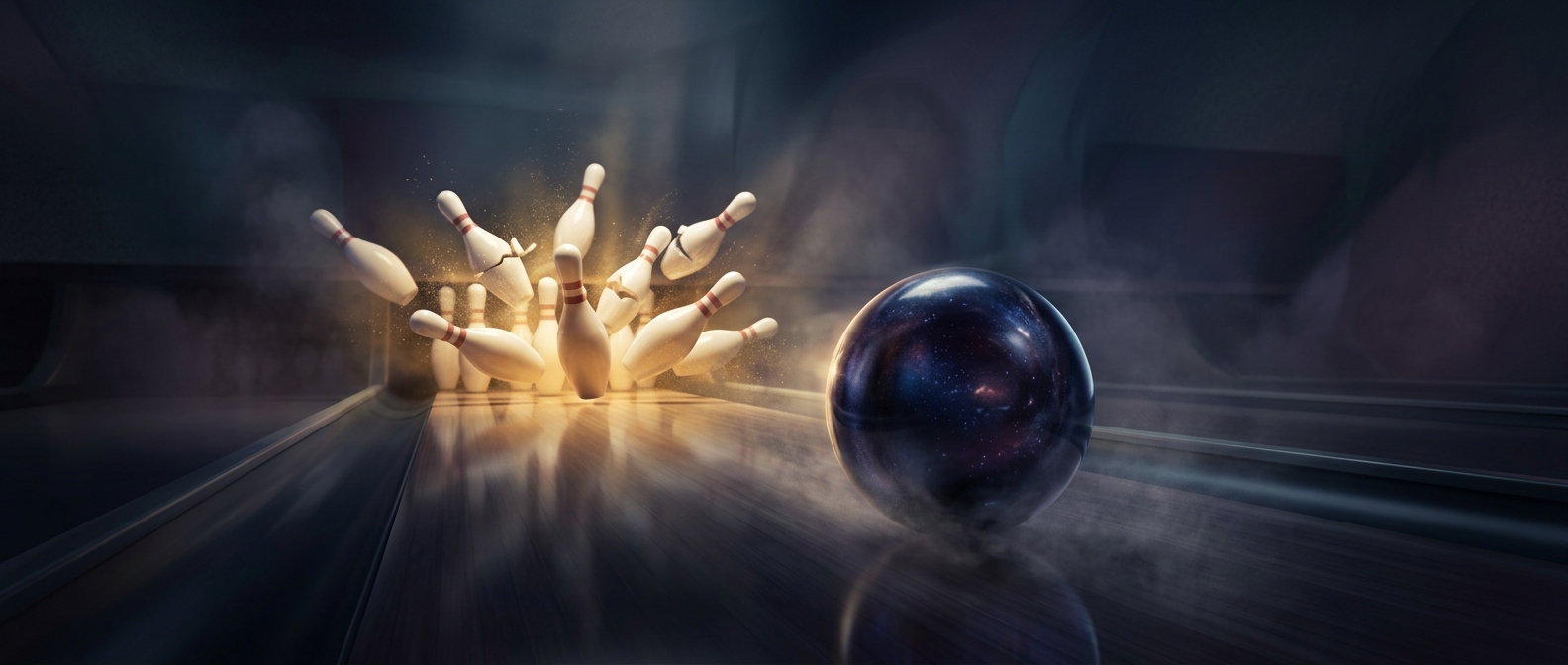
A resin ball can grip the lane more strongly than a smooth plastic ball, helping it turn when it reaches the drier section. The ball’s rotation and entry angle matter: arriving at the pocket—the gap between the front pin and the pin beside it—can send pins crossing into one another, spreading the impact beyond the ball’s direct path.
That chain reaction is why a strike is not simply a matter of hitting hard. Players balance speed, spin, and angle, trying to make the ball’s momentum set off the most effective pin collisions. The lane’s oil shapes the route; the pins’ movement decides whether that route pays off.