Why Paranormal Activity Feels Like Someone’s Home Video
Oren Peli’s house did more than provide a cheap backdrop: it shaped how the film could make ordinary space feel threatening. The story unfolds in familiar rooms—bedrooms, hallways, a kitchen—where the audience already knows what “normal” looks like. That makes small changes, such as a door shifting or a sound coming from off-screen, feel unusually intimate. The fear comes not from a grand haunted-house set, but from the possibility that something has entered a space meant to be safe.
The Camera Is Part of the Story
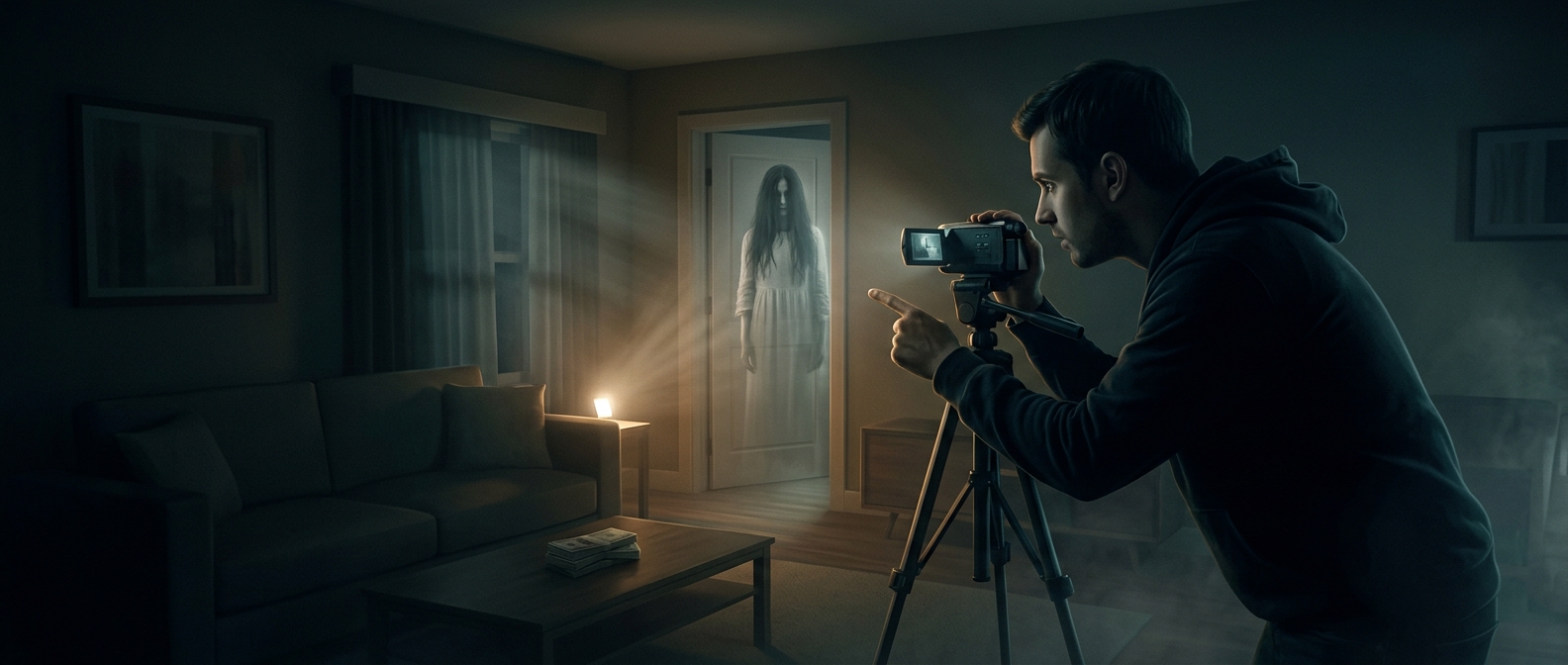
The film’s home-video style turns a production constraint into a storytelling rule. Much of what viewers see is framed as footage recorded by the characters, so a fixed camera can remain in a room while the people in it sleep. The long, still shots give the audience time to scan the image and anticipate movement. When the camera appears to capture something inexplicable, the effect depends on the plainness of the room around it.
This approach also narrows what the film needs to show. Instead of relying on elaborate visual effects or frequent action, it can build tension through waiting, sound, and a few changes in an otherwise familiar frame. The house becomes a limited set of places the audience learns to watch closely.
A Small Production, a Focused Effect
Working in a private home with unknown actors and no crew kept the production intimate, but it also meant the film could not operate like a conventional large-set shoot. Renovations and camera equipment helped make the house usable for filming, while the modest setup suited the story’s premise: events recorded by people trying to document what is happening to them.
The result is a horror film whose scale is part of its scare. A bedroom does not need to look strange to become frightening; it only needs to remain still long enough for viewers to wonder whether it has changed.