How DAF’s belt drive made reverse match forward
A conventional car’s reverse gear is a separate, fixed gear. Its ratio is chosen to move the car slowly and give the driver control while backing up. DAF’s Variomatic worked differently: it changed its transmission ratio continuously, rather than stepping through a set of gears.
The system used a belt running between two pairs of cone-shaped pulleys. As the cones moved closer together or farther apart, the belt rode higher or lower on each pulley. That changed how much the pulleys turned relative to one another—and therefore how fast the wheels turned for a given engine speed. The driver did not need to select a gear for each speed.
One range in either direction
In a geared car, reverse usually has its own ratio, deliberately making backward travel slow. The Variomatic had no separate low reverse gear to impose that limit. Its belt-and-pulley arrangement could provide the same continuously changing range whether the car was moving forward or backward.
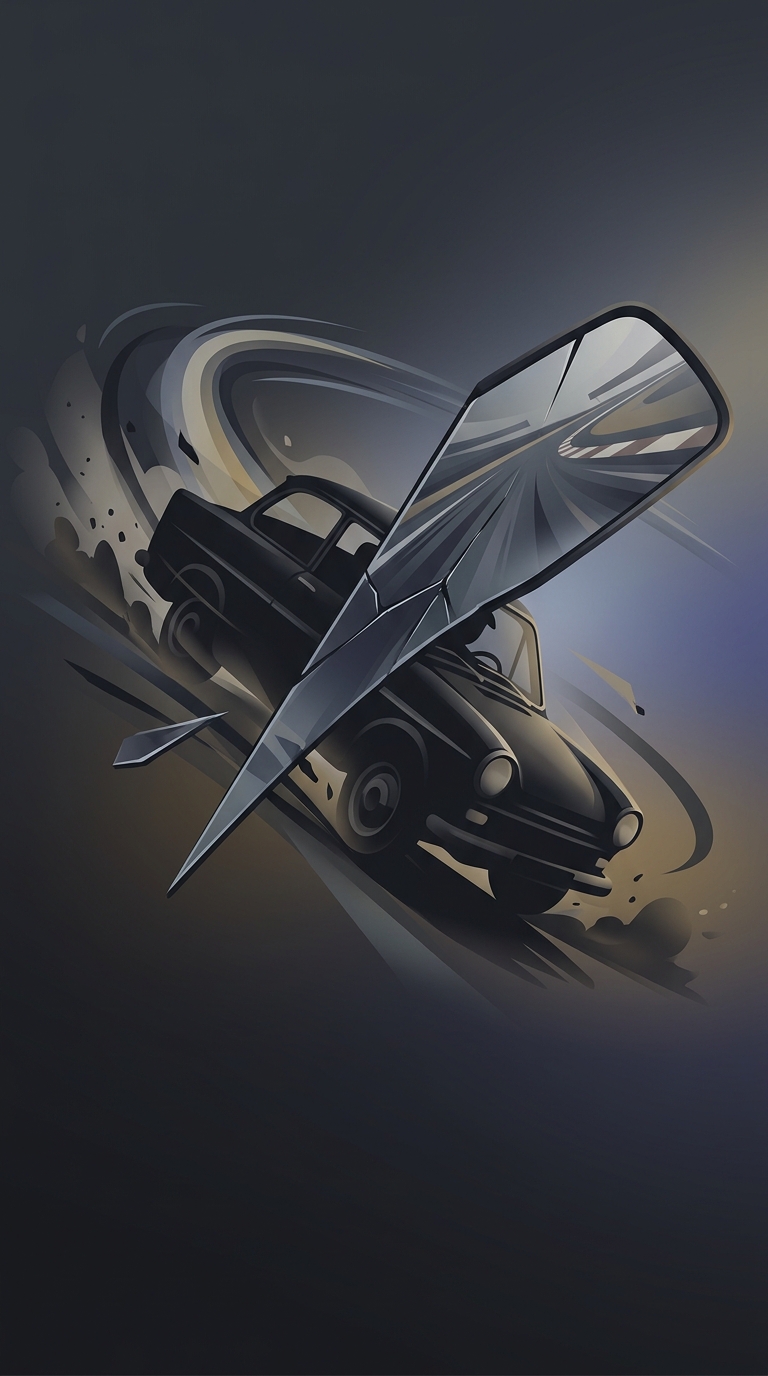
That made reverse the forward range in mirror image: if the car could reach a certain speed going ahead, the transmission itself did not impose a lower maximum for backing up. It did not mean the car could instantly reverse direction at speed; the driver still had to change direction safely. The unusual point was that, once traveling backward, the transmission could keep increasing speed through the same range.
A clever feature with a practical edge
The design replaced the familiar sequence of gears with a simpler operating idea: let the pulleys adjust automatically as speed changed. But a reverse drive with no special speed cap also demanded care. A driver accustomed to reverse being inherently slow could not rely on the transmission to limit backing speed. DAF’s small family car therefore turned a mechanical simplification into a memorable driving characteristic—and a reminder that a transmission’s limits shape how a car feels, not just how its engine reaches the wheels.