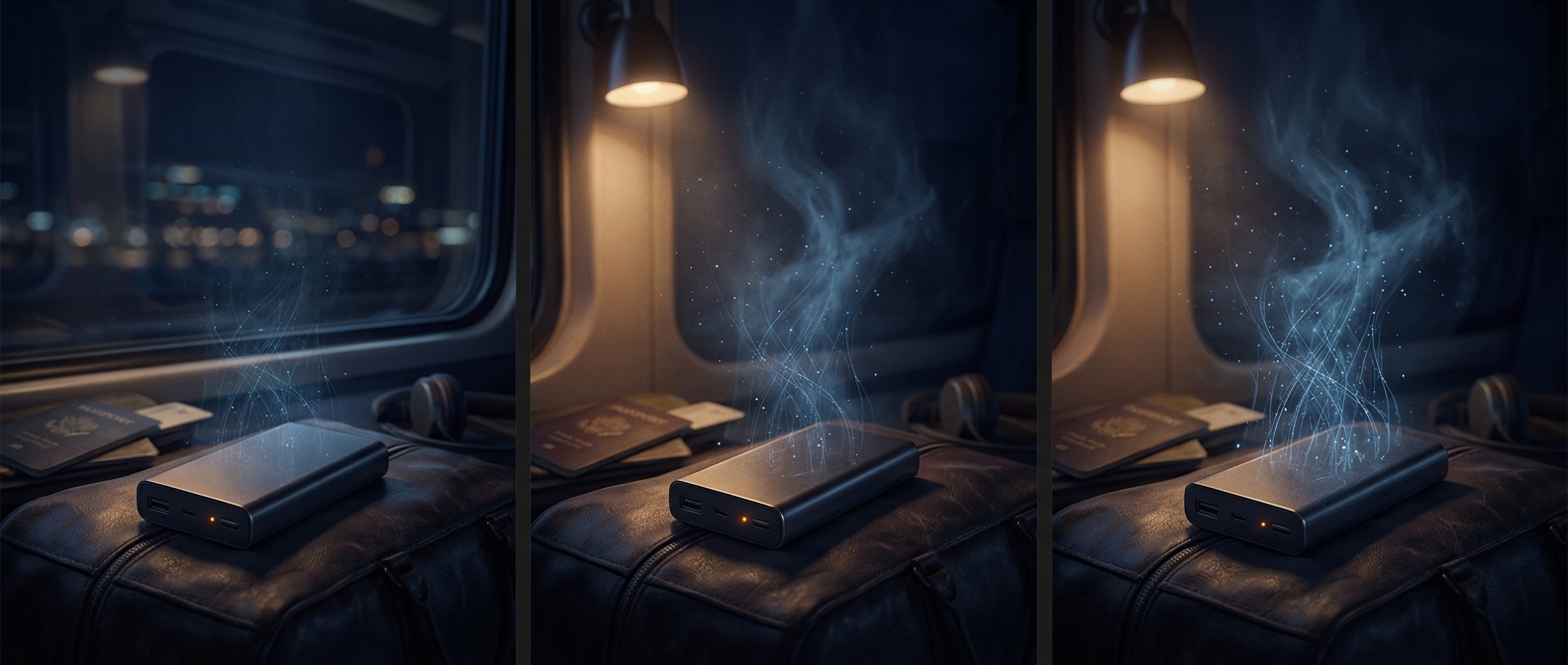
Why a Power Bank Loses Charge in a Drawer
A power bank is not a passive container of electricity. Its lithium-ion cells gradually lose stored energy through self-discharge: tiny chemical reactions inside the battery continue even when nothing is plugged in. The rate is usually slow, but it never falls to zero.
There may also be a small electrical load inside the device. The power bank’s control circuit monitors the cells and manages charging and output; depending on its design, that circuitry can draw a little energy while the bank appears to be off. These two effects together explain why a charge reading can be lower after storage.
Storage Conditions Make a Difference
Heat speeds up the chemical processes that wear down a battery and can increase its loss of stored charge. Age matters too: as a battery deteriorates, it generally holds less energy than it did when new. A cool, dry place away from direct sunlight is therefore a better storage spot than a hot car or sunny windowsill.
Check Before You Travel
A power bank that looks full when put away is not guaranteed to be ready weeks later. Check its indicator and recharge it before relying on it for a trip. If it will sit unused for a long time, follow the manufacturer’s storage guidance; battery makers may recommend a partial charge rather than leaving a device completely full or empty. The practical lesson is simple: treat a stored power bank as a battery that needs checking, not as a permanently topped-up reserve.