Why a travel dryer feels underpowered
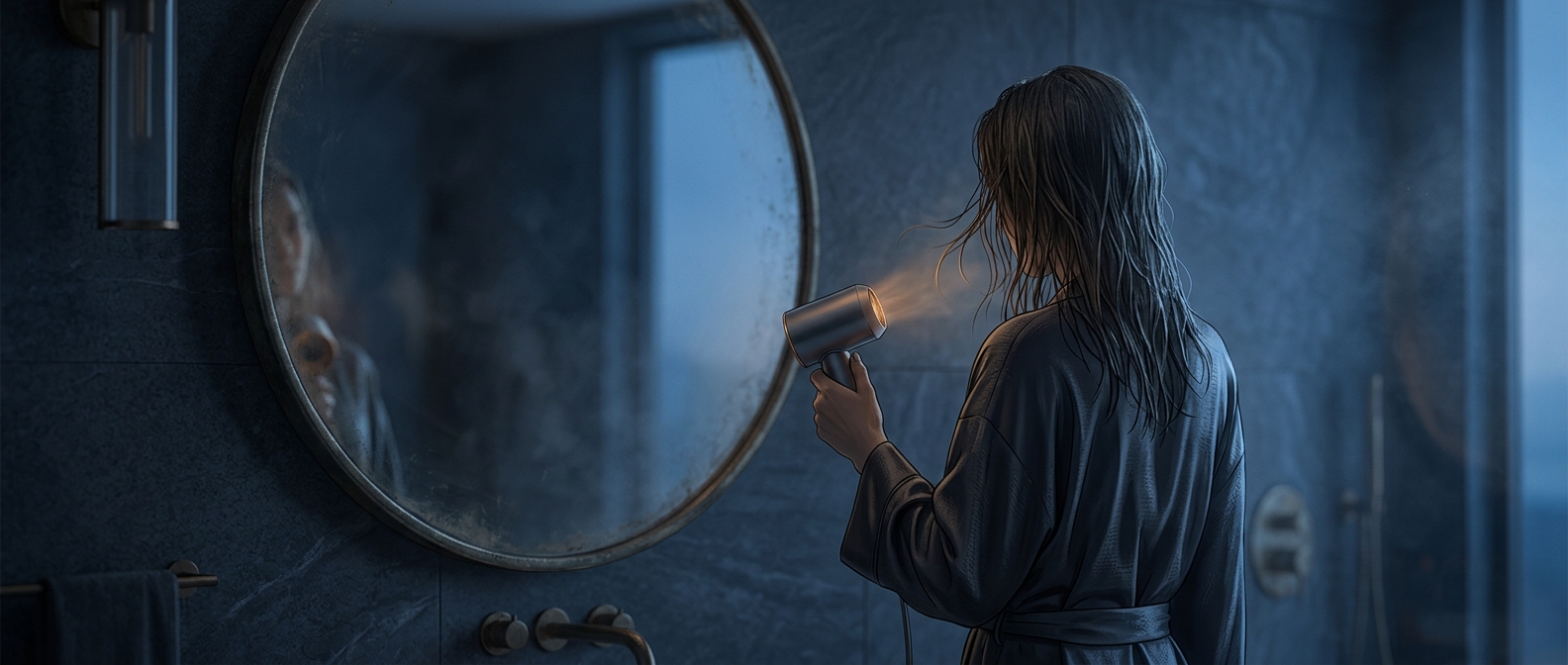
A hair dryer has two jobs: move air across wet hair and warm that air so water evaporates faster. In a compact model, the fan and heating element have less room, and the appliance may be designed to draw less power than a full-size dryer. The result can be a narrow, gentle stream that warms the scalp without moving much air through the hair.
That distinction matters because warmth alone does not do all the work. Moving air carries away the humid layer that gathers around wet strands, letting more water evaporate. If airflow is weak, that damp boundary layer lingers, and drying slows even when the air feels hot.
The travel tradeoff shows up in the bathroom
Compact dryers are easier to pack, but their small size does not guarantee full-size drying speed. Hair that is thick, long, or still dripping presents more water for a modest stream to remove. Blotting with a towel first makes a noticeable difference: the dryer can spend less time dealing with surface water and more time drying the strands.
A useful technique is to lift and separate sections so air can reach more of the hair rather than heating only the outside. The payoff is practical: a little preparation can matter more than holding a small dryer closer, which concentrates heat without fixing its limited airflow.