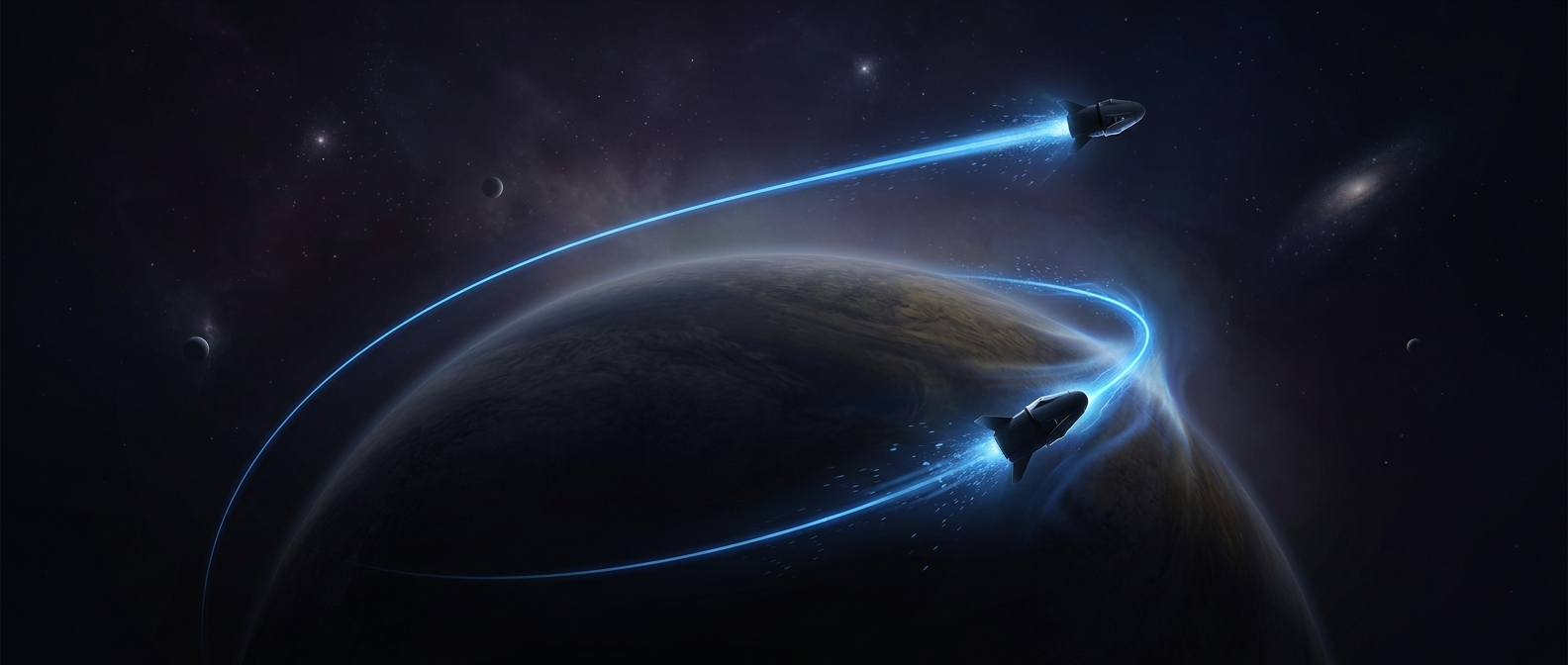
How a planet can speed up a spacecraft
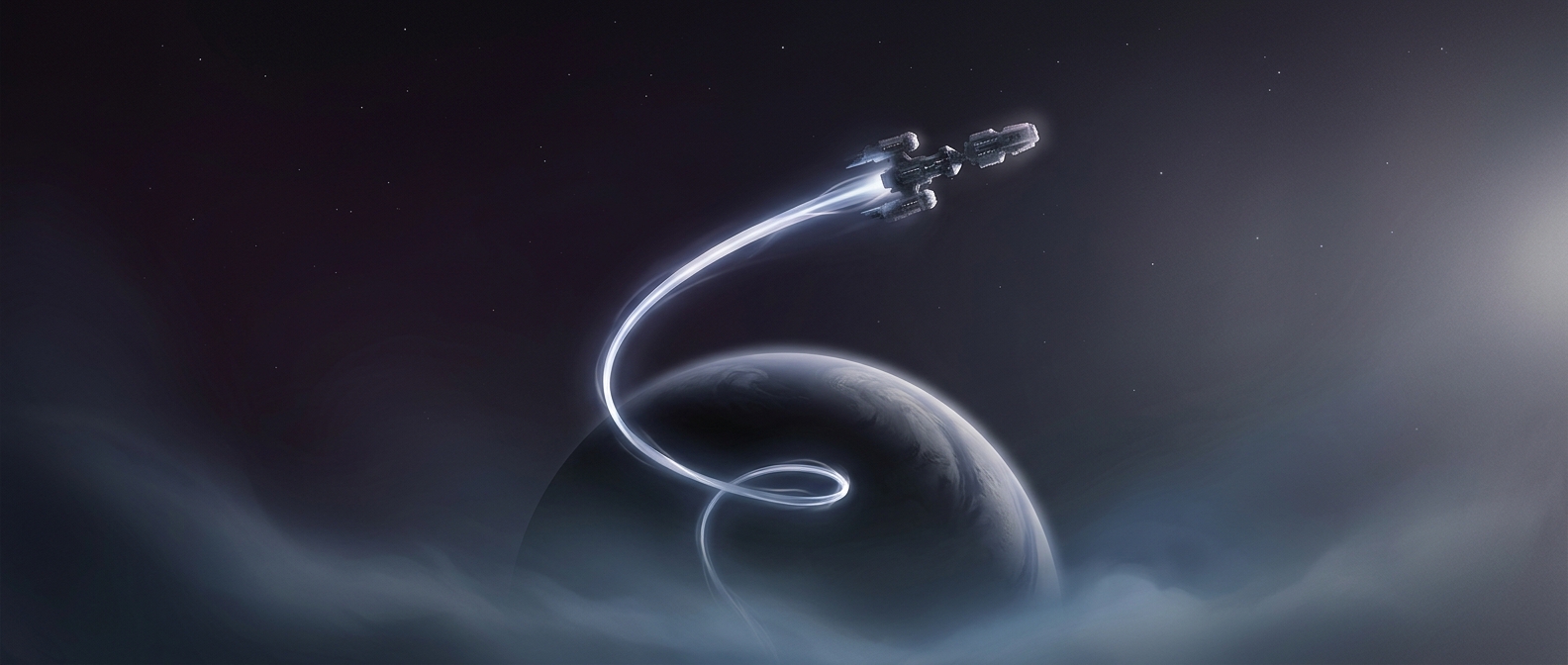
A gravity assist is not a rocket burn. A spacecraft uses a planet’s moving gravity to change both its direction and its speed as measured against the Sun. The key is that the planet is already orbiting the Sun at high speed. A probe approaching from one direction can be turned around the planet and leave moving in a direction that adds some of that orbital motion to its own.
Imagine bouncing a ball off a moving train. The ball can rebound faster than it arrived because the train is moving. In space, the planet plays the role of the train: its gravity pulls the probe inward, then back out, bending its route. Relative to the planet, the probe’s speed is nearly the same before and after the encounter; relative to the Sun, the change in direction can mean a substantial gain—or loss—of speed.
The flyby is planned, not a free-for-all
Mission planners choose a trajectory that sends the probe past a particular side of the planet. Passing behind a planet in its direction of travel can boost the spacecraft’s Sun-relative speed; approaching from the other side can slow it. Either result can be useful. A probe heading outward may need a boost, while one arriving at a destination may need to shed speed so it can enter orbit rather than race past.
That makes gravity assists a way to trade fuel for careful timing and navigation. A rocket still has to launch the spacecraft and steer it onto the right course, but a well-aimed flyby can accomplish a large change in speed without carrying propellant for an equivalent burn.
A tiny exchange with a huge payoff
The planet does lose a minute amount of orbital energy when it speeds up a probe, or gains some when it slows one down. But the spacecraft is so small compared with the planet that the planet’s resulting change in motion is imperceptible. The payoff for the mission can be much larger: one flyby can redirect a probe toward another planet, and a sequence of encounters can open routes that would otherwise demand far more fuel.