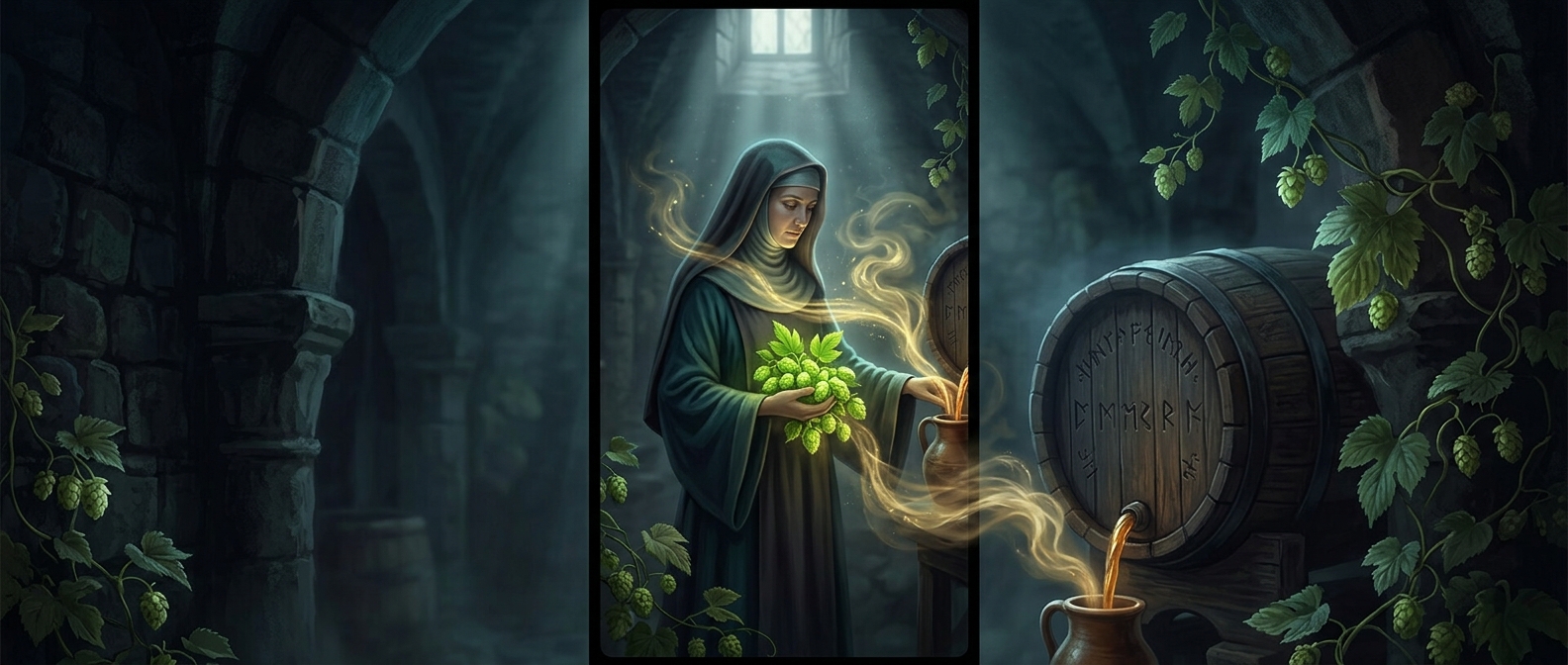
What Hildegard Meant by “Greenness”
For Hildegard of Bingen, viriditas—Latin for “greenness”—named more than the color of leaves. It was a way to describe the vitality that makes living things flourish, from a plant putting out new growth to a person becoming spiritually receptive. In her religious vision, that vitality ultimately came from God, the source of creation and life.
The image drew force from something medieval people could see directly: a green plant was growing, while a dried one had lost its life. Hildegard used that contrast to make an invisible spiritual condition imaginable. Her language did not divide nature, the body, and the soul into wholly separate realms; the same imagery of flourishing and withering could speak to each.
From Spiritual Dryness to Renewal
In this framework, sin was not only the breaking of a rule. It could be described as a turning away from divine life, leaving the soul dry and unable to flourish. Virtue and spiritual renewal, by contrast, restored a person’s capacity to receive and express that life.
That makes viriditas a picture of relationship as much as a theory of vitality: life flourishes when it remains connected to its source. Hildegard’s green imagery gave readers a concrete way to grasp spiritual change—not as an abstract argument, but as the difference between something withering and something able to grow again.