Why a Rabbit with Antlers Would Struggle in the Brush
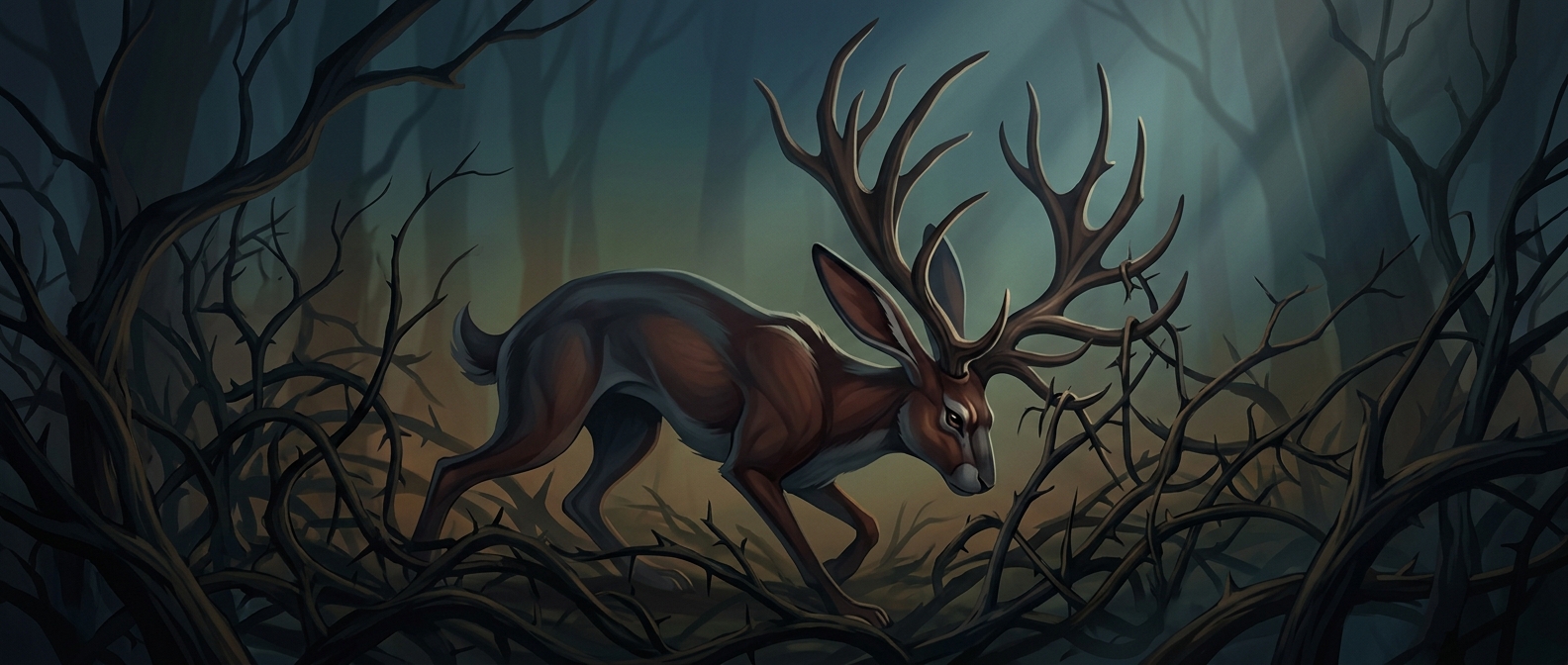
Jackalopes are imaginary creatures from American folklore: rabbits pictured with antlers, often displayed as if they were specimens of a real animal. The joke in the image is practical as much as fantastical. A rabbit’s usual advantage is its ability to slip through low cover and change direction quickly. Large branching antlers would get in the way.
Antlers Turn Cover into an Obstacle
Brush works as both shelter and escape route for a small animal. A rabbit can crouch beneath stems, dart between branches, and use tight gaps to break from a pursuer’s line of sight. Antlers project above and to either side of the head, making those same gaps harder to pass through. Their points could catch on twigs or vines, slowing a sudden turn or forcing the animal to back out rather than dash ahead.
Real deer manage antlers in their own surroundings, but a jackalope combines a rabbit’s compact, quick-moving body with a conspicuous rack. The mismatch is what makes the folklore creature funny: the feature that makes it look formidable would undermine the rabbit’s most useful escape tactics.
A Visual Joke with a Catch
The antlers also make a rabbit-sized animal easier to spot. In a landscape where hiding and disappearing into cover matter, a wide, branching silhouette would announce its position. So the jackalope’s imagined horns are not just an absurd decoration; they turn a nimble animal into one poorly equipped for the very brush a rabbit might rely on.