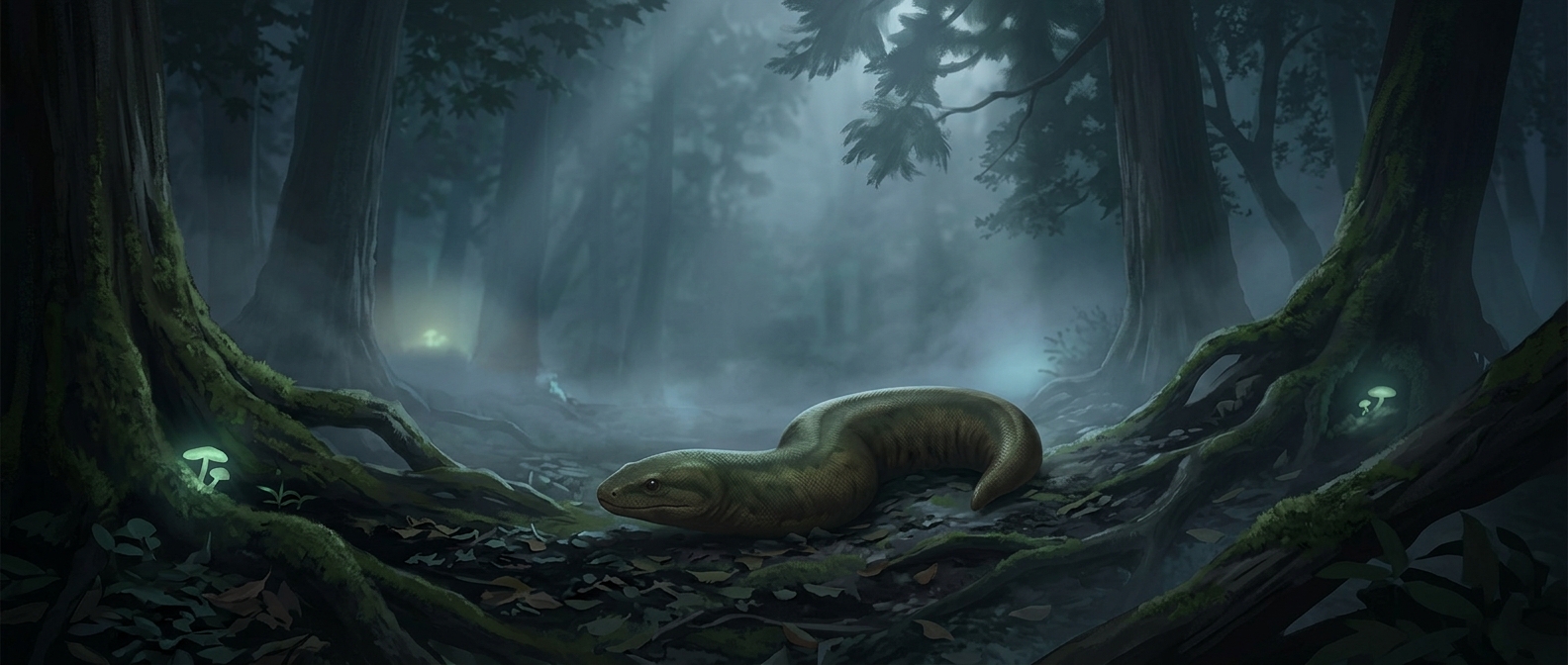
A Snake That Breaks the Usual Shape
The tsuchinoko is a creature from Japanese folklore, not a single animal with a fixed, authoritative description. Stories and reported sightings differ, but the same odd silhouette often returns: a snake-like body swollen around the middle, tapering toward the head and tail. That shape makes it feel recognizable at first—and strange on a second look.
The claim that it hops adds to the mismatch. Snakes ordinarily move by pressing their bodies against the ground, so a hopping snake is not just an unusual-looking one; it behaves in a way that sets it apart from familiar wildlife. In the tales, that movement helps make the creature memorable and difficult to mistake for an ordinary snake.
Why the Details Matter
Folklore creatures do not need a standardized anatomy. Their descriptions travel through retelling, and different communities or storytellers can emphasize different features. With the tsuchinoko, the thick body and springing motion give people two compact details to picture and repeat. The result is less a field-guide portrait than a shared mental image: a snake that seems built for neither slithering nor staying still.
That vivid combination is why the tsuchinoko remains easy to recognize in Japanese popular culture. Its appeal lies in the small disruption it creates—something familiar enough to imagine in the grass, yet odd enough to make a person look twice.