Why the Chupacabra Is Called a “Goat-Sucker”
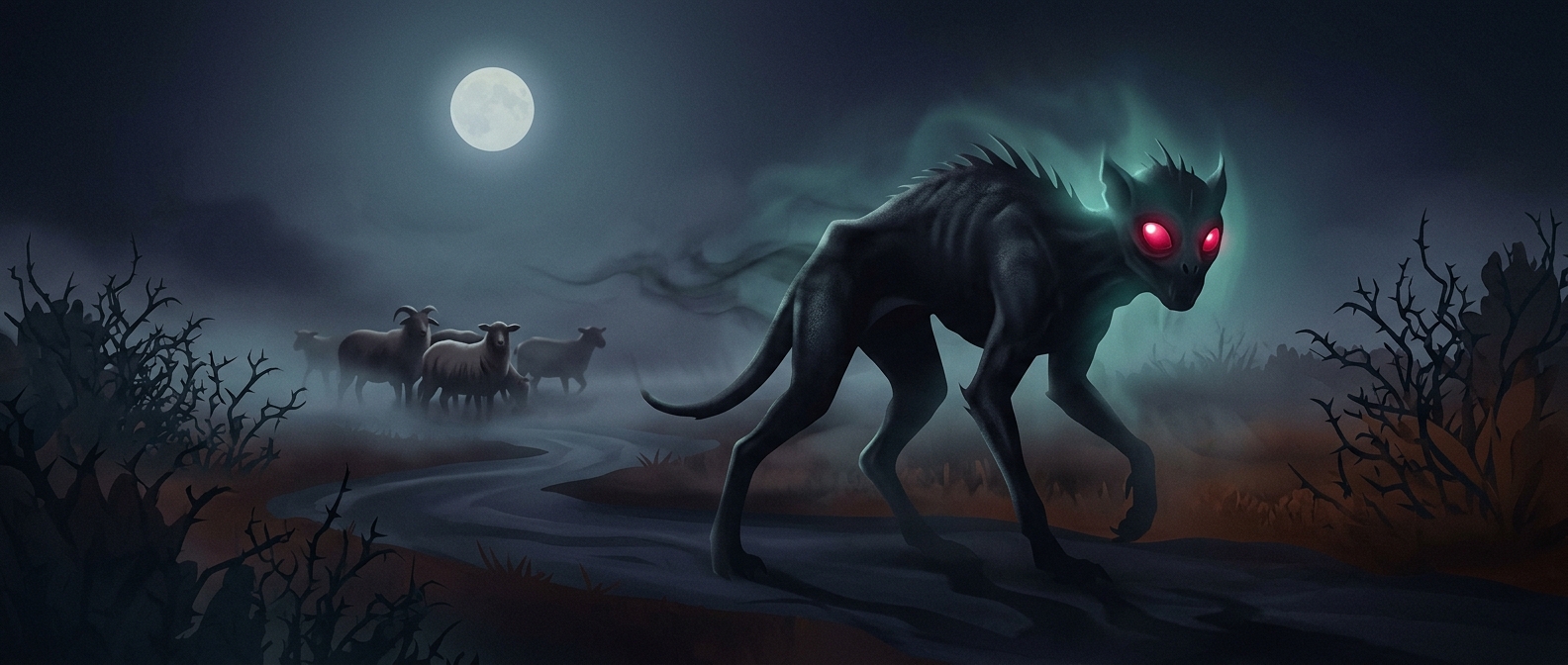
The chupacabra’s defining act is not simply attacking farm animals: in the folklore, it drains their blood. The name comes from Spanish chupar (“to suck”) and cabra (“goat”), making the animal’s supposed feeding method part of its identity. Goats became the emblematic victims, though stories also describe attacks on other livestock.
That detail gives the creature a distinctive place among legendary predators. A wolf or big cat kills to eat; the chupacabra is imagined as taking something less visible—the animal’s blood—while leaving behind a body that seems strangely emptied. The result is a mystery with an apparent signature, even when no witness has seen what happened.
How a Livestock Mystery Becomes a Legend
For a farmer, an animal found dead is a practical loss and an unanswered question. A story about a nocturnal blood-drinker turns that uncertainty into a memorable explanation: the attack has a culprit, a method, and a recognizable victim. The name itself helps reports travel, because “goat-sucker” tells listeners what to picture before they know anything else about the creature.
The folklore does not settle what caused any particular animal’s death. Instead, it preserves a way of describing frightening, unexplained losses—and gives them a supernatural shape. That is why the chupacabra’s most retellable clue is not its appearance, which varies across accounts, but the claim that it came for the livestock’s blood.