How an Animal Became a Sea Monster
A giant squid is difficult to encounter alive: it spends its life in deep water, while sailors historically had little chance to observe what happened beneath a ship. That gap between a frightening sight and an unknown cause gave maritime stories room to grow. A huge, unfamiliar creature glimpsed at the surface—or imagined from a body found later—could become something more deliberate and dangerous in the telling.
Why the Arms Made the Story Work
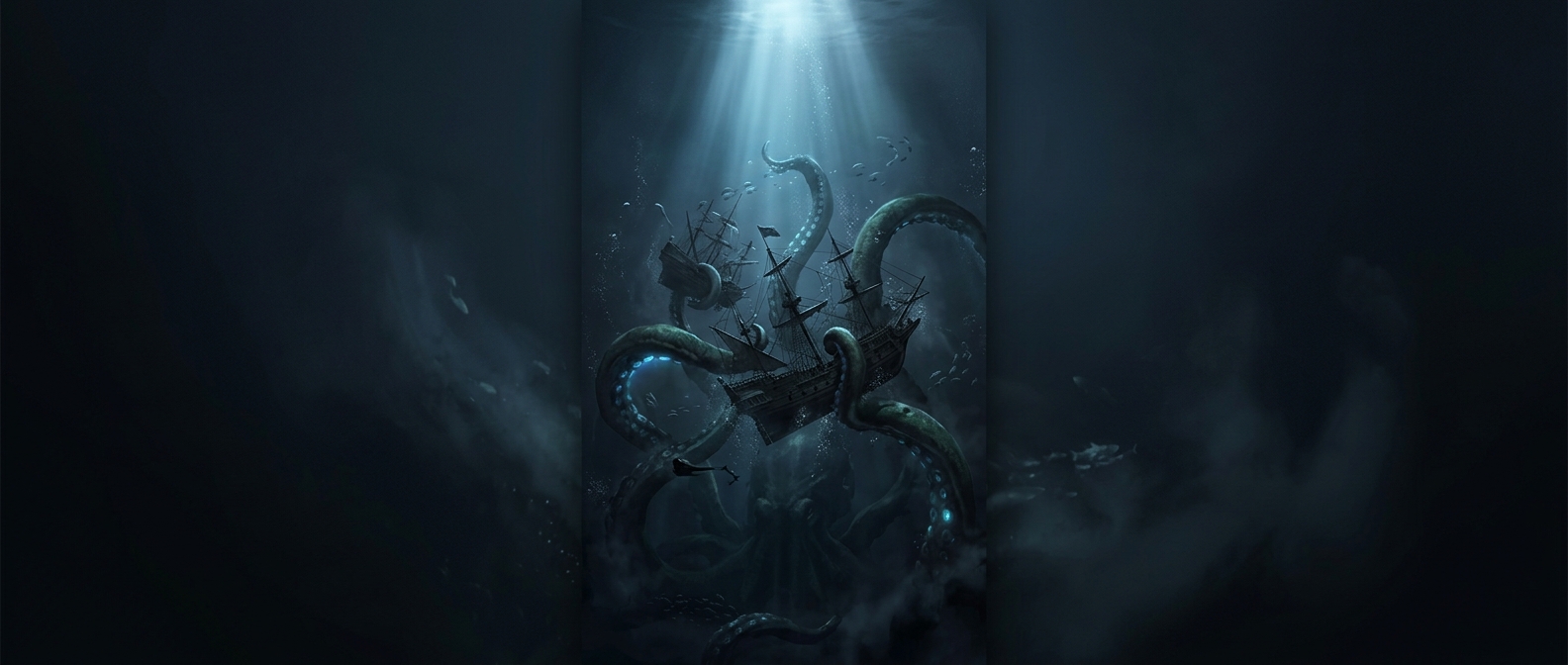
A squid’s long arms and feeding tentacles are striking even without a ship in the picture. In a tale, they supplied a simple, visible mechanism for disaster: coils reach the hull, grip the vessel, and pull it under. The image turns an invisible peril into a scene sailors could picture, giving shape to fears of deep water, wrecks, and creatures beyond human control.
The story also magnifies a real imbalance. A vessel may look enormous from the deck, but at sea it is exposed to forces its crew cannot see or command. The Kraken’s tentacles made that vulnerability personal: the ocean seemed not merely to swallow ships, but to reach up and take them.