Why a Whale Could Look Like a Sea Serpent
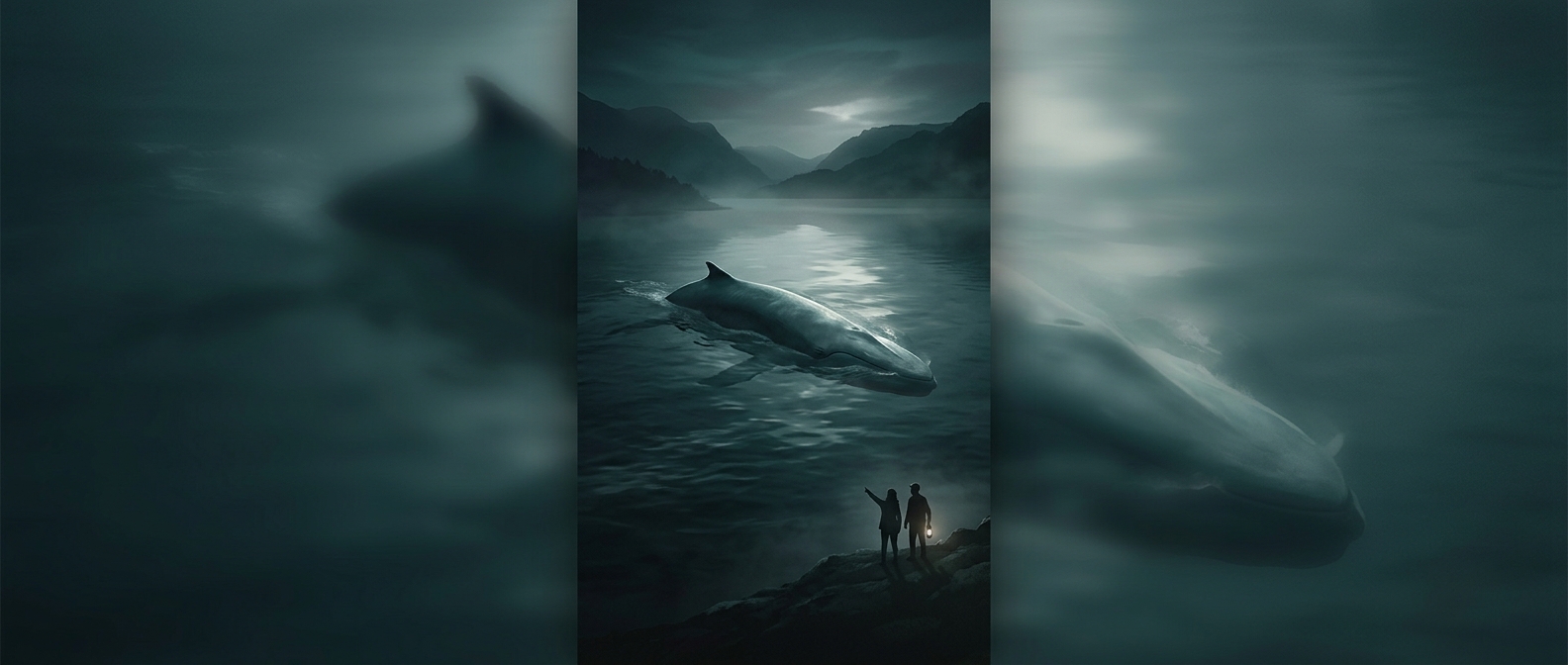
A whale rarely presents its whole body to someone watching from a ship. It may surface in pieces: first a dark curve of back, then a low ridge, then another section as it rolls or dives. From a distance, the gaps between those glimpses can make one animal seem like a long creature with a series of humps.
The view is especially misleading when waves hide the whale’s body. A line of exposed parts can appear to move across the water independently, while a tail or fin briefly breaking the surface may suggest a head or neck. Sailors had to interpret these fleeting shapes from a moving vessel, often with little more than the naked eye.
How the Sighting Becomes a Monster
The sea itself supplies the missing pieces. Swells rise and fall between a watcher and an animal, alternately revealing and concealing it. A whale swimming at an angle can show a sequence of body parts that does not resemble the familiar outline of a whale on land or in a calm-water illustration. The observer sees a pattern, but not enough of the animal to identify it with confidence.
That does not mean every sea-serpent report described a whale, or that every witness was mistaken. It offers a plausible explanation for some sightings: an ordinary animal, seen briefly under difficult conditions, could take on an extraordinary shape. A few separated glimpses can turn one body into an apparent chain of creatures.