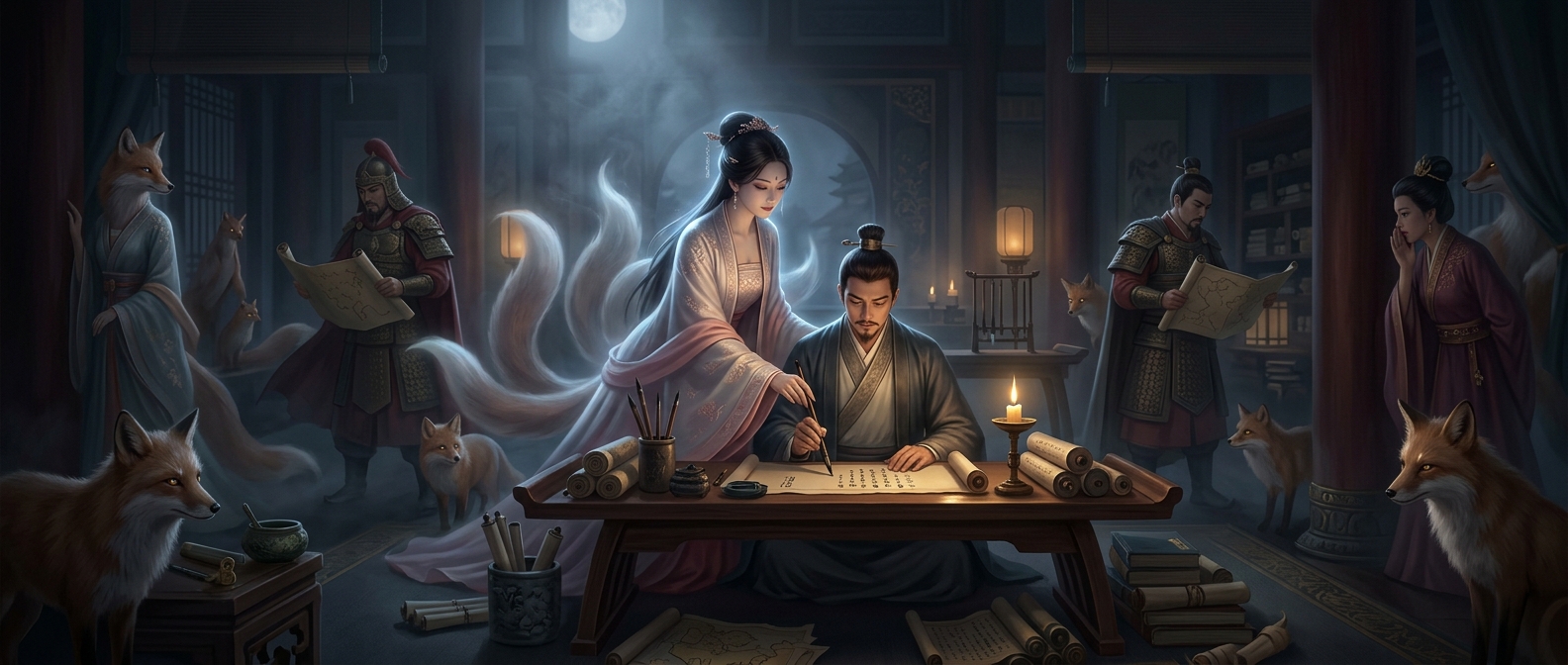
Why Huli Jing Stories Turn on Human Relationships
In Chinese folklore, a huli jing is a fox spirit, often imagined as able to take human form. That transformation makes the spirit more than a frightening animal: it can enter a household, court someone, form an alliance, or disrupt a marriage. The resulting trouble comes from uncertainty about who is truly human and what a person wants.
A Shapeshifter With More Than One Motive
Huli jing do not have one fixed character. In some tales, a fox takes the form of an attractive woman and draws a man away from his family; in others, foxes are clever, helpful, or capable of affection. Their shifting roles make each encounter a test of judgment. A character may mistake desire for love, fear for wisdom, or an unusual companion for a threat.
The disguise also gives storytellers a way to explore relationships under pressure. A romance with a spirit can expose a human character’s vanity or compassion, while a fox’s interference can bring hidden jealousy or family conflict to the surface. The supernatural plot turns private tensions into visible events.
Why the Stories Keep Their Ambiguity
Rather than treating every fox spirit as simply wicked, many traditional stories leave room for mixed motives and uncertain outcomes. That ambiguity is part of the point: a huli jing can upset social expectations, but the humans around it also reveal their own flaws and choices. The fox’s most memorable power may be its ability to make a familiar relationship feel suddenly unfamiliar.