Why Medusa’s gaze was deadly
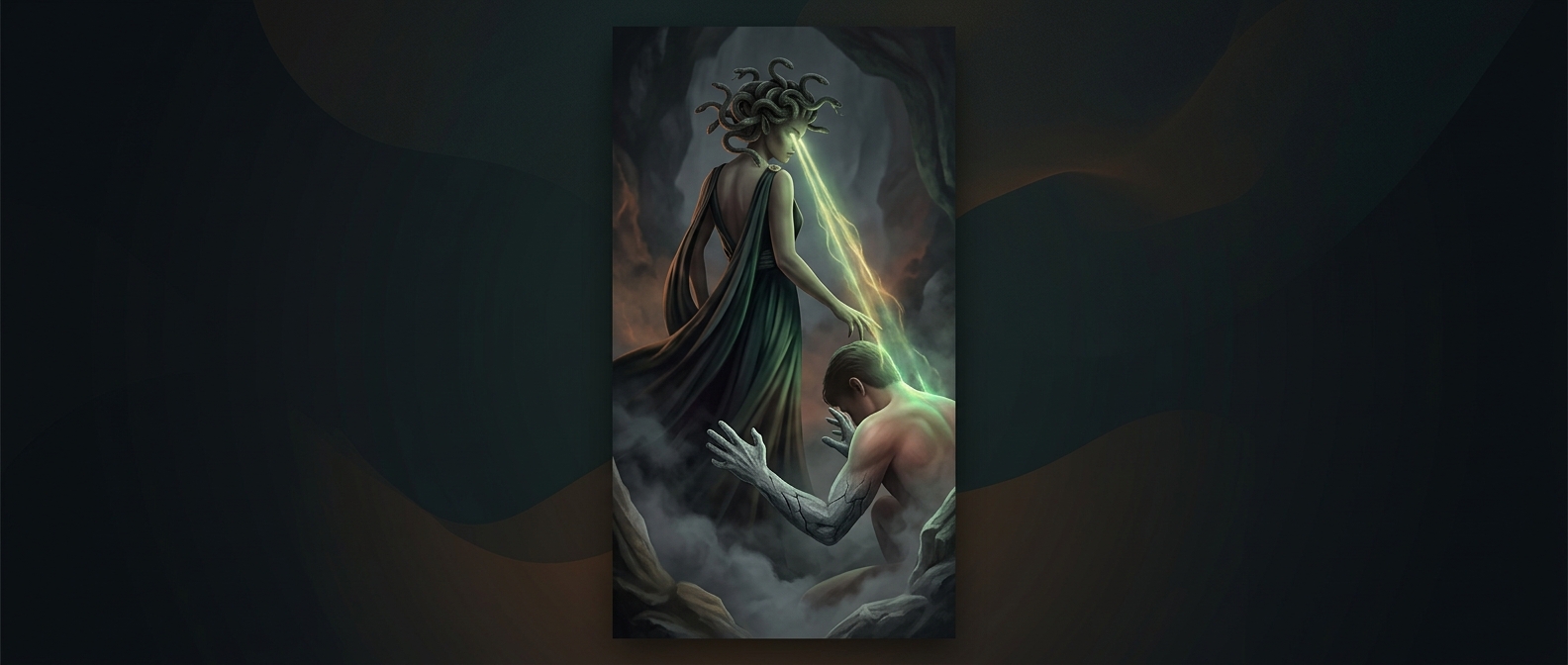
In Greek myth, Medusa was a Gorgon: a monstrous figure whose direct gaze could turn a living person to stone. The danger worked at a distance. A warrior did not have to touch her or even get within reach of her snakes; meeting her eyes was enough to become immobile, like a statue.
That made looking itself the threat. Medusa’s snake-filled hair added another obstacle, but the gaze made ordinary approaches—watching where she moved, aiming a weapon, or checking that she was defeated—potentially fatal. The story turns a basic act of attention into a trap.
How Perseus faced her
In the familiar story, the hero Perseus avoids looking directly at Medusa. He watches her reflection in a polished shield, using the image to guide his movements without meeting her eyes. He then beheads her. The tactic is not simply a clever weapon trick: it lets him act while keeping the dangerous gaze at one remove.
Even death does not make Medusa’s head harmless. Perseus carries it as a weapon, using its power to petrify enemies. The head remains dangerous because the myth treats Medusa’s gaze as an enduring force, not merely a feature of a living opponent.
A danger that survives its defeat
The tale’s central reversal is that the hero can overcome Medusa only by refusing direct confrontation—and then turns the source of danger into protection. Her severed head becomes a warning that can ward off threats, while still carrying the power to destroy anyone who looks upon it. In this myth, defeating a monster does not erase its force; it changes who can direct it.