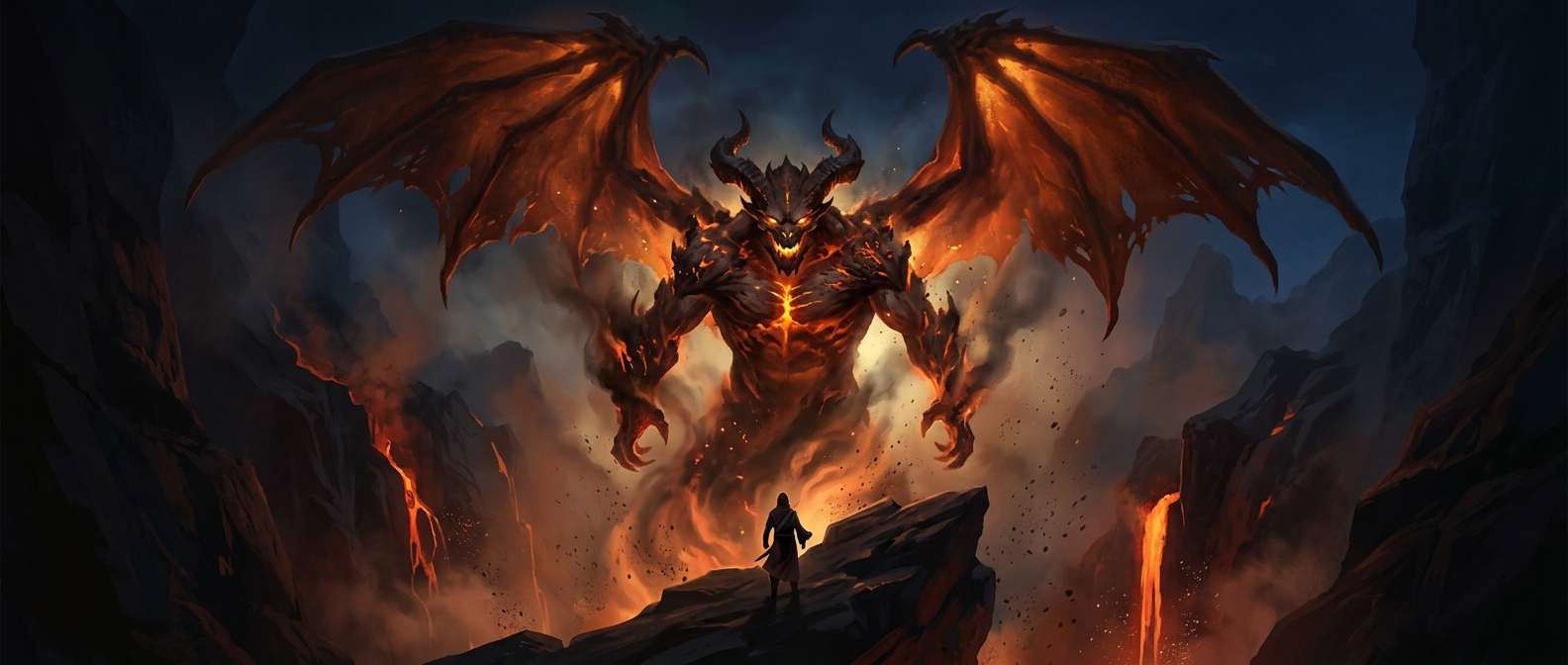
Why an Ifrit Is More Than a Fire Monster
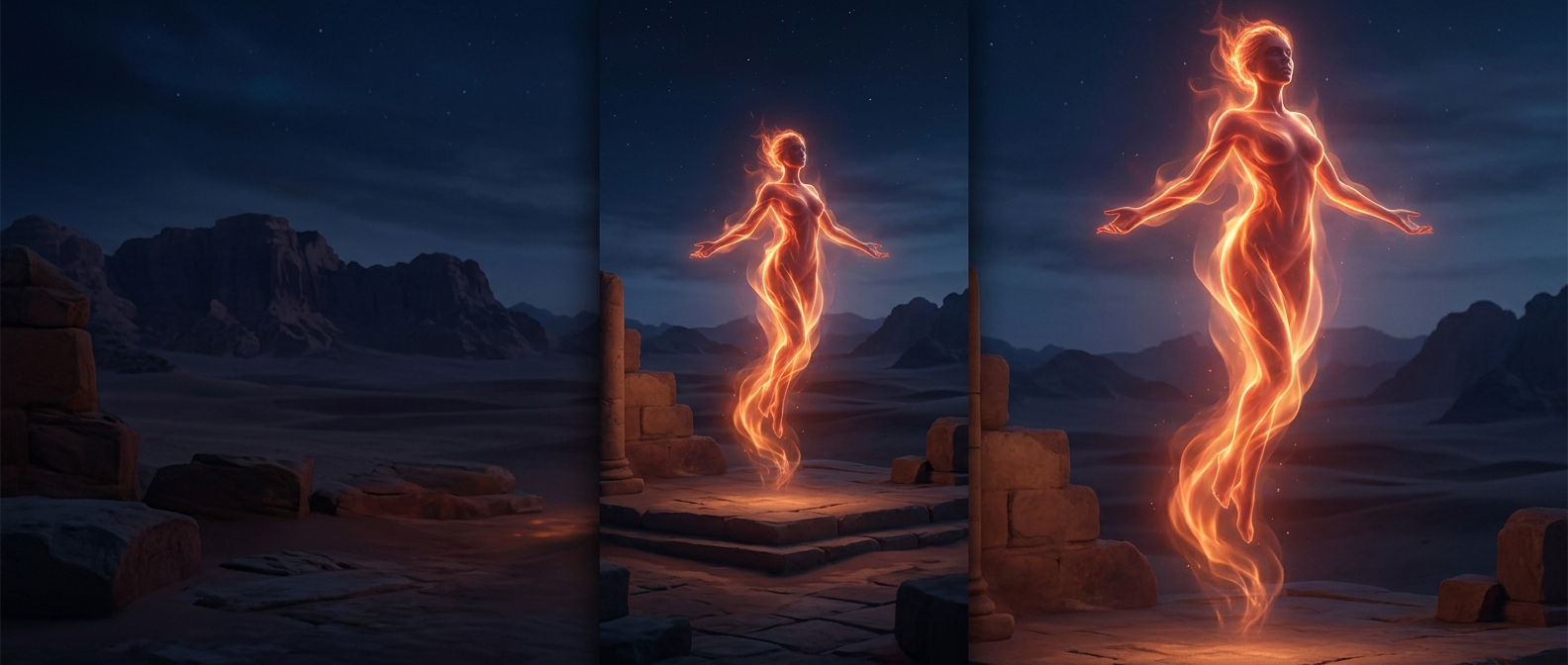
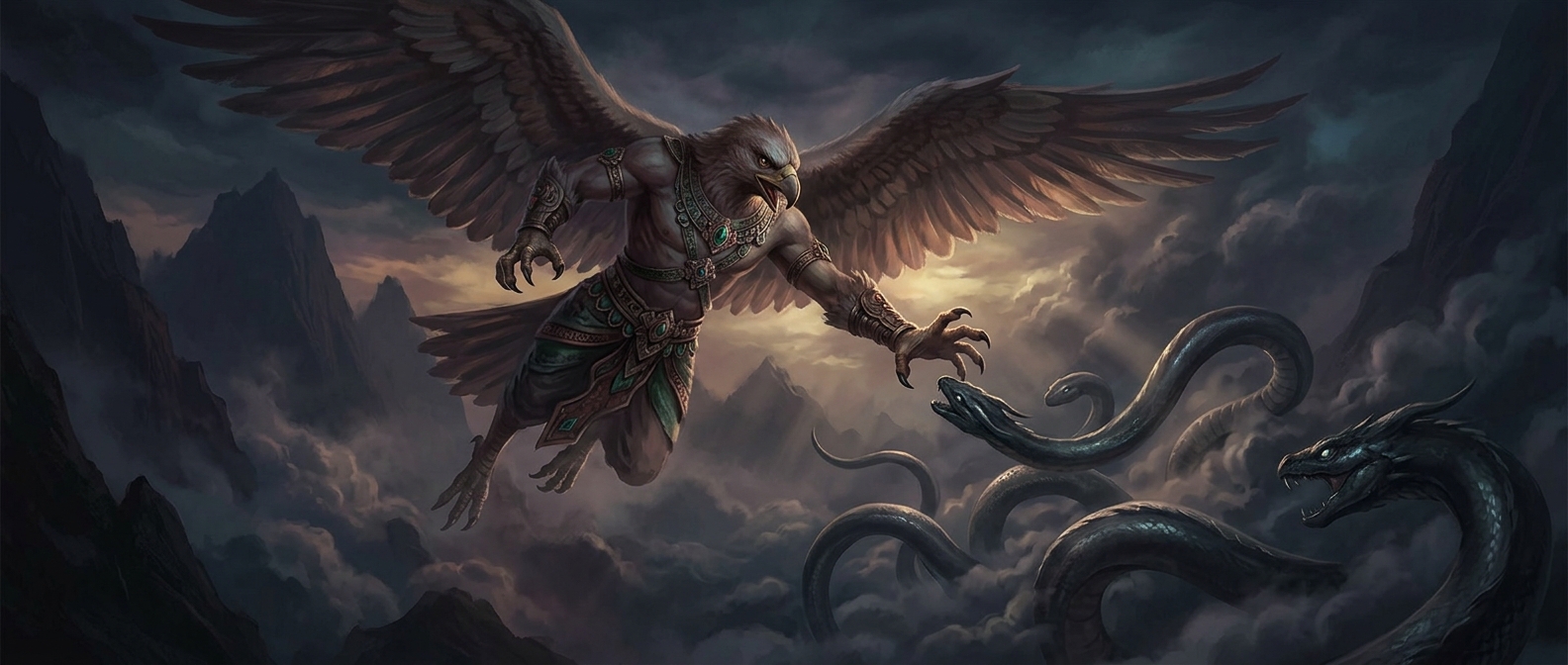
In Arabic and broader Islamic folklore, an ifrit is a formidable kind of jinn—a supernatural being associated with hidden powers and, in many later stories, fire. The word signals exceptional strength and defiance, not a creature with one fixed appearance. Tales and artistic depictions vary: wings, enormous size, and a body of flame are familiar images, but they are not a universal blueprint.
Power That Ordinary Force Cannot Settle
Stories often make an ifrit powerful enough to overwhelm human opponents, while ordinary weapons fail to harm it. That failure is part of the creature’s narrative logic: a sword can injure a body, but it cannot necessarily master a being whose strength comes from the supernatural world. The conflict therefore turns on more than combat. A human may need cunning, restraint, a binding device, or some other way to command or outwit the jinn.
This makes the ifrit’s arrogance consequential. Its strength gives it reason to dismiss human authority, but folklore can still place limits on it through bargains, commands, or magical restraints. The tension is not simply “monster versus hero”; it is whether power can be controlled when force alone is useless.
A Name for Exceptional Defiance
The term has a notable early association in the Qur’an, where an ifrit from among the jinn offers to bring Solomon a throne. Later storytelling expanded the figure into a more elaborate supernatural character. Across those traditions, the enduring idea is less a precise anatomy than a dangerous combination: immense capability, independence, and resistance to ordinary control.