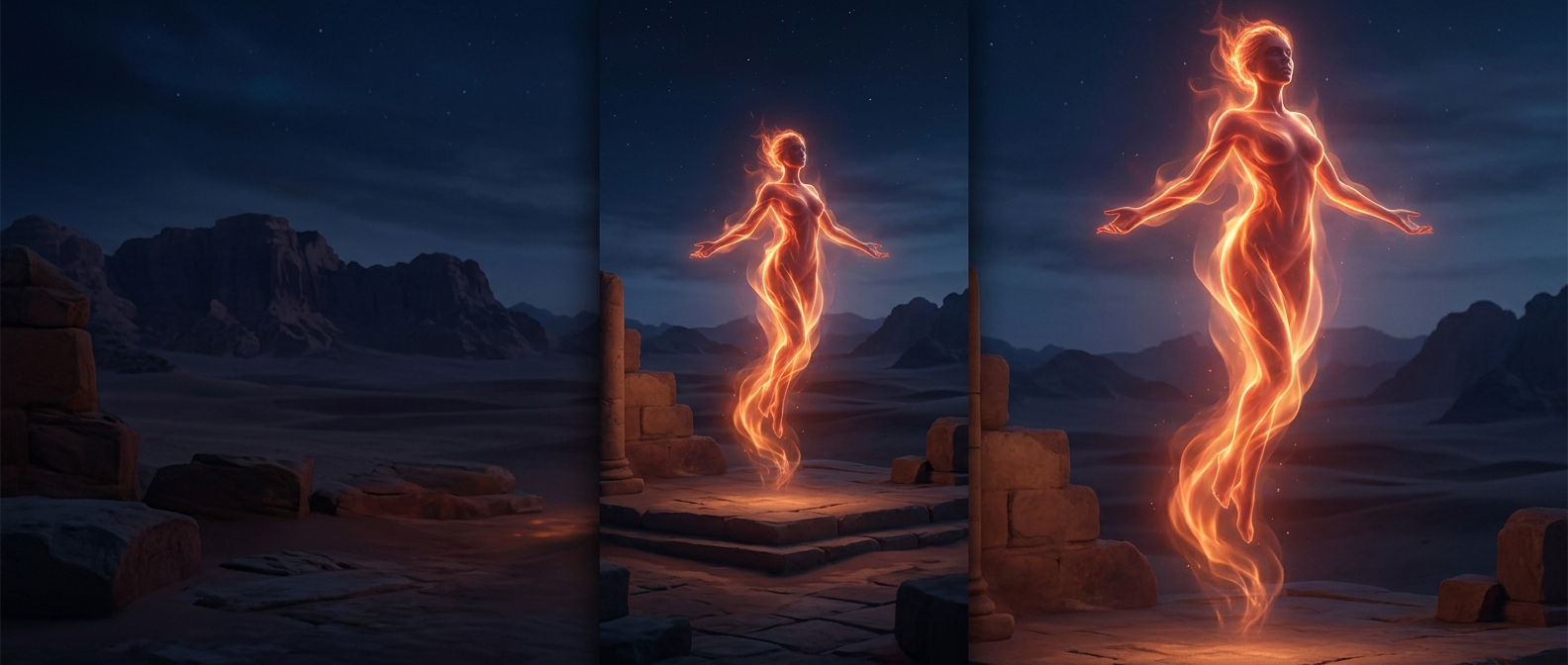
What “smokeless fire” means in the stories
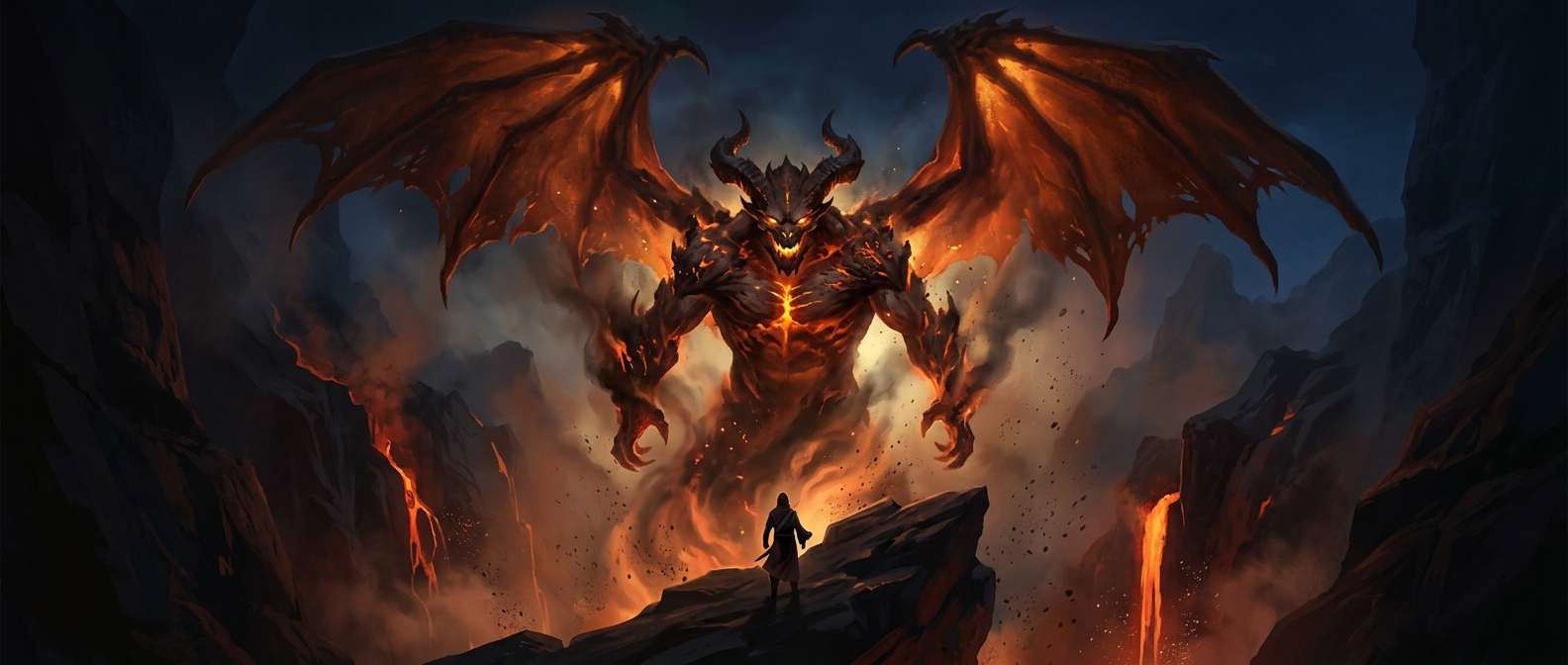
In Islamic tradition and wider Middle Eastern folklore, djinn are often described as beings made from “smokeless fire.” The phrase is not a recipe for an observable substance. It gives djinn a different kind of origin from humans, who are associated in religious accounts with clay, and suggests a nature that is fiery, subtle, and normally unseen.
“Smokeless” matters because ordinary fire announces itself with smoke and ash. The image instead points to a flame that leaves no obvious trail—a way to imagine a being that can move beyond ordinary sight and human control.
Not every djinn is a genie
The familiar lamp-bound genie is a simplified figure from popular retellings. In many traditional accounts, djinn have their own communities and choices: they may be helpful, harmful, indifferent, or religious, and they are not automatically servants waiting for a human command. Their free will is part of what makes them a people in their own right, rather than merely magical tools.
The idea of fiery origins also helps explain why stories treat encounters with djinn as unpredictable. A being with its own aims can bargain, deceive, or keep its distance; it does not have to grant wishes just because a person has found a lamp. The “smokeless fire” image gives that independence a memorable form: a presence imagined as real within the tradition, yet difficult to see or contain.