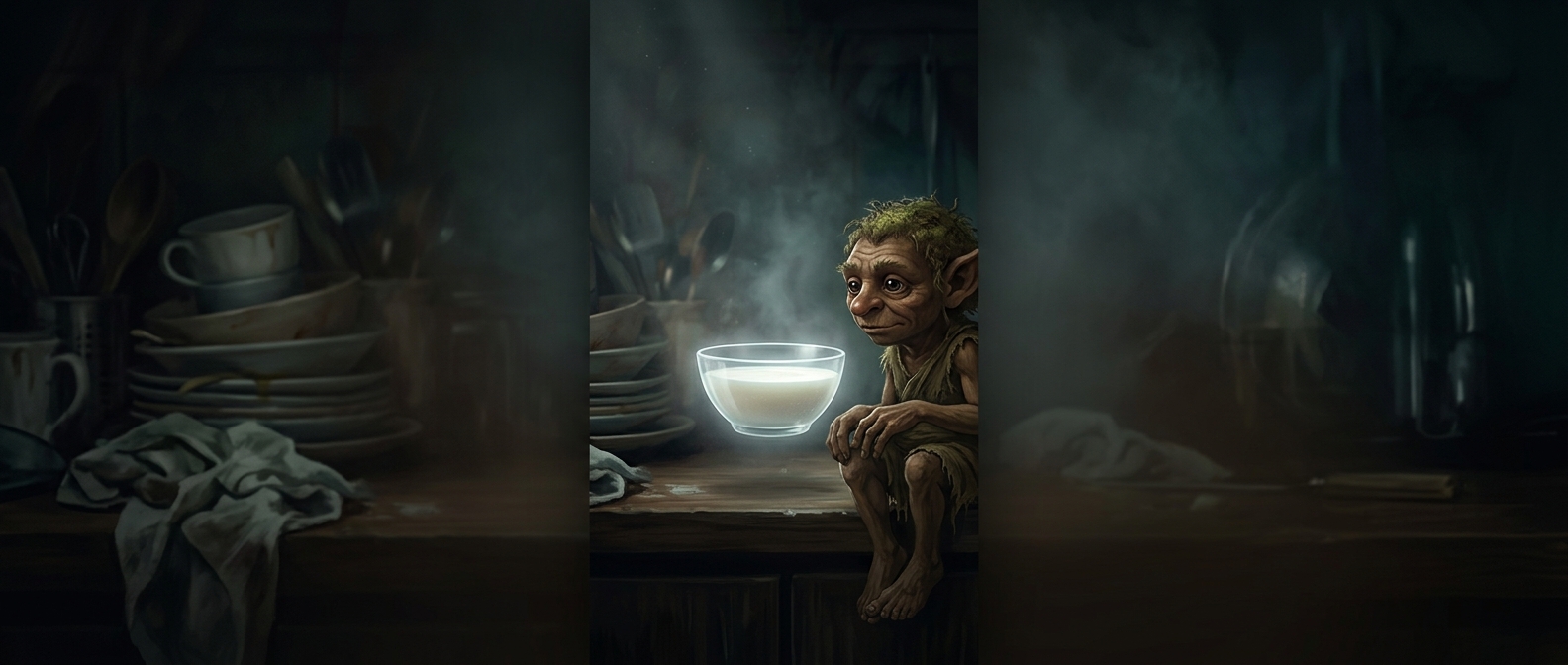
The Brownie’s Milk Was Payment—and a Boundary
In Scottish folklore, a brownie was a household spirit imagined as a quiet helper: after the family went to bed, it might tidy rooms or finish chores. Leaving fresh milk or cream was a way to acknowledge that help. The offering made the relationship reciprocal, even if the spirit was not supposed to be directly hired or commanded.
Why Clothes Could Send One Away
Stories often gave brownies a specific condition: they might accept food, but not clothing. A garment could imply that the household was trying to dress, reward, or claim the spirit rather than leave it free to come and go. In some tellings, receiving clothes ended the arrangement and the brownie left. The distinction made the custom feel less like wages and more like a careful act of hospitality: offer a modest treat, but do not presume ownership.
A Household Rule Told as a Story
That bargain also gave chores a memorable explanation. Work completed overnight could be credited to an unseen helper, while the bowl of milk turned everyday hospitality into a small ritual. The warning about clothes added a consequence to crossing the line: generosity kept the helper welcome, but an attempt to make the relationship too familiar could break it. The brownie’s payment was therefore not simply milk—it was the household’s respect for its independence.