The human face of a winter storm
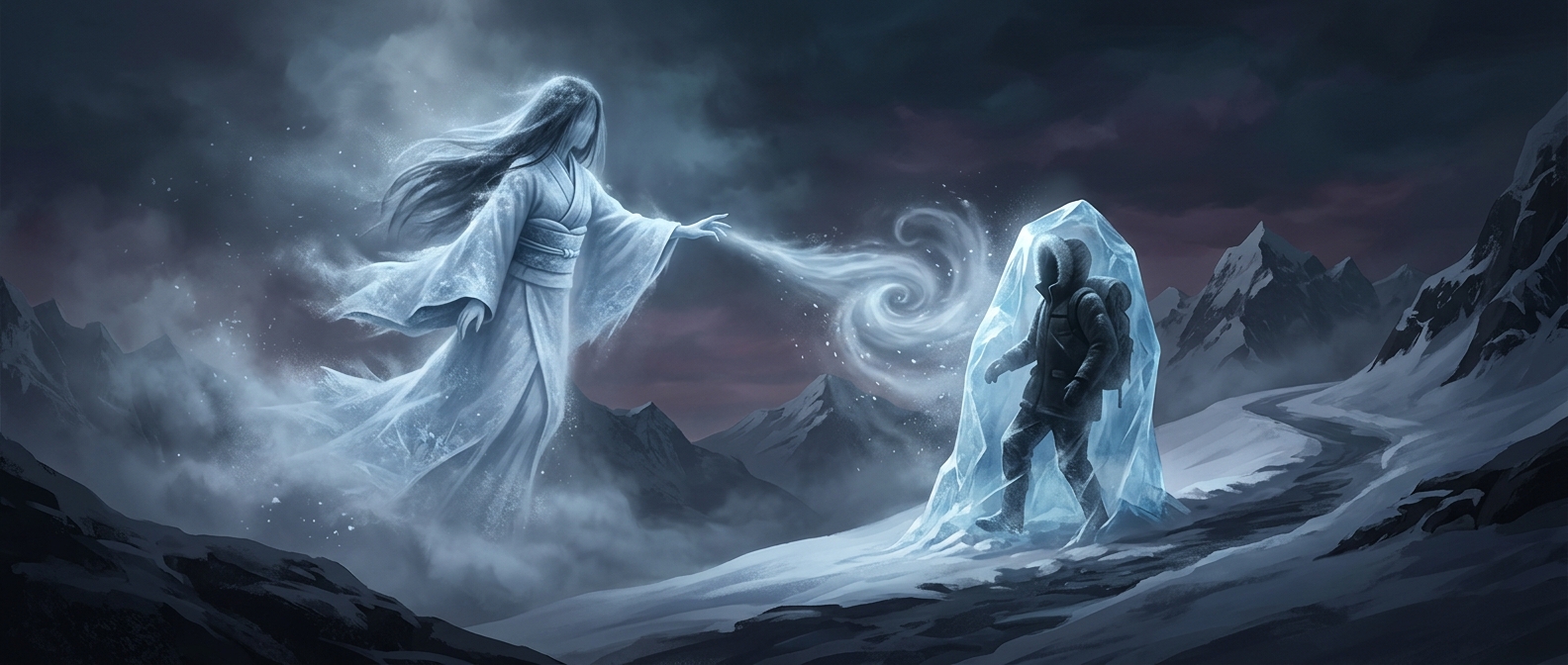
Yuki-onna, literally “snow woman,” gives a human shape to a danger that can be hard to read in a blizzard. Falling snow erases landmarks, wind makes it difficult to judge direction, and cold gradually weakens a person’s ability to keep moving. In a folktale, an icy breath or an encounter with a mysterious figure turns those dangers into an agent with intent.
That transformation makes the story more than a description of bad weather. A traveler is not simply lost in an impersonal storm; the landscape seems to have noticed them. The snow-woman’s beauty sharpens the contrast: an inviting appearance conceals a force that offers no safe bargain.
A figure shaped by retelling
Yuki-onna stories belong to a broad tradition of Japanese regional folklore, not to one fixed account with a single official ending. Details of her appearance, behavior, and encounters vary among tellings. That flexibility lets the figure carry different meanings—from a warning about winter travel to a haunting presence associated with snowbound places.
The tale’s practical edge is easy to recognize even without taking its supernatural events literally. In a storm, disorientation can turn a short journey into a dangerous one, while cold makes clear thinking and movement harder. The snow-woman makes that invisible, mounting peril memorable: in the story, the blizzard does not merely surround the traveler; it comes to meet them.