Wolves at the Edge of the Valkyries’ Ride
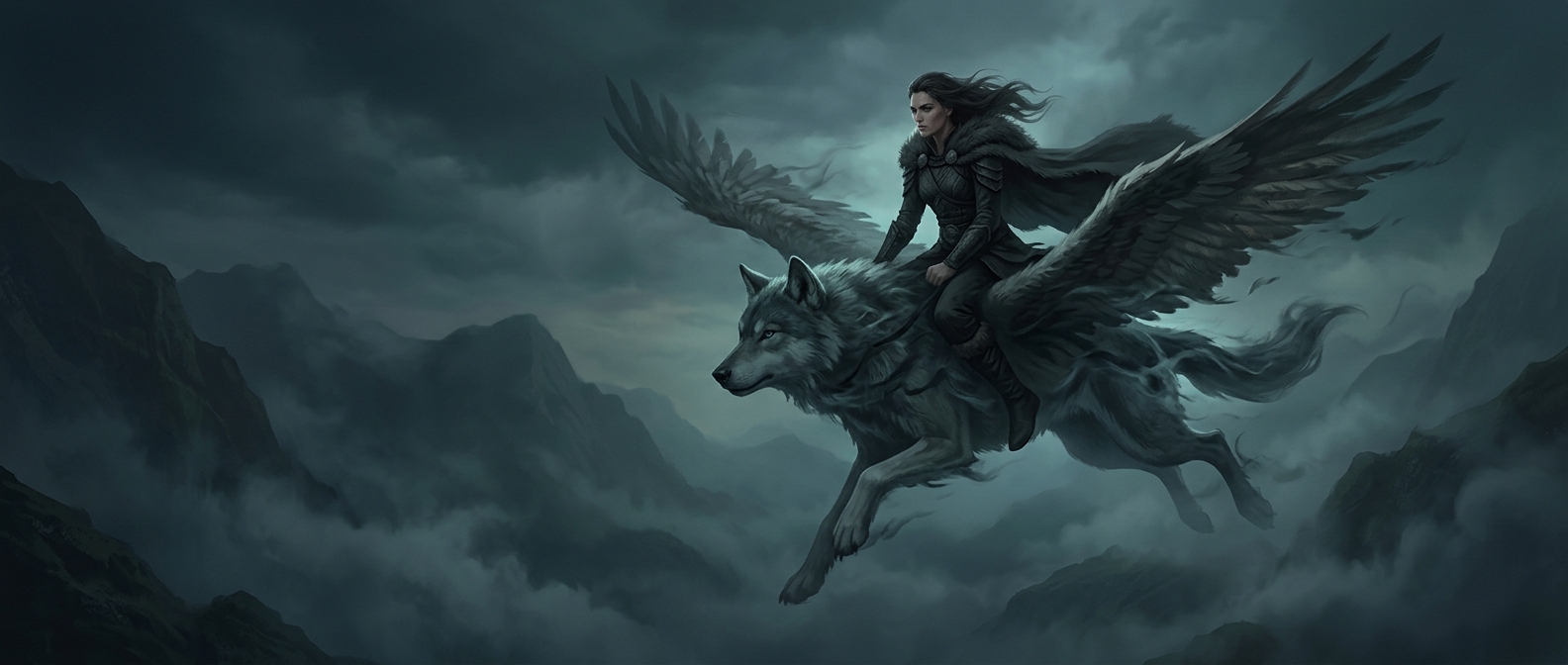
The image of a valkyrie riding a wolf belongs to a darker strand of Norse mythic poetry than the familiar picture of a warrior woman on a winged horse. But it is best understood as poetic imagery, not as a fixed rule repeated across “runic accounts.” Runes are characters used to write; the surviving stories about valkyries come chiefly from later-written poems and prose, and their details vary.
Why Put Wolves in the Sky?
In Old Norse poetry, wolves are closely tied to battle and death: they feed on the slain, while ravens circle the battlefield. A valkyrie appearing with wolves therefore carries an ominous meaning. She is not simply traveling; she is moving through the boundary between combat and the afterlife, where the dead are chosen and gathered.
Calling a wolf a mount can also be a compact poetic way to make that connection vivid. Norse verse often uses imaginative, indirect descriptions rather than presenting a scene like a modern illustration. The image folds the battlefield’s predators into the valkyrie’s supernatural journey.
A Tradition, Not a Single Picture
The winged horse became the more familiar modern depiction, but it does not erase older, stranger associations. Norse sources preserve several overlapping images rather than one standardized design. The wolf-riding valkyrie is striking because it makes her role feel inseparable from the violence and death she crosses to collect the fallen.