A storm made visible
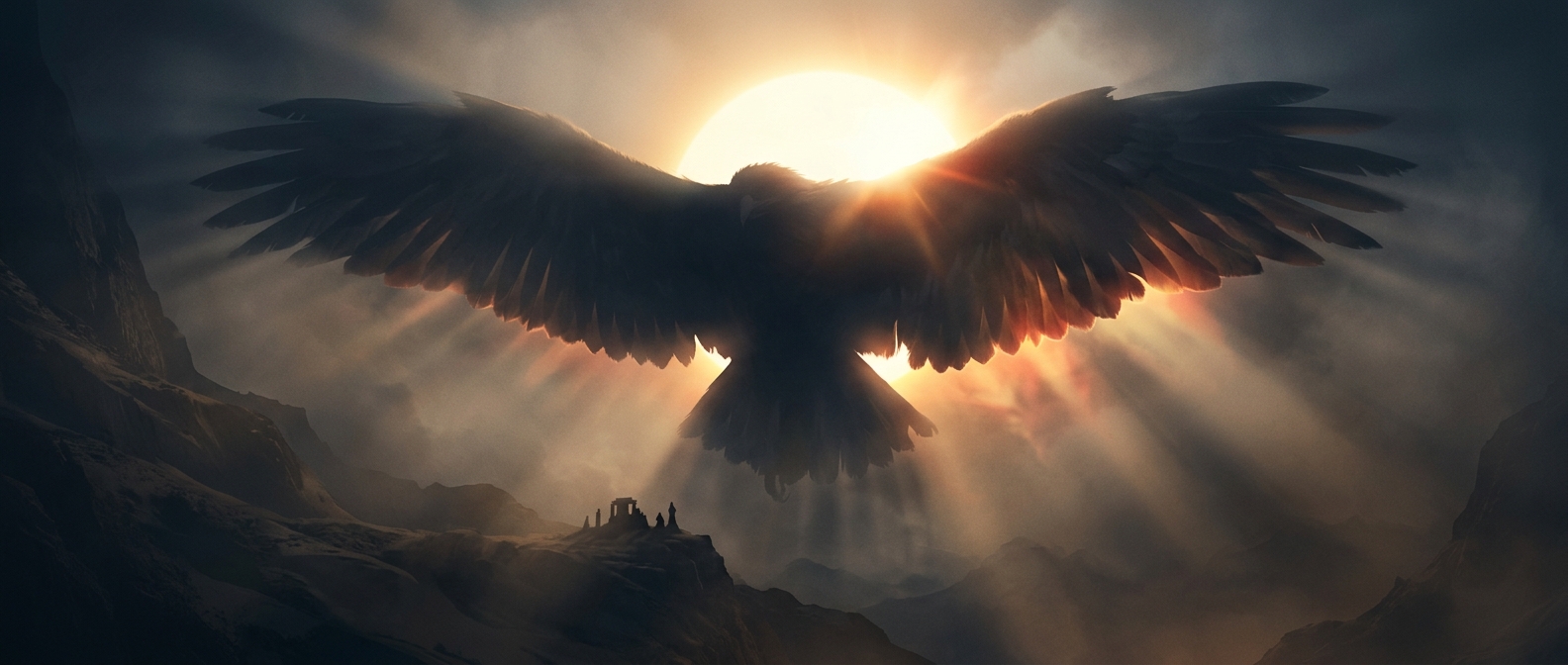
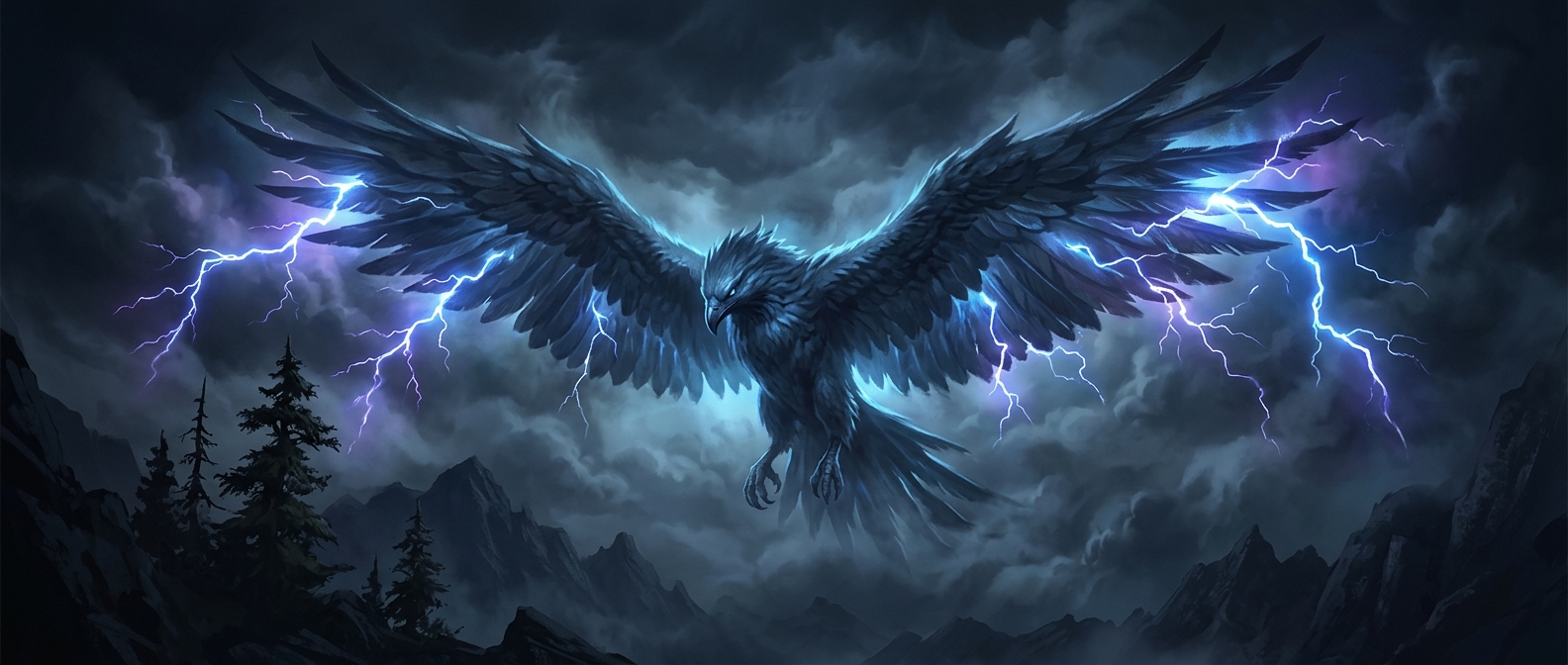
In some Indigenous North American traditions, the Thunderbird gives thunder and lightning a living presence: a vast being whose actions can be heard and seen across the sky. Stories that describe thunder as the beat of its wings or lightning as a flash from its eyes turn a distant, frightening weather event into an encounter with a powerful creature.
That image is more than a poetic explanation of noise and light. It makes the storm part of a world inhabited by beings with agency, rather than an impersonal backdrop. The Thunderbird’s scale also gives weather a fitting force: a wingbeat large enough to shake the sky suggests power beyond ordinary human control.
No single Thunderbird story
“Thunderbird” is a broad English label, not the name of one identical character shared by every Indigenous nation. Accounts and meanings vary among communities; particular stories may connect the being with protection, danger, or the ordering of the world. The details about lightning-shooting eyes belong to some tellings, not to a universal version.
That variation matters because these are living cultural traditions, not one fixed mythology. In a given story, the Thunderbird can make a storm intelligible while also expressing a community’s understanding of power and its relationship to the natural world. When thunder rolls overhead, the image invites listeners to hear more than weather: they hear the presence of a being whose immense movement makes itself known in the sky.