Why Apsaras Appear in Stories of Meditation
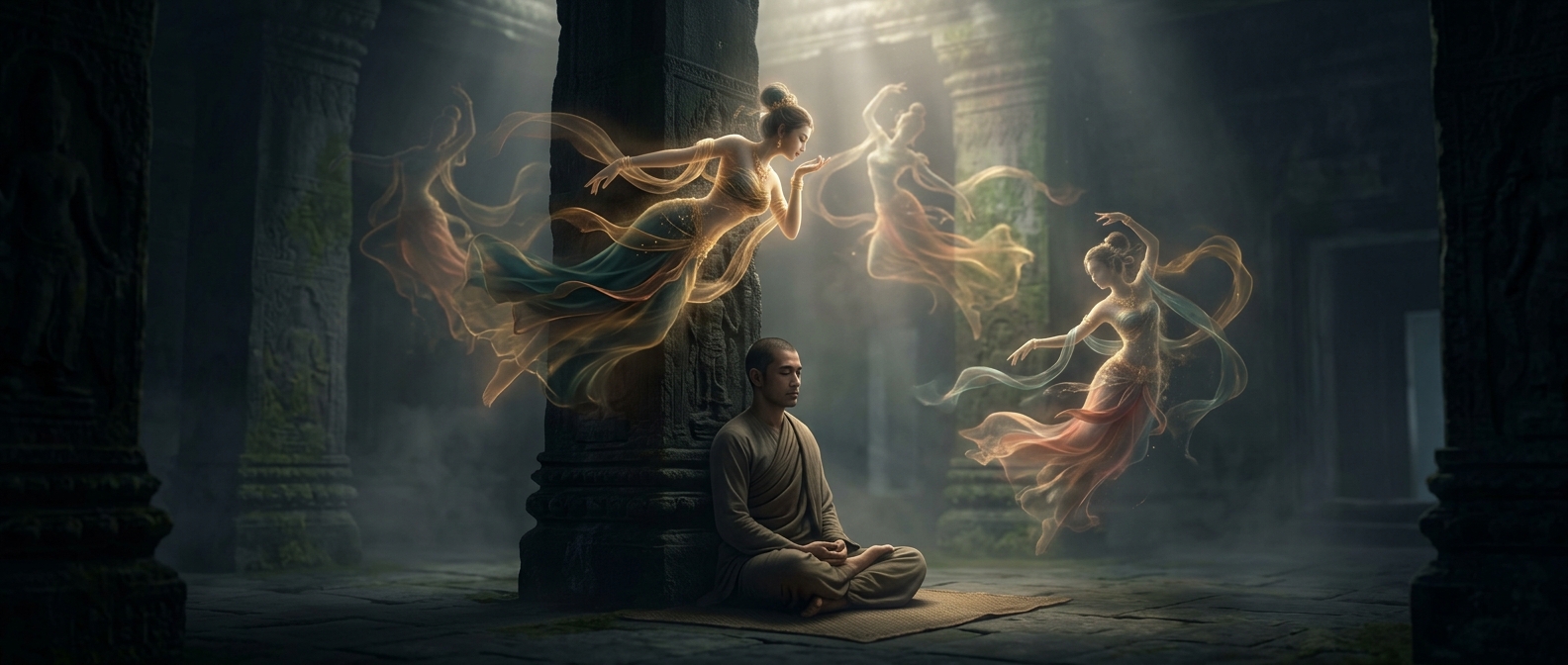
In Hindu and Buddhist traditions, apsaras are beautiful celestial beings associated with dance, music, and heavenly courts. Some tales send them to distract ascetics—people who have withdrawn from ordinary life to pursue spiritual discipline. The encounter turns meditation into a test: can a person remain focused when desire, beauty, or worldly pleasure suddenly seems close at hand?
A Test of Self-Control—and Divine Anxiety
These episodes are not simply about romance. An ascetic’s intense practice may be portrayed as giving him spiritual power, so a ruler of the gods may fear that his discipline could threaten the existing order. Sending an apsara to interrupt that practice dramatizes a conflict between concentrated spiritual ambition and the attractions of ordinary life.
The stories also make an inward struggle visible. Meditation requires attention, but attention can be pulled away by vivid sensations and thoughts. An ascetic who shuts his eyes is using a concrete act of restraint: he tries to block the stimulus before it can take hold. That gesture does not prove the temptation has vanished; it shows how difficult maintaining focus can be.
What the Motif Makes Visible
Apsara stories give abstract ideas—desire, discipline, and the consequences of power—a memorable scene. The dancer represents a temptation that arrives from outside, while the meditator’s response reveals the strength and limits of his resolve. The tension is the point: spiritual discipline is portrayed not as effortless escape from the world, but as a struggle over what deserves one’s attention.