Garuda and the Nagas: More Than Predator and Prey
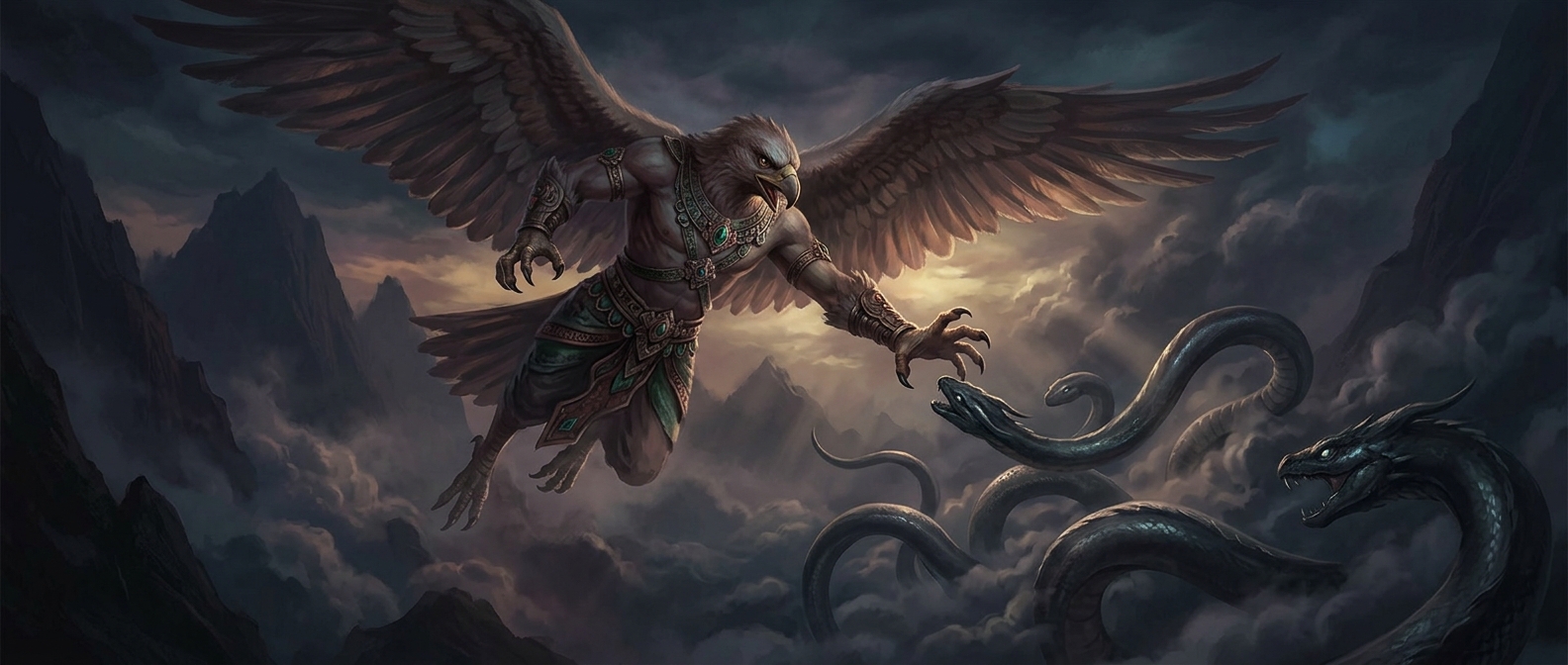
Garuda is a powerful, birdlike divine being in Hindu tradition, often shown with a human body, wings, and a beak. The serpent beings he hunts are Nagas: supernatural, often shape-shifting figures associated with snakes, water, and hidden realms. They are not simply oversized animals, so their conflict carries meaning beyond a chase through the sky.
A Rivalry Rooted in a Family Story
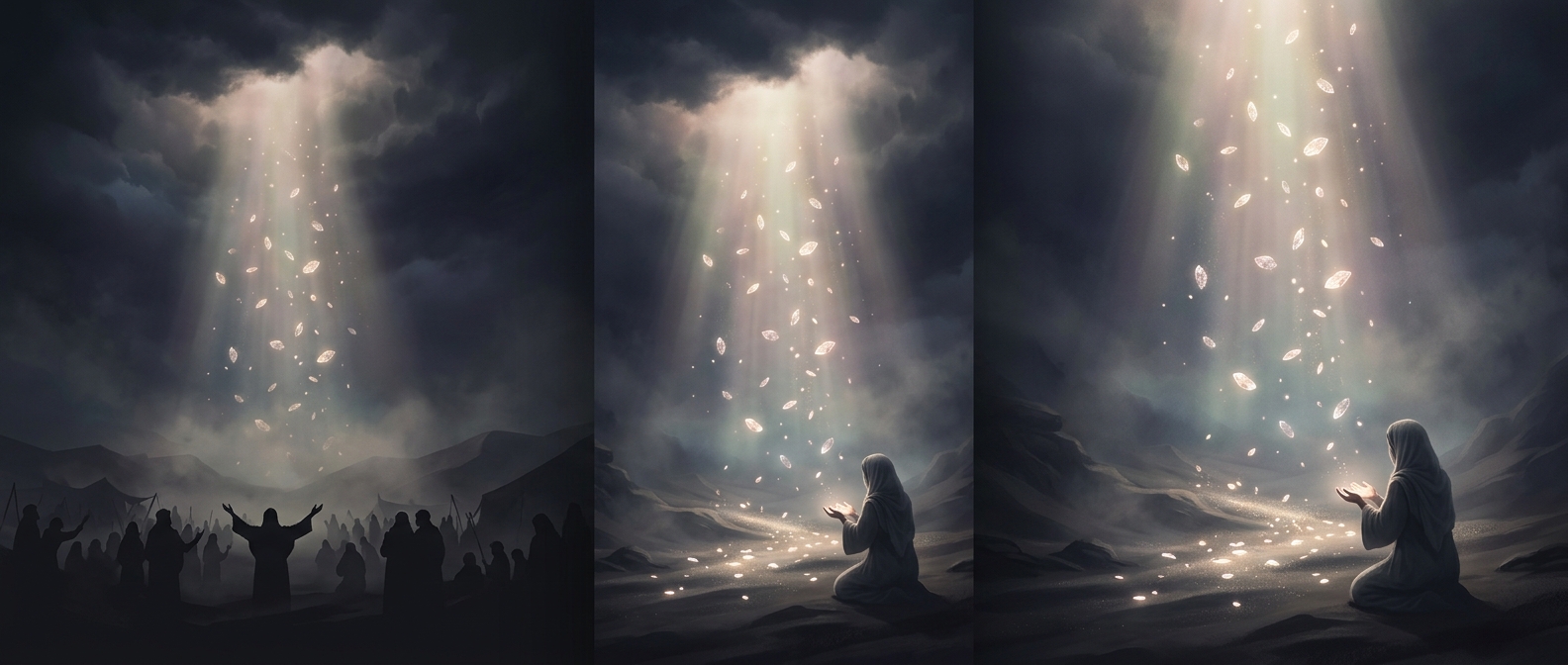
In a major version of the legend, Garuda’s mother, Vinata, is forced into servitude to the Nagas after losing a wager to their mother, Kadru. Garuda seeks a way to win her freedom. The Nagas demand amrita—the divine nectar of immortality—as the price. He obtains it through a perilous quest, but the nectar does not become theirs to keep; the episode instead leads to his mother’s release and his lasting enmity with the serpents.
This backstory makes the hunt personal. Garuda’s attacks are not just a display of strength: they continue a feud born from captivity and a bargain. The tale also makes him a figure of rescue and independence, not only a fearsome enemy.
Why the Image Endures
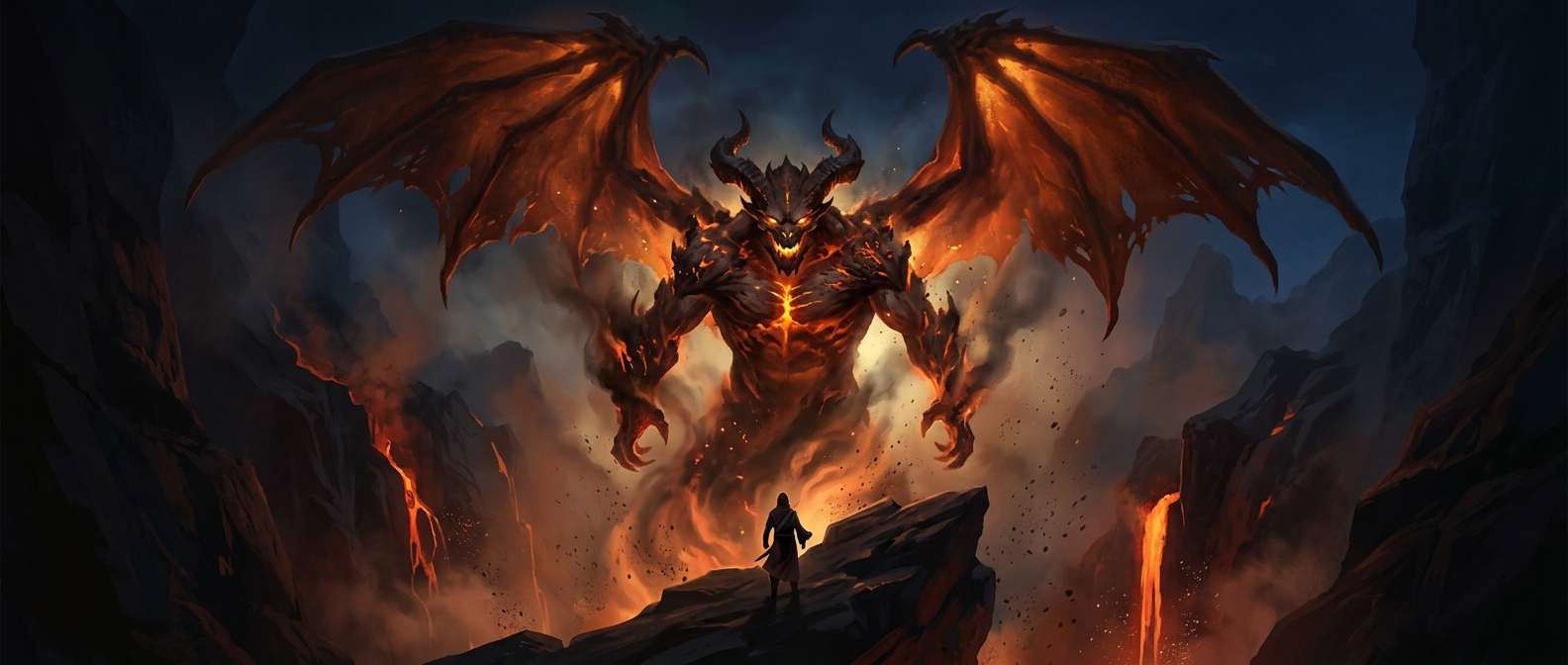
The contrast is striking: a creature of the open sky against beings linked to water, earth, and concealed places. In art and storytelling, their opposition gives visible form to a larger contest between rival powers. Details vary across traditions, but the image of Garuda swooping down on Nagas condenses the legend’s enduring tension into one scene: freedom in flight confronting a serpentine force below.