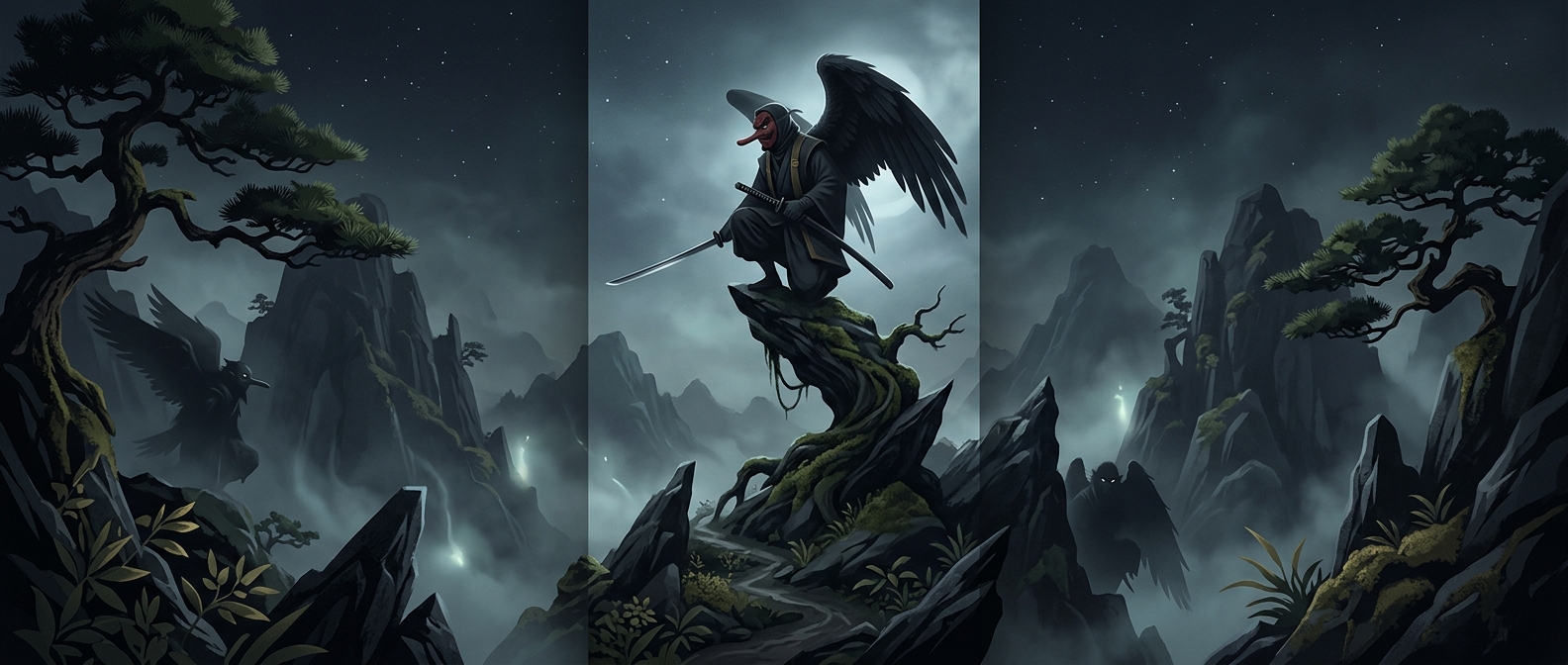
Tengu turn mountain manners into a moral boundary
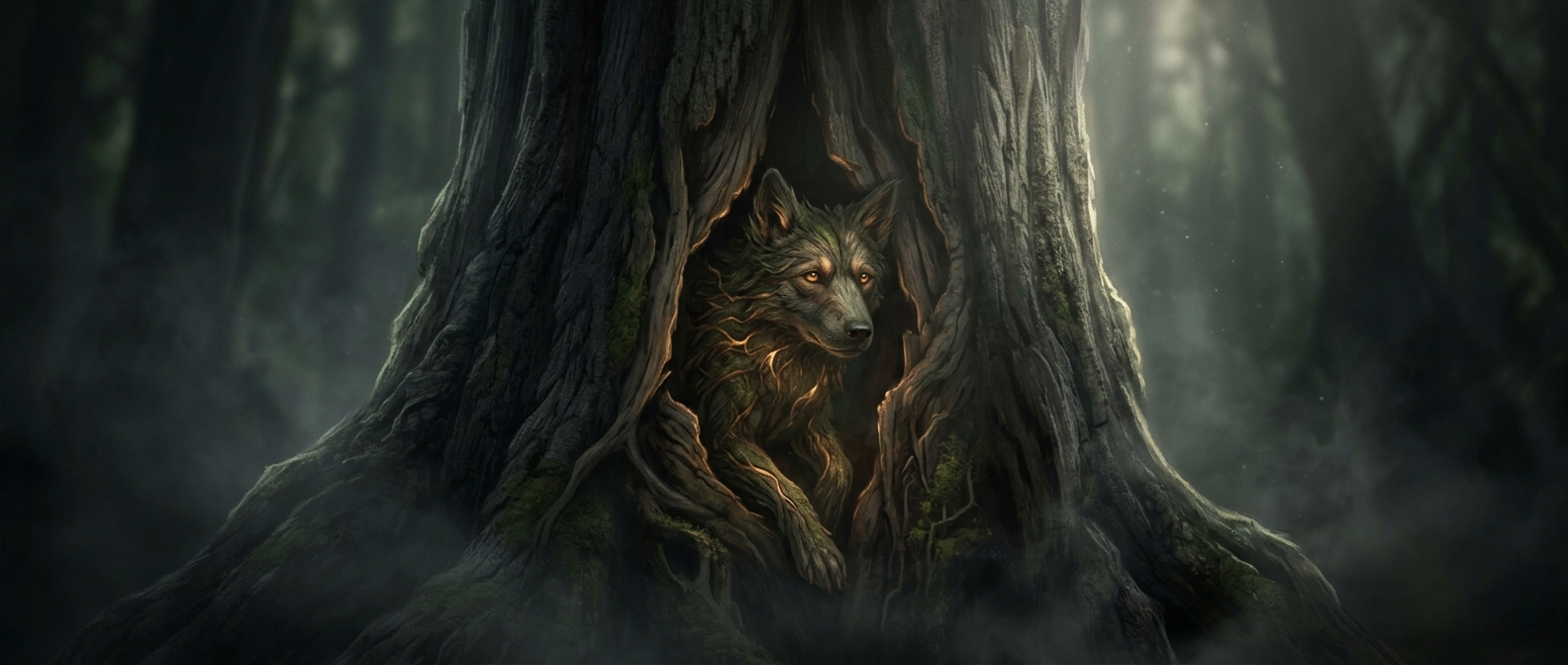
Calling tengu “goblins” is convenient, but it can obscure their place in Japanese folklore. They are yōkai—supernatural beings in traditional stories—and their forms vary, often appearing either birdlike or humanlike. In tales set in the mountains, they are not simply monsters waiting to attack: they can act as guardians who judge how people behave in a place treated as powerful and set apart.
A supernatural consequence for careless conduct
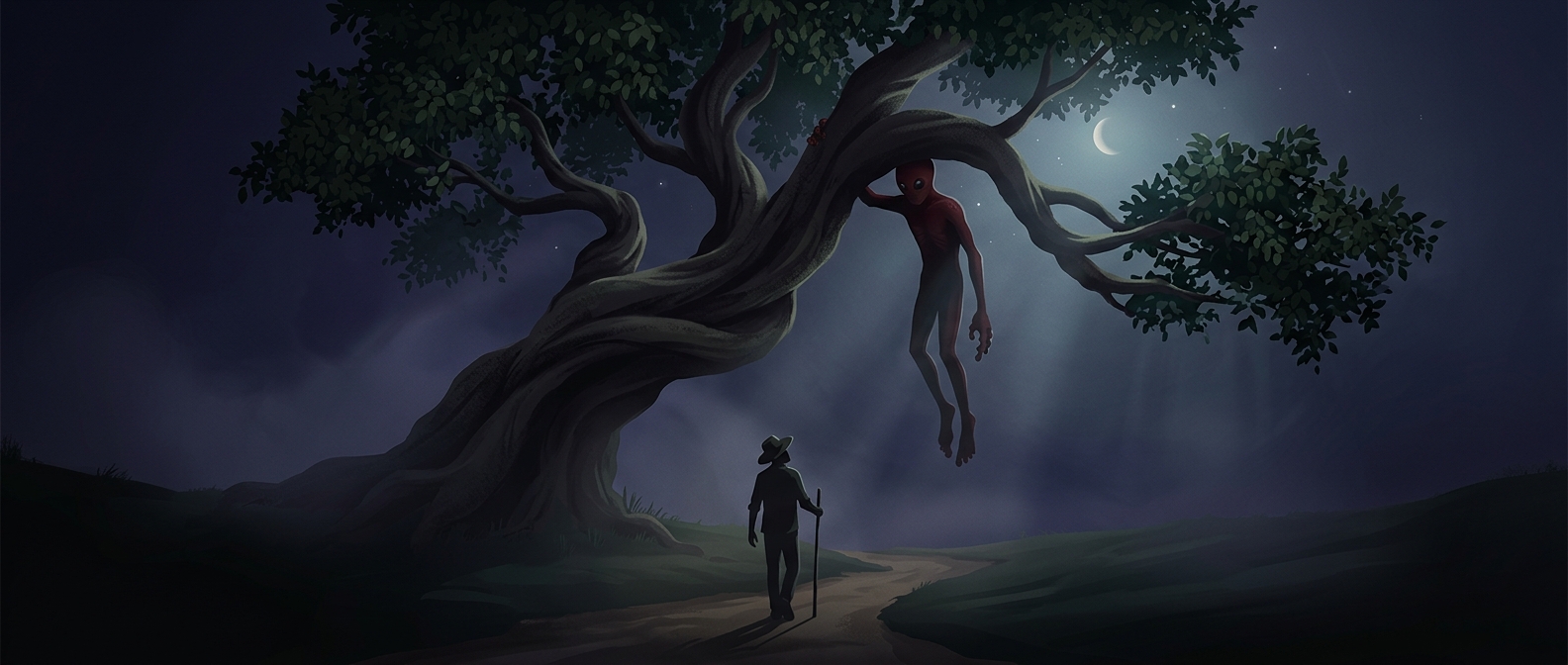
A traveler who treats a mountain as ordinary terrain—acting arrogantly, disrespecting sacred places, or ignoring local expectations—may find that the landscape seems to answer back. Tengu stories give that danger a face. The threat of punishment makes good conduct feel consequential even when no human authority is watching.
That lesson sits alongside a practical reality: mountain paths can be hazardous, and visitors may not know the customs of a place. Folklore does not replace trail rules or explain every version of tengu belief, but it can make caution memorable by turning disrespect into a personal encounter with an uncanny protector.
The mountain is more than a backdrop
Tengu are frightening partly because they blur the line between wilderness and moral territory. A mountain is not just scenery to cross; in these stories, it has its own claims on visitors. The memorable implication is that getting lost or punished may begin not with a wrong turn, but with behaving as though the place belongs to you.