A wild beast with a moral purpose
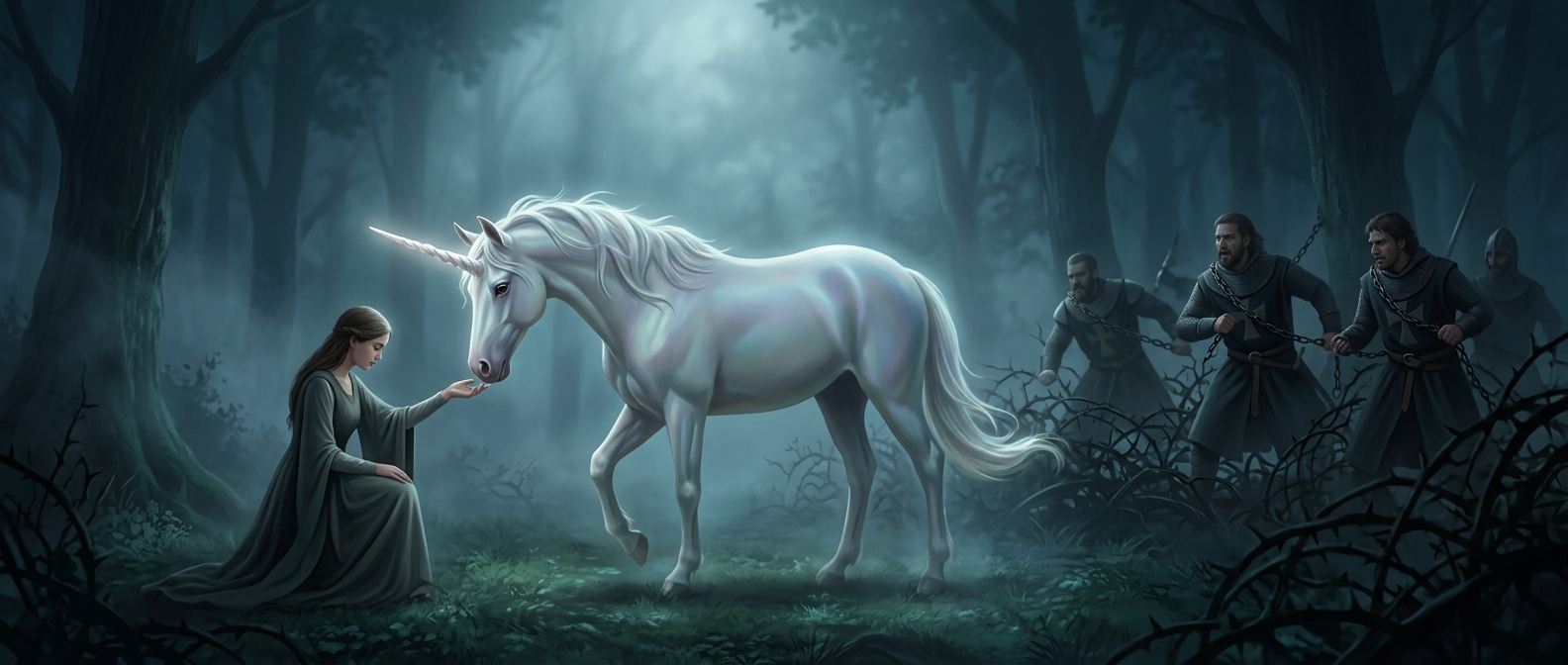
A medieval bestiary was more than a catalog of animals: it paired descriptions of creatures with lessons about faith and conduct. Its unicorn could be fearsome in the hunt, but the maiden changed the scene. Rather than overpowering the animal, she made it approach willingly, turning capture into a story about the power of purity and gentleness.
From hunting tale to Christian symbol
In Christian readings, the unicorn’s submission to a virgin could represent Christ entering the world through the Virgin Mary. The beast’s strength suggested power; its willingness to be held suggested humility and voluntary sacrifice. The image therefore made an abstract religious idea visible: something mighty could accept vulnerability without being defeated by force.
Not every account used the creature in precisely the same way, and bestiaries mixed inherited lore with religious interpretation rather than documenting a real animal. But the maiden was more than a convenient way to catch a unicorn. She made its change in behavior carry the meaning of the tale.
Why the contrast mattered
The sharp contrast between a beast that could threaten an elephant and one that would rest beside a maiden gave readers a memorable lesson: strength and gentleness were not opposites. In the bestiary’s moral world, the unicorn’s most revealing act was not its charge, but its choice to lower its guard.