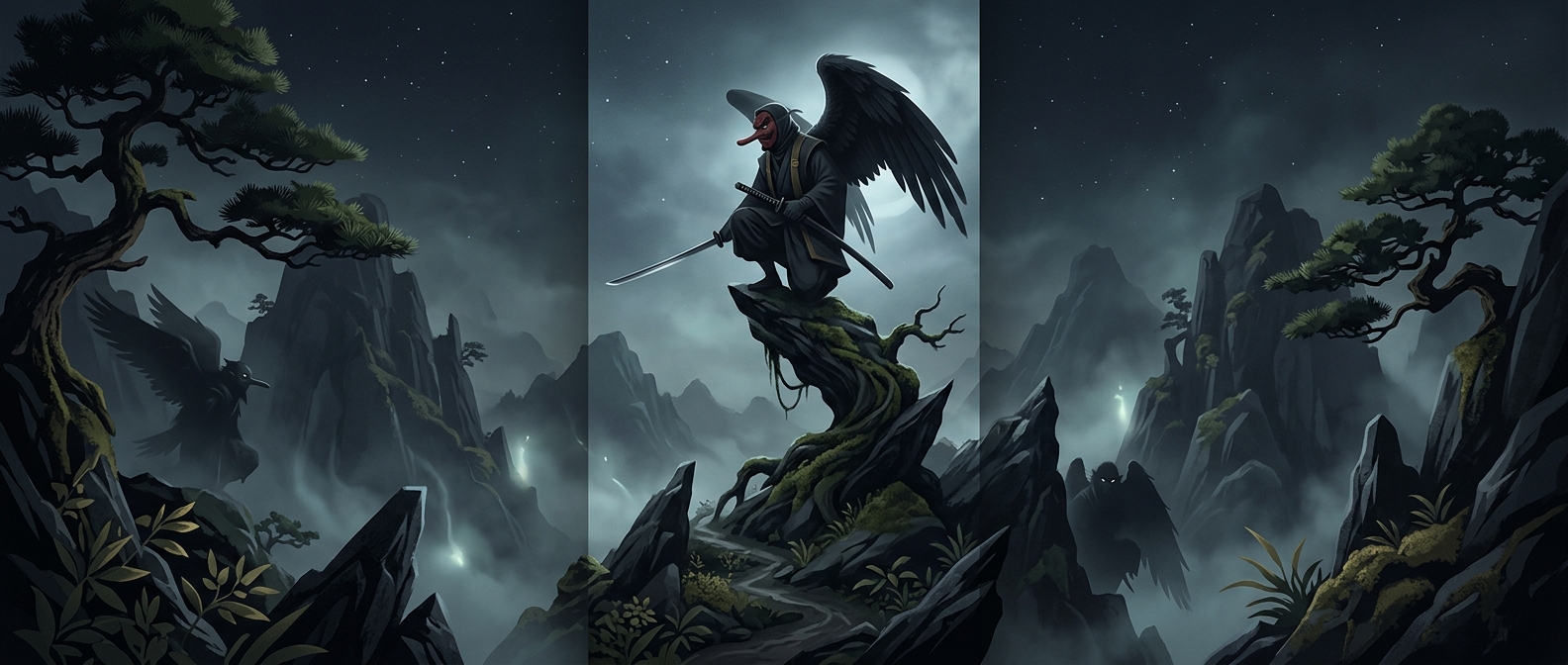
The Tikbalang Turns a Familiar Trail Strange
In Philippine folklore, the tikbalang is often imagined as a towering, horse-headed being that misleads people traveling through wooded or mountainous places. Its trick is not simply to frighten a passerby: it makes the traveler lose direction, so a known path can seem to lead somewhere unfamiliar.
That image gives a name and a face to a disorienting experience. In dense woods, landmarks can disappear behind trees, trails can branch or bend, and fatigue can make it harder to judge where you are. The story transforms that uncertainty into an encounter with a deliberate trickster—one that seems to know the landscape better than the person crossing it.
A Folklore Figure, Not One Fixed Story
The tikbalang belongs to a broader world of Filipino folk belief, but tellings differ. Details about its appearance, behavior, and how people might respond to it can change from one account to another. The enduring feature is the unsettling reversal: the traveler expects the trail to guide them, yet the trail seems to lead them in circles.
The creature’s mountain setting matters. A remote path already demands attention and can make a wrong turn consequential; the tikbalang makes that vulnerability memorable. In the tale, getting lost is not just a mistake—it is the sign that the landscape has become an active participant.