Mana is power understood through relationships
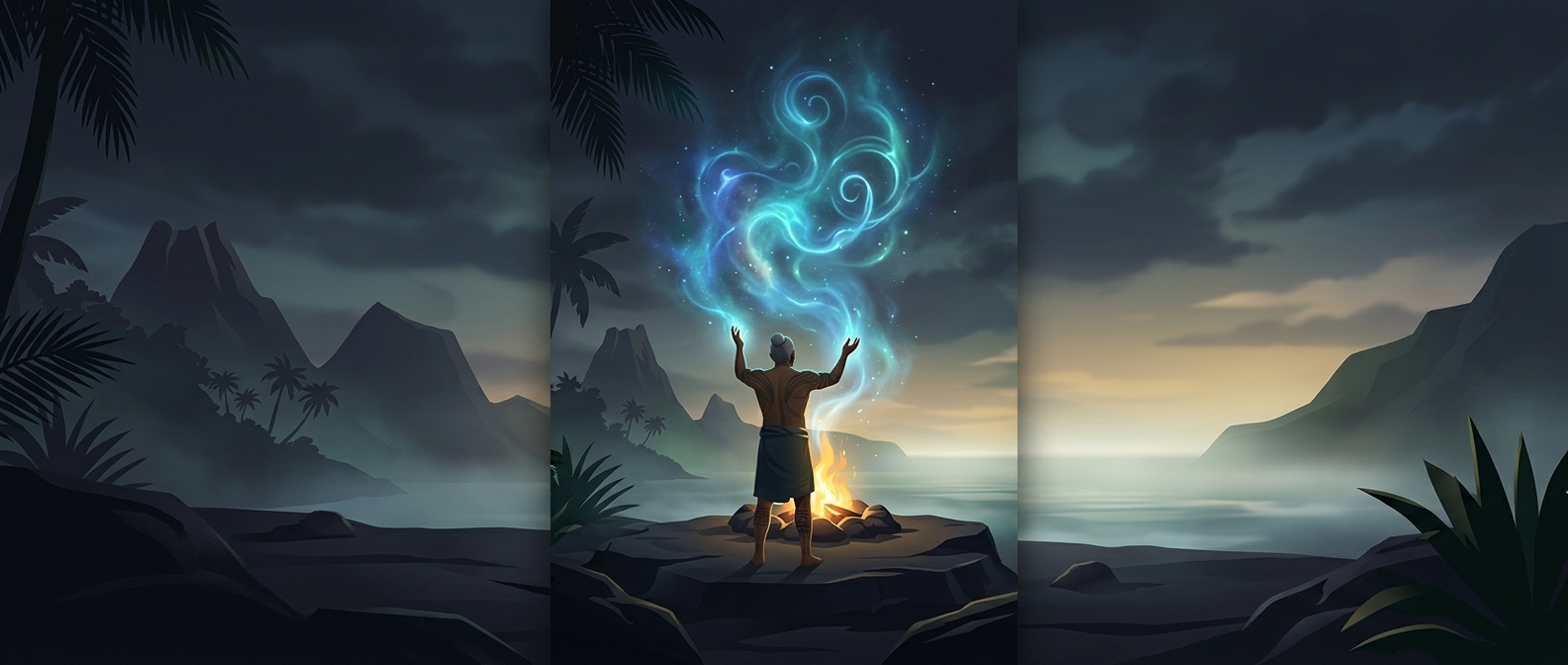
In many Polynesian traditions, mana refers to a sacred or supernatural potency: the capacity associated with a person, place, object, or act to carry authority and have effects. It is not simply an invisible substance stored inside someone. Its meaning varies across communities, and it is best understood within the particular tradition using the term.
How mana can be strengthened—or diminished
Mana may be connected to ancestry and rank, but it can also be demonstrated through conduct, achievement, leadership, or success. A person’s actions can uphold their standing and influence; failures or harmful behavior can weaken it. In this sense, mana is not just a private quality. It is recognized and sustained through relationships among people, ancestors, communities, and the places they belong to.
That helps explain why an object or location might also be described as having mana. Its significance may come from its history, its association with an ancestor or leader, or its role in communal life—not from a measurable force like electricity.
More than a game mechanic
Video games often turn mana into a visible resource that a character spends to cast spells. That is a convenient design metaphor, but it narrows a culturally varied idea into a personal energy bar. In traditional contexts, mana can describe authority and efficacy bound up with social and spiritual relationships—something whose importance is shown by how people treat one another and the places they share.