A Small Idea With a Strong Game Loop
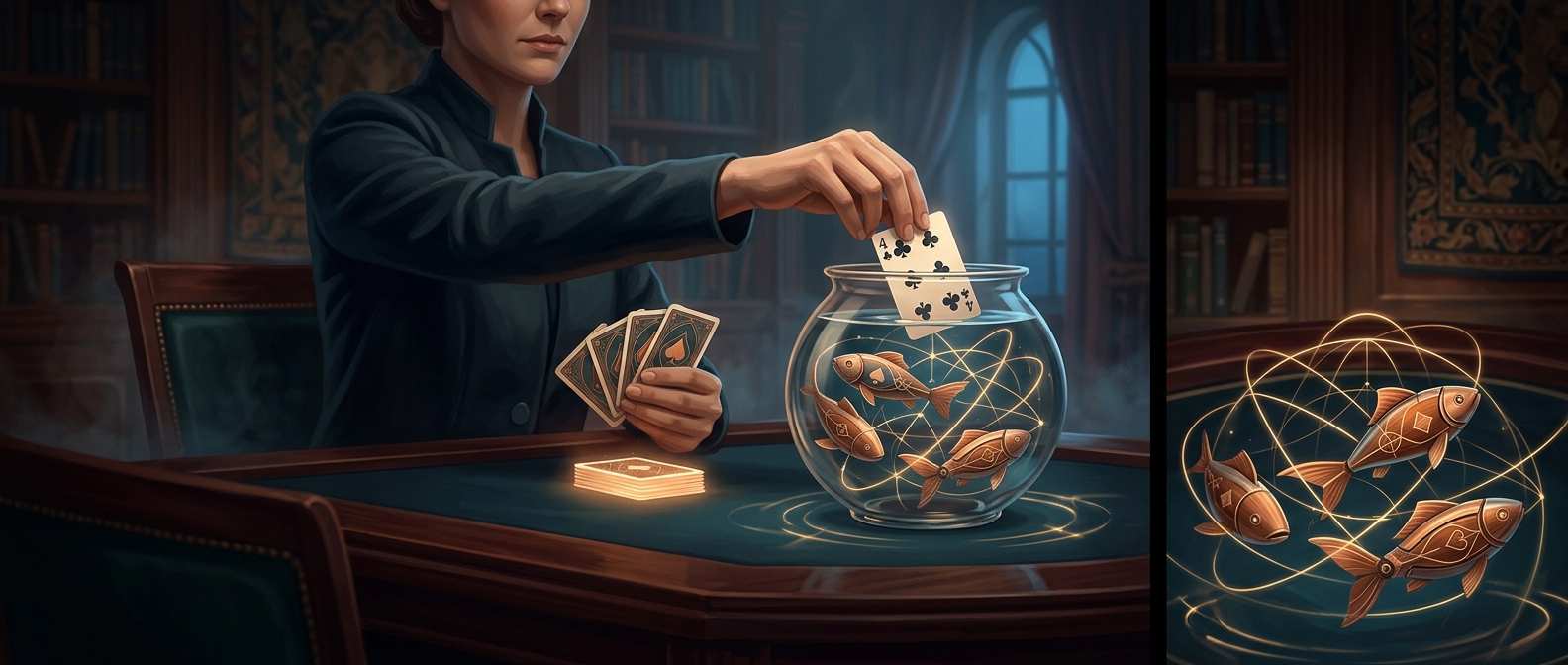
Go Fish turns a simple question—“Do you have any?”—into the engine of play. A player asks someone else for a rank of card they already hold. If the other player has it, they hand over the matching cards; if not, the asker draws from the deck. In common versions, players collect sets of four cards of the same rank.
That exchange makes each turn do two jobs: players try to complete a set, and they learn something about what their opponents might be holding. A failed request is not just a setback; it changes what the asker knows. The rules need little equipment beyond a deck, and the central action is easy to understand without reading a long rulebook.
Why an Eight-Year-Old Origin Sounds Plausible
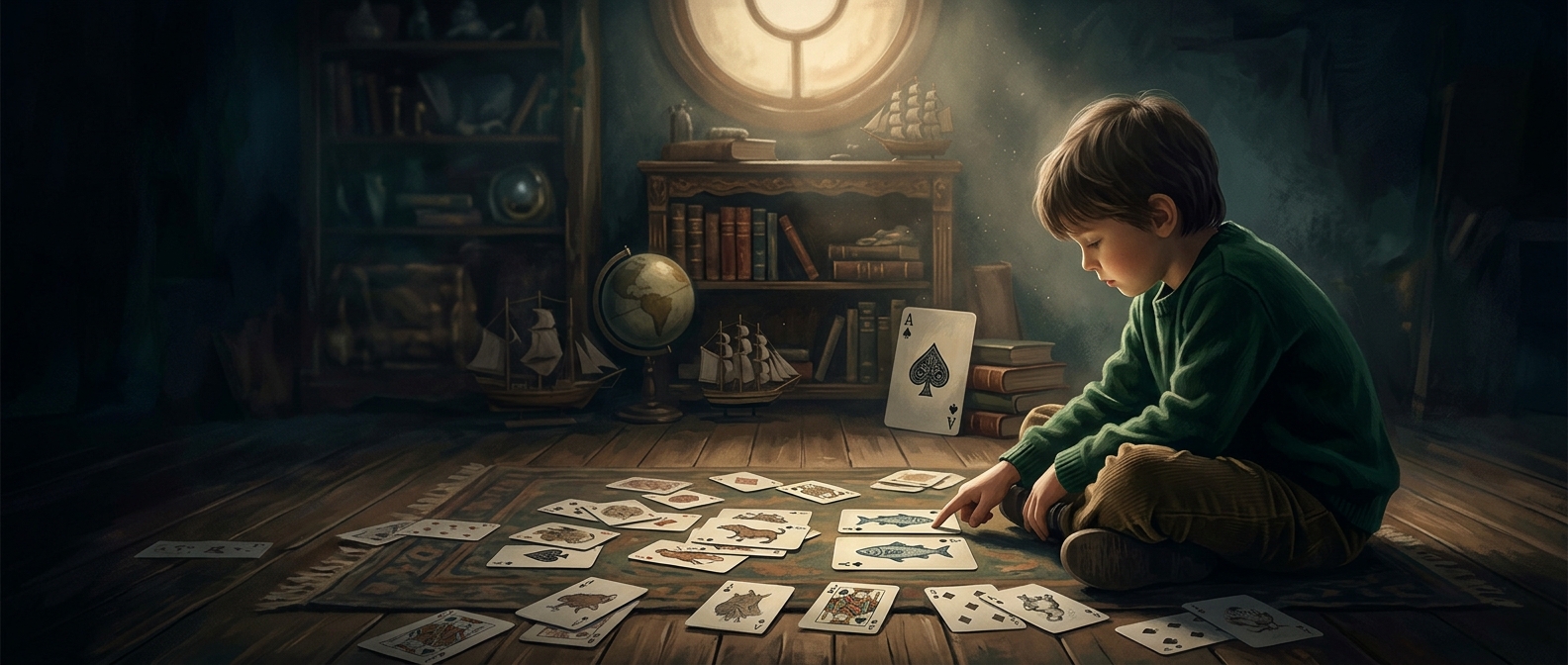
One account credits an eight-year-old with inventing the game in the 1980s. The attribution is best treated as an account of the game’s origin, not as a fully documented design history. Still, the game’s appeal does not depend on elaborate rules or specialized strategy: it grows from a familiar social act—asking someone for something and finding out whether they have it.
That simplicity also leaves room for children to make decisions. They can remember earlier answers, choose whom to ask, and decide which rank to pursue, while the draw rule keeps a turn moving when a request fails. The result is a game whose basic rhythm is simple enough to teach quickly, but whose next question is always a small gamble.