Why Pinochle Keeps the Nines
Pinochle’s deck is built around cards that matter often. It contains two copies of every rank from nine through ace in each suit, for 48 cards total. The lower cards are left out, so a hand is less crowded with ranks that rarely decide a trick or contribute to a score.
That cutoff also keeps the deck compact without making it sparse. Players still have enough cards to build combinations and compete over tricks, but the important ranks appear more frequently than they would in a standard deck.
The Duplicate Cards Shape the Game
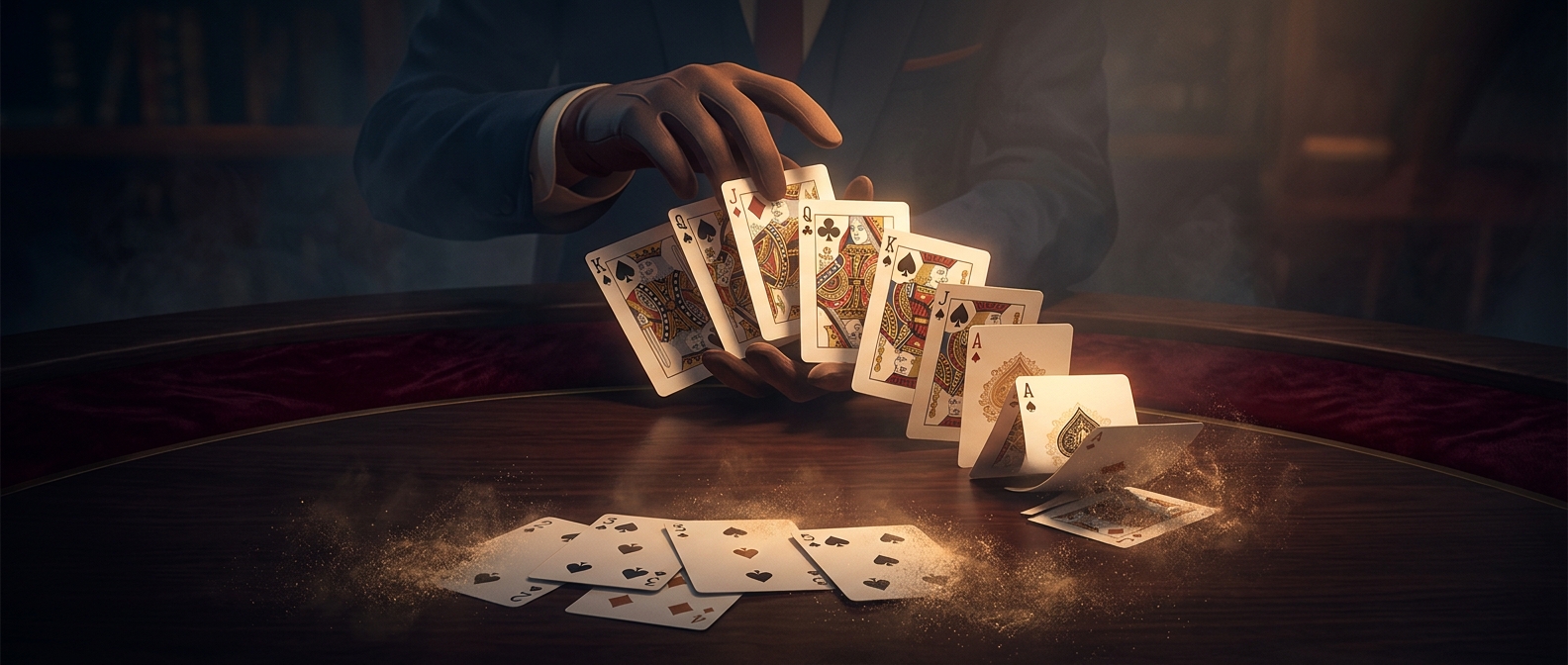
Pinochle is both a trick-taking game—players play one card each, and the strongest card of the led suit usually wins—and a game of melds, scored combinations held in a player’s hand. A run of ace, ten, king, queen, and jack in one suit, for example, is a meld; so is a queen and king of the same suit.
Because each card appears twice, players can hold duplicate copies of a high card or combination. That changes the decisions: a player may value a card for its meld now, its strength in a later trick, or both. The nines remain in the deck as the lowest rank, but they do not carry the trick-taking or scoring weight of the cards above them.
The result is a deck where even the bottom rank belongs to the game’s active range. Removing the cards below nine is not just a way to make a smaller pack; it concentrates play around the ranks that drive Pinochle’s scoring and contests.