Teresa of Ávila and the heat witnesses described
Accounts of Teresa of Ávila’s religious ecstasies sometimes included a striking physical detail: people nearby reportedly saw snow melt around her. In sixteenth-century Spain, such a scene could be read as evidence that an intense spiritual experience had bodily effects. It also posed a practical puzzle for physicians, who had no modern way to measure body temperature or distinguish a person’s internal heat from the effects of clothing, shelter, or the surrounding conditions.
Why an ecstatic state could look physical
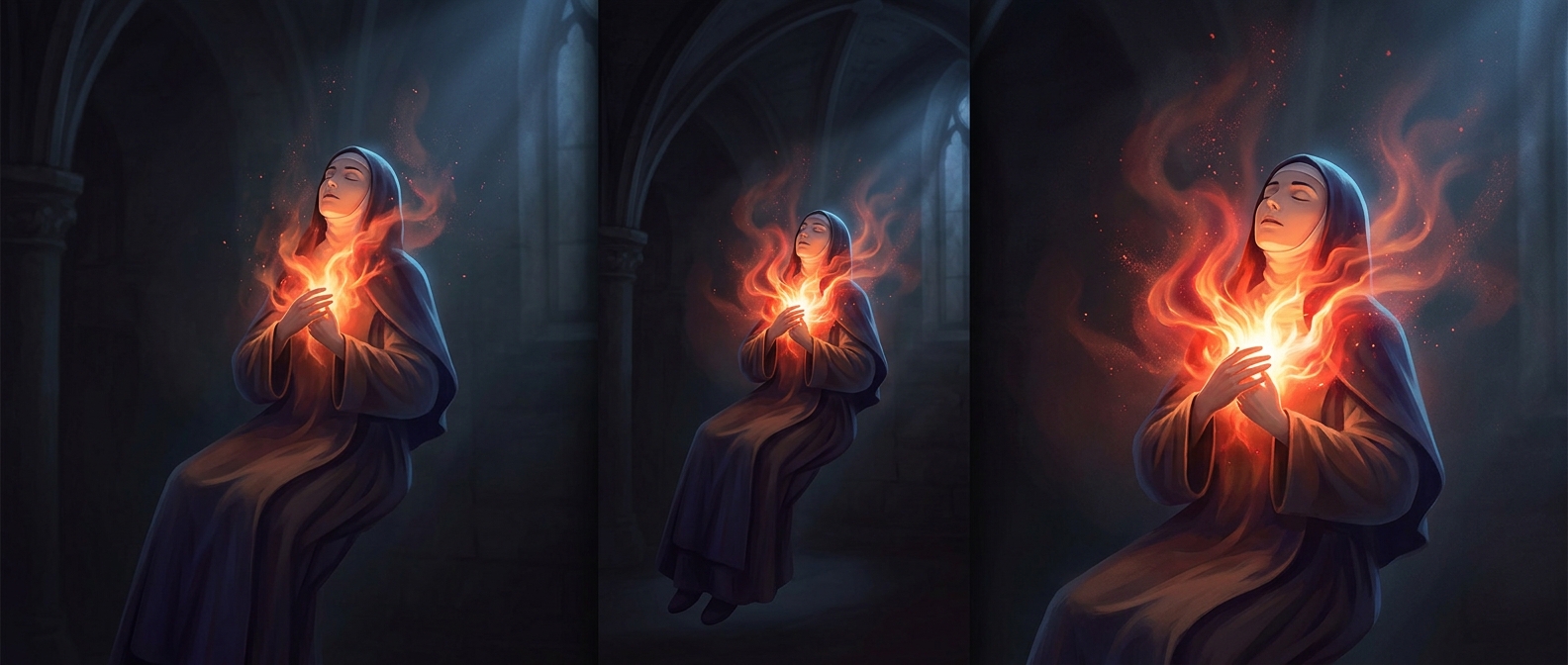
An ecstasy is an experience in which a person becomes absorbed in religious contemplation and less responsive to ordinary surroundings. Teresa’s episodes were described as involving powerful emotion and altered awareness, not simply quiet prayer. Those visible signs made the experience something observers could debate: was it a spiritual event, a bodily condition, or both?
The reported melting of snow gave that debate a vivid, tangible focus. Yet the account does not establish that Teresa’s body became hot enough to melt snow by itself. Snow can melt when exposed to warmth from many nearby sources, and a historical report generally cannot tell us the exact temperature, duration, or conditions involved. What it does reveal is how witnesses tried to interpret an extraordinary episode using the explanations available to them.
A spiritual experience becomes a medical question
For Teresa and those around her, bodily signs mattered because they could help distinguish a genuine religious experience from illness, deception, or ordinary emotion. Physicians were asked to consider what they observed, while religious observers weighed its spiritual meaning. The same event could therefore be both a medical puzzle and a claim about faith.
The snow detail endured because it turns an inward experience into a scene anyone could picture: a woman in ecstasy, snow nearby, and witnesses asking what had caused it to melt.