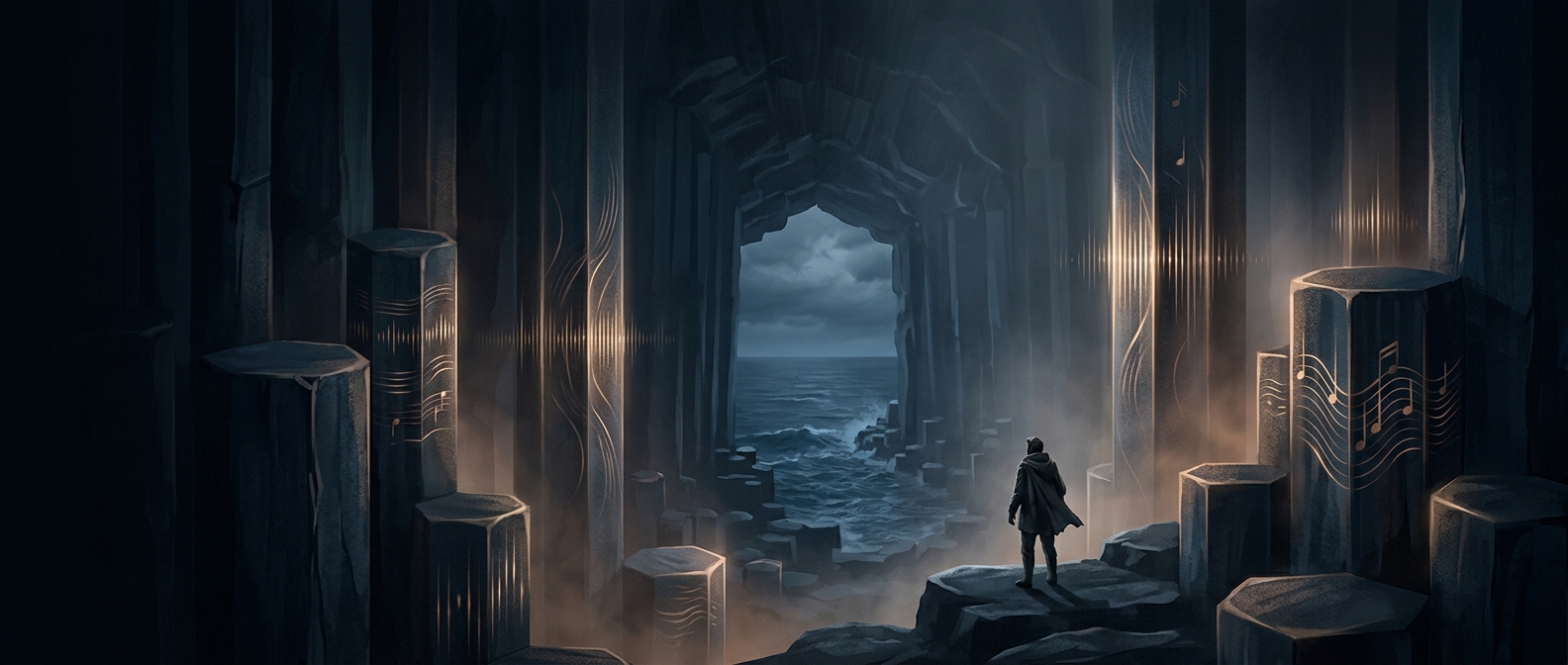
A cave shaped to send sound back
At Scotland’s Fingal’s Cave, the sound is shaped by the space as much as by the waves. The cave’s entrance opens toward the sea, while its high, enclosed interior gives sound hard surfaces to strike and return from. Basalt does not absorb much of that energy, so a wave’s crash can linger as its reflections arrive in quick succession.
Why the echo feels musical
The cave is not producing a note in the way a musical instrument does. Instead, overlapping reflections stretch and color the irregular roar of the water. The basalt columns break up the walls’ surfaces, while the cave’s overall shape helps carry sound through the chamber. The result can seem unusually ordered: a burst of surf becomes a resonant wash rather than disappearing at the entrance.
That effect depends on the conditions. The strength and timing of the echo change with the waves, the water level, and where a listener stands. The “cathedral” quality is therefore not a fixed soundtrack but a meeting between a particular chamber and moving sea—one that makes the cave’s architecture audible.