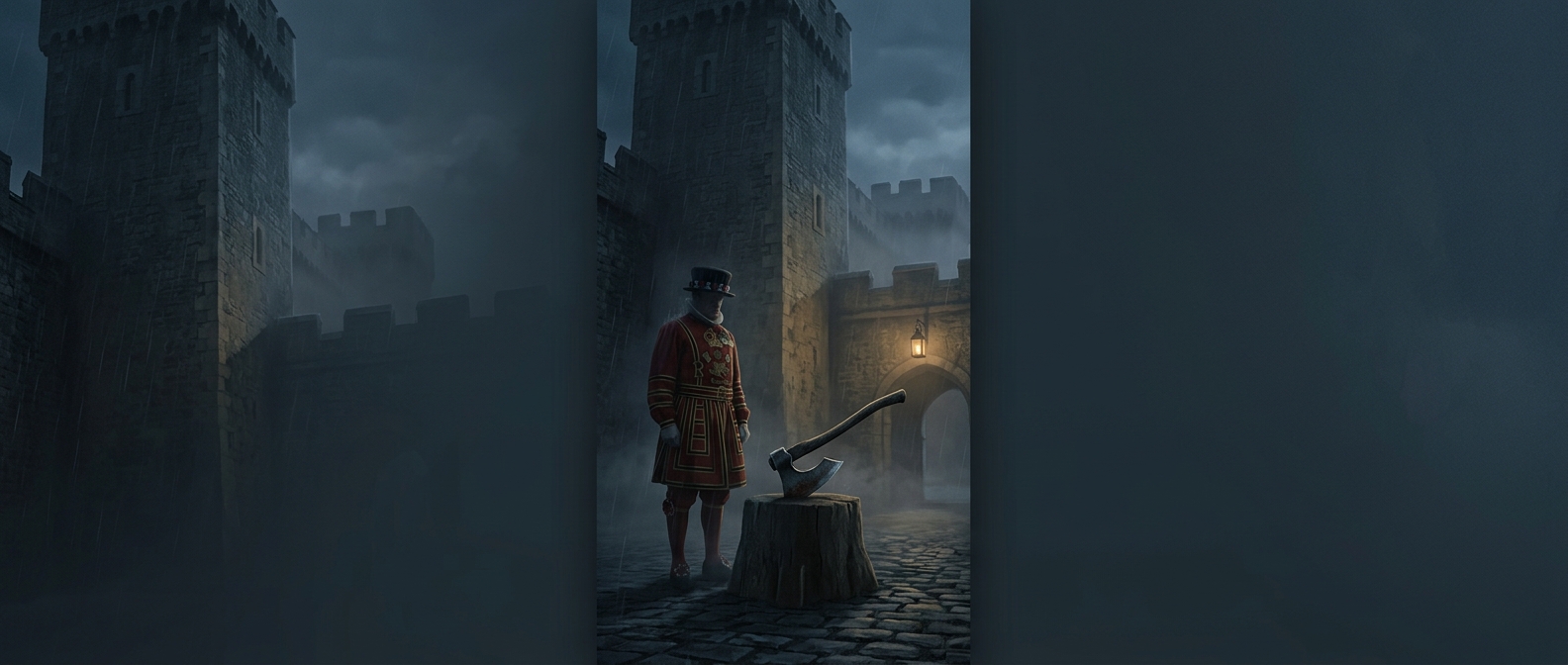
Two execution sites, two kinds of spectacle
The Tower of London was not simply a prison: it was a royal fortress and political stronghold, where people accused of treason or other threats to the Crown could be confined. Its walls also shaped how executions were staged. Some took place inside the complex, on Tower Green, while others were carried out at Tower Hill, just beyond the fortress walls.
The distinction mattered. An execution on Tower Hill could be witnessed by a crowd; one inside the Tower was more controlled and private, though not necessarily secret. Anne Boleyn, Henry VIII’s second wife, was beheaded on Tower Green in 1536. Her execution shows how the Tower’s grounds could serve as a stage for the punishment of a person whose status made a public street-side spectacle less fitting.
Why beheading carried meaning
Beheading was a familiar form of execution for people of high rank in England. It was intended to be quicker than hanging, but it was still a public act of state power: the condemned person’s body made the consequences of defying the Crown visible. The Tower’s role as both prison and execution site brought that threat close to the center of royal authority.
Today, visitors encounter lawns and historic buildings where confinement and punishment once took place. The contrast is part of the site’s history: behind a fortress’s impressive walls, political power could mean both protection for the monarch and captivity for those judged dangerous.