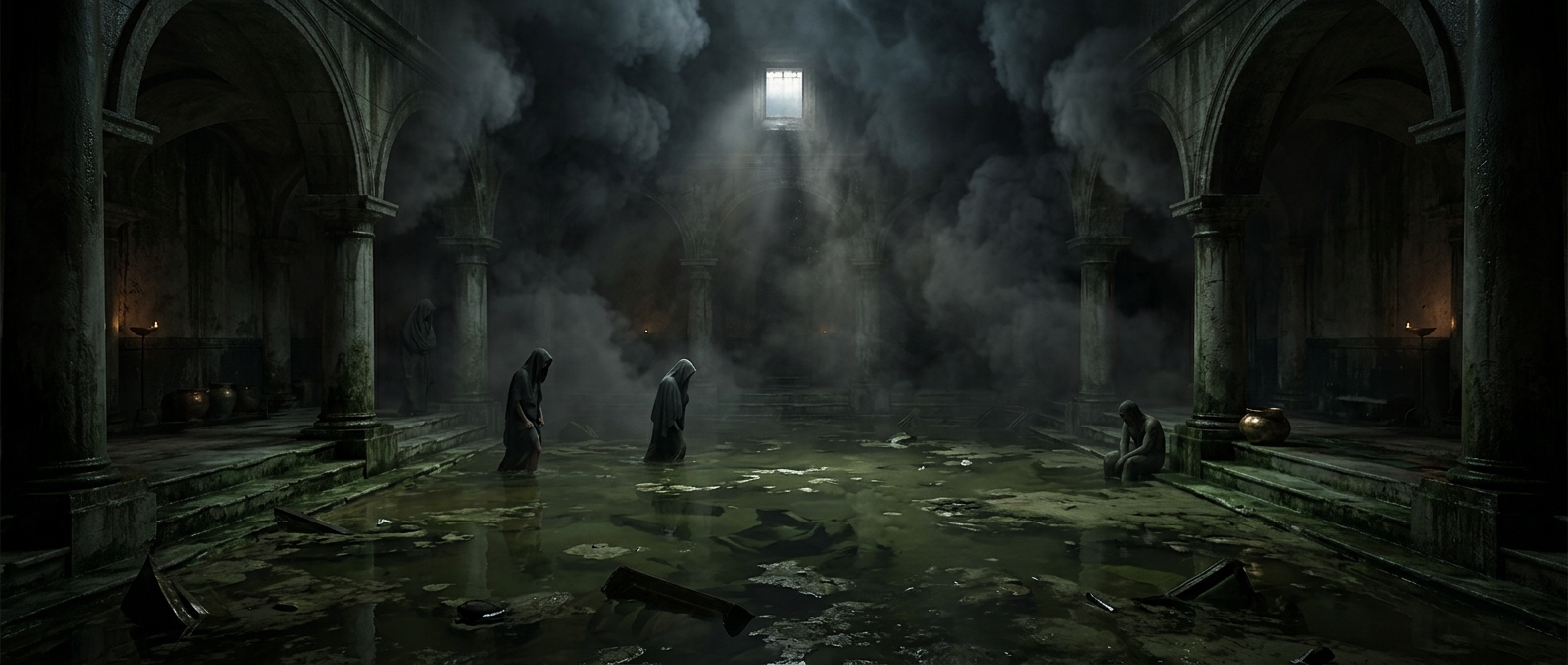
What Bathers Carried Into the Pool
A Roman bath was a sequence of rooms and activities, not simply a place to step into clean water. In a common bathing routine, people warmed up, rubbed oil onto their skin, and scraped it away with a curved tool called a strigil. The tool lifted sweat, dust, and oil from the body—but in a shared pool, whatever remained on bathers could end up in the water too.
That made the pool part of the bath’s social life as well as its plumbing. People soaked and mingled in water used by others, so a grand setting did not guarantee water that looked or felt pristine. The same warm water that made bathing comfortable also gathered the residue of many bodies.
Cleanliness Took More Than Marble
Bath complexes depended on systems to heat and move water, and their upkeep could vary. Water might be refreshed or a pool emptied and cleaned, but those tasks took labor and coordination; they did not make every pool continuously spotless. Nor does a pool’s appearance reveal how recently it was cleaned or how many people had used it.
The contrast is what makes Roman baths memorable: elaborate architecture and communal leisure sat alongside an ordinary consequence of shared bathing. A visit could feel luxurious while the water held traces of the people who had bathed before.