Newgrange’s passage turns toward the midwinter sun
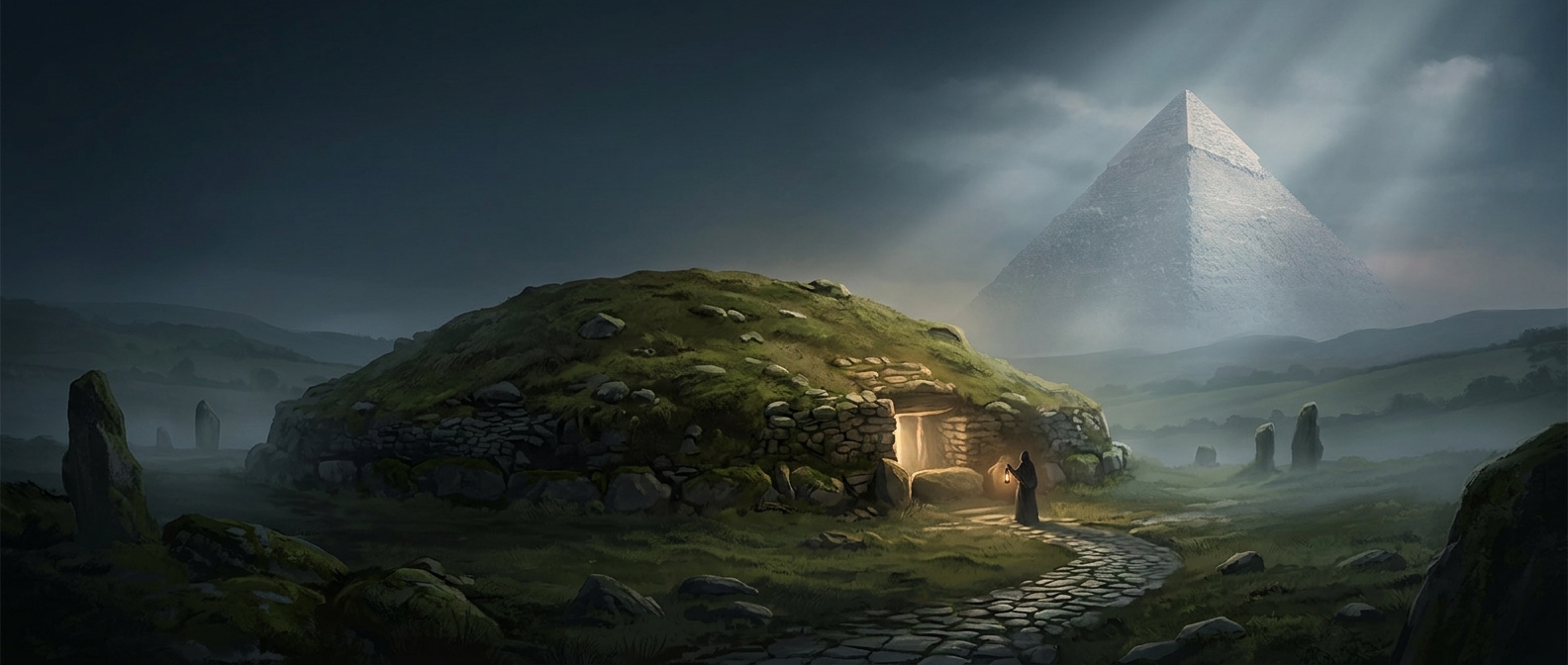
At Newgrange in County Meath, a long stone passage leads into a chamber beneath a great circular mound. Above the entrance is a small opening known as a roof box. Around the winter solstice—the shortest days of the year—the low-rising sun can send a narrow shaft of light through that opening and down the passage, briefly reaching the inner chamber.
The alignment is a physical feature of the monument, not just a modern interpretation of its shape. Building it required placing the passage and roof box so that sunlight could follow this particular path at dawn. The effect depends on the sun’s seasonal position; it does not happen in the same way throughout the year.
A brief beam, built into a vast tomb
Newgrange was constructed around 3200 BCE, thousands of years before the Egyptian pyramids at Giza. Its builders shaped and covered the chamber with a huge mound, then faced the exterior with stones. The careful solar alignment suggests that marking the turning point of the year mattered to the people who made the monument, though the precise meaning they gave the event is unknown.
The solstice illumination lasts only briefly, but it makes the mound’s scale feel purposeful: sunlight reaches a chamber buried inside a structure made of stone and earth. Today, visitors can see the passage and chamber, while access to the solstice sunrise is limited; the light itself remains a fleeting event, governed by the same horizon and season the builders observed.