The couch was part of the scene’s blocking
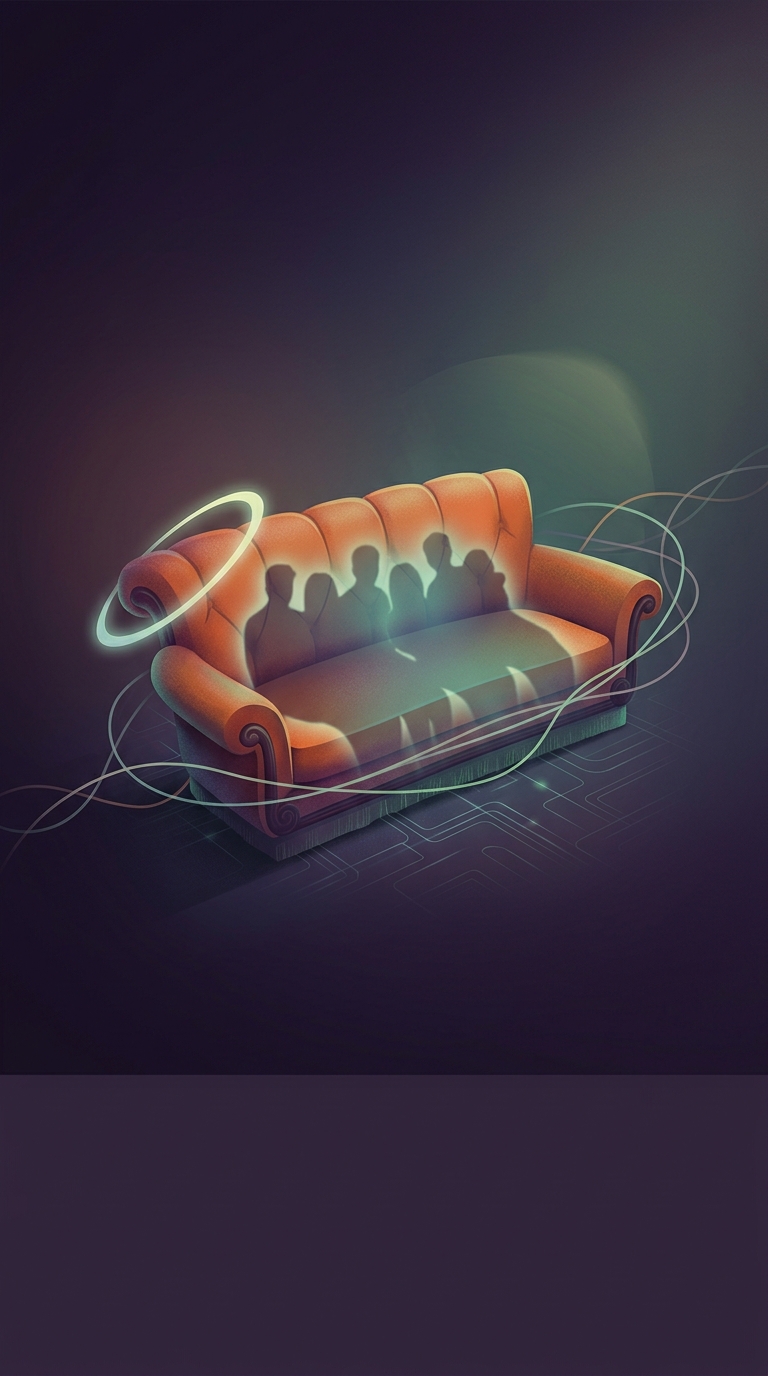
Central Perk was a working set, not a coffee shop where performers had to compete for a seat. In a sitcom, blocking—the planned movement and placement of actors—helps make each scene readable to both the studio audience and the cameras. The orange couch gave the six friends a familiar place to gather, so the performers could sit there when the scene called for it.
When the couch looked empty, that was often useful staging. A character could arrive, cross the room, and join the group; the open seat also made the central gathering spot easy to see. Filling every seat from the start would leave less room for those entrances and shifts in the conversation.
A set could be reset between takes
A filmed scene is repeated, adjusted, and shot again. The cast and crew return to their planned positions so that the action and camera views stay consistent. That makes an unoccupied couch less a matter of luck than a visual choice: the set could be arranged to leave it open until the moment the actors used it.
The couch’s importance came from that repeatable setup. It was more than a piece of furniture; it gave the show a recognizable “home base” where the friends could regroup. An empty seat, then, helped make the next arrival—and the familiar group settling in—part of the scene’s rhythm.