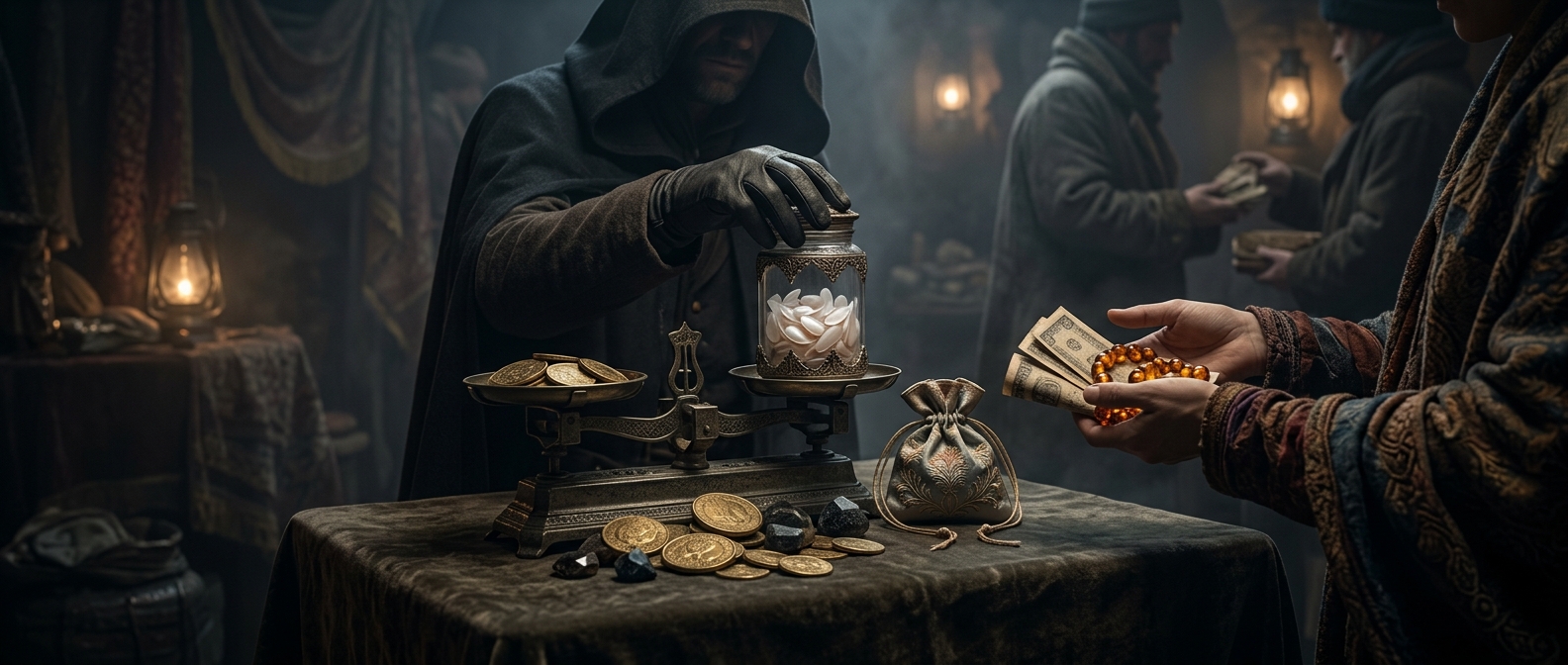
Why a Tiny Byproduct Can Become a Collectible
A clipped fingernail has almost no practical use, so its price is not about the material. It comes from what a buyer believes the object represents: a personal trace of a particular stranger, made collectible by being unusual and difficult to obtain through ordinary retail channels. In that sense, the item’s appeal resembles other keepsakes whose value depends more on association and rarity than on what they are made of.
How the Exchange Creates Value
The seller has an unusual supply: clippings are a byproduct of routine grooming, but a buyer cannot simply select them from a standardized stock. A marketplace makes that otherwise private material visible to potential purchasers and gives the seller a way to set a price. The buyer, in turn, accepts that the item has no widely agreed value; the price reflects an individual appetite for oddities, intimate memorabilia, or the novelty of owning something most people would discard.
That makes the transaction highly dependent on trust. A listing can describe what is being offered, but the buyer has limited ways to verify whose clippings they are or how they were handled. The object’s story may therefore matter as much as the object itself—while remaining difficult to prove.
A Market for Meaning, Not Material
This kind of sale shows how online marketplaces can turn a private bodily byproduct into a tradable collectible. The seller gains money from something normally thrown away; the buyer gets an object whose significance is personal rather than functional. Its value exists because someone is willing to assign meaning to it—and because a platform lets that person find a seller.