When the Music Wasn’t Enough of a Signal
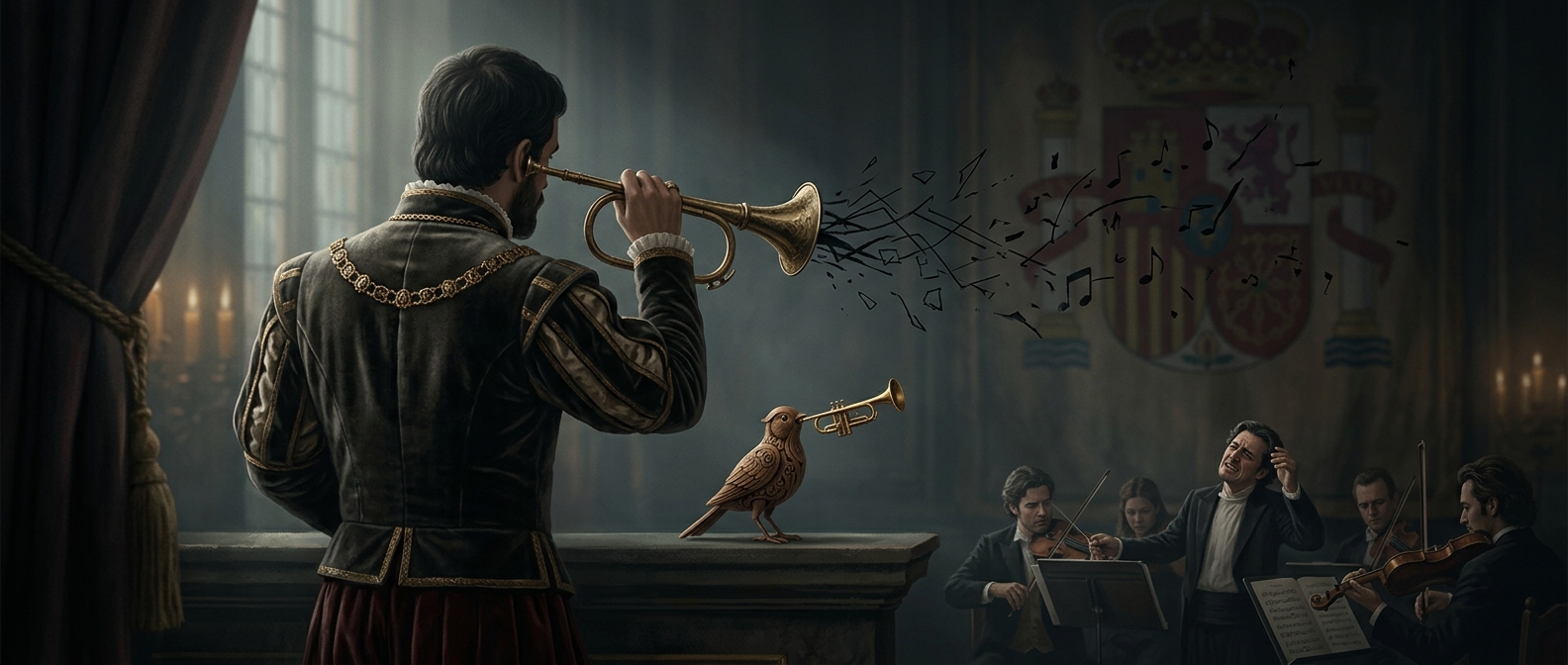
At a royal ceremony, standing for the anthem was not just a personal gesture; it was part of the public choreography. Everyone needed to move at the right moment, and the king’s response was especially visible. In Alfonso XIII’s case, the account says he did not recognize the anthem, so a courtier supplied a discreet physical cue: a nudge to stand.
That small intervention illustrates how court protocol depended on people, not just written rules. A musical performance could mark the moment, but if the person expected to respond did not identify it, someone nearby had to bridge the gap. The courtier’s job was effectively to turn an ambiguous signal into an unmistakable one.
A Practical Fix for a Public Moment
Spain’s anthem, the Marcha Real, is instrumental rather than a song with official lyrics. Without words announcing its subject, recognition rests on the tune and the setting. That does not explain why Alfonso XIII failed to recognize it, but it helps show why a human prompt could be useful in a formal gathering.
The nudge kept the ceremony moving without calling attention to the problem. In a court where every gesture carried meaning, a tiny cue could preserve the appearance of effortless protocol.