Damage Turns a Safety Net Into a Scramble
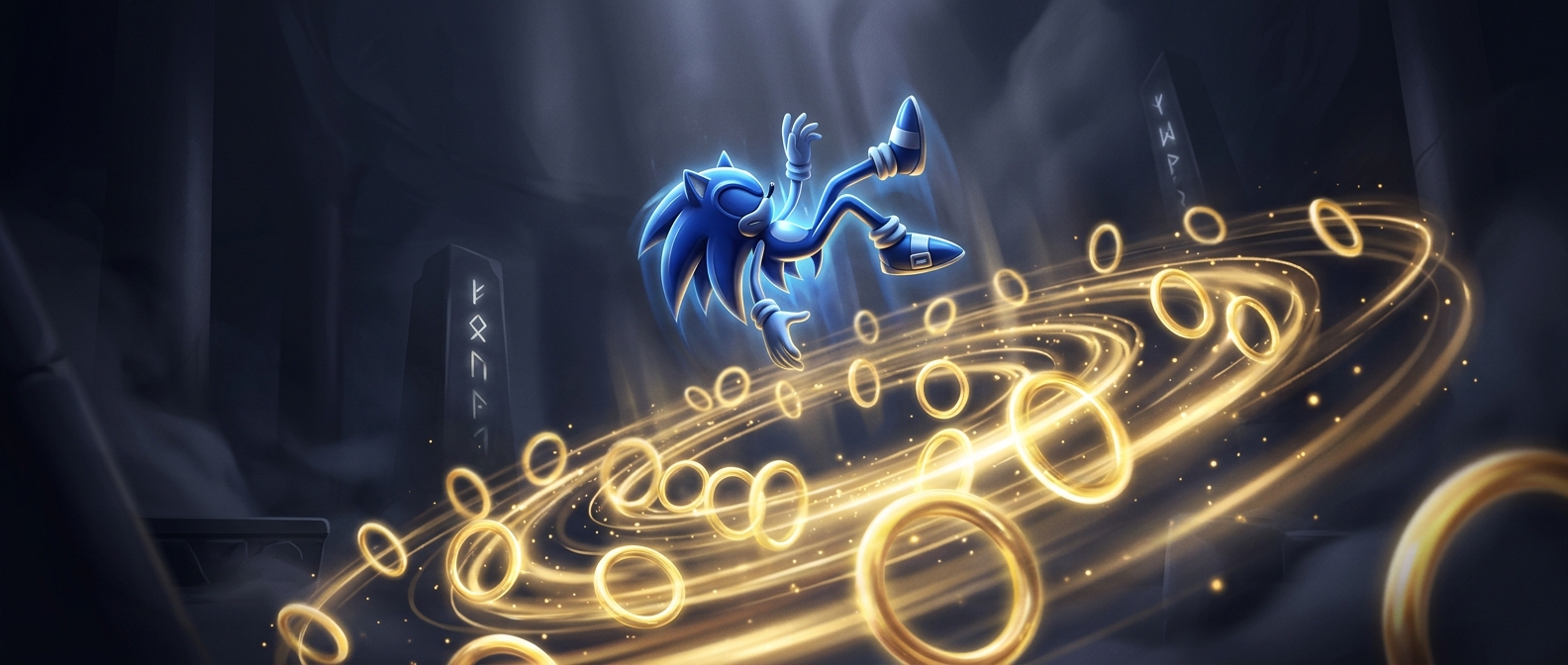
In many classic Sonic the Hedgehog games, rings do more than reward exploration: carrying at least one can let Sonic survive a collision that would otherwise cost him a life. Taking a hit spends that protection by flinging the collected rings outward. The player then has a brief chance to recover some before they vanish.
That creates a sharp change in the action. A hit is not always an immediate failure, but it can leave Sonic exposed and force the player to react while enemies, hazards, or moving platforms remain in play. The rings become both protection and a temporary recovery challenge.
Why Scatter Them?
A conventional health bar shows damage as a number shrinking. Scattered rings make the loss physical: they bounce across the level, sometimes landing within reach and sometimes tumbling into danger. The player must judge whether to chase them or keep moving. A single recovered ring may be enough to restore the basic protection, even if most of the stash is gone.
This also makes the game’s fast movement carry a cost. Speed helps Sonic race through a stage, but a careless collision can turn the route ahead into a scramble for the resources he just dropped. The mechanic makes damage visible—and gives the player one last, frantic chance to keep going.