How micro wrestling changes the ring
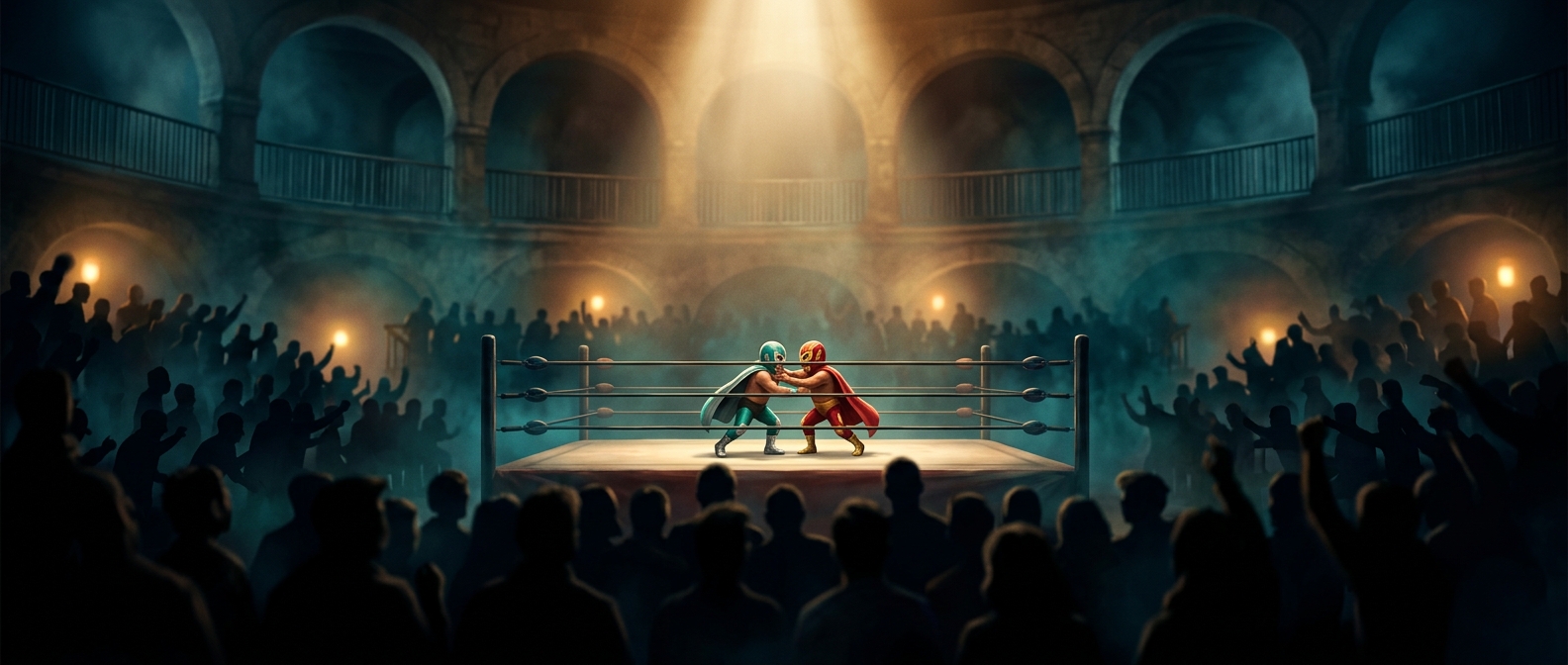
Micro wrestling is built around a useful contrast: the familiar scale of a wrestling ring and its ropes, paired with performers whose smaller stature changes how movement reads. A leap, tumble, or collision can look especially quick and dramatic when the action unfolds across a compact frame. The result is not simply a smaller version of a match; it is a different visual rhythm, with athletic movement and comic timing working together.
Athletic skill meets theatrical storytelling
Like other forms of professional wrestling, the action combines practiced physical performance with characters and staged conflict. A throw has to look forceful while being performed with control, and an acrobatic move needs both balance and precise timing. The crowd sees a story of rivals and reversals, not just a sequence of tricks.
That mix is part of the appeal of Mexico’s wrestling culture, where the ring becomes a theatrical space as much as a sporting one. Micro wrestling makes the mechanics unusually visible: performers use the ropes, turns, and sudden changes of pace to make each exchange legible from the audience. The memorable part is the contrast between the compact scale and the outsized drama—every fall or comeback feels like a beat in a live performance.