Breakable pots turn curiosity into a habit
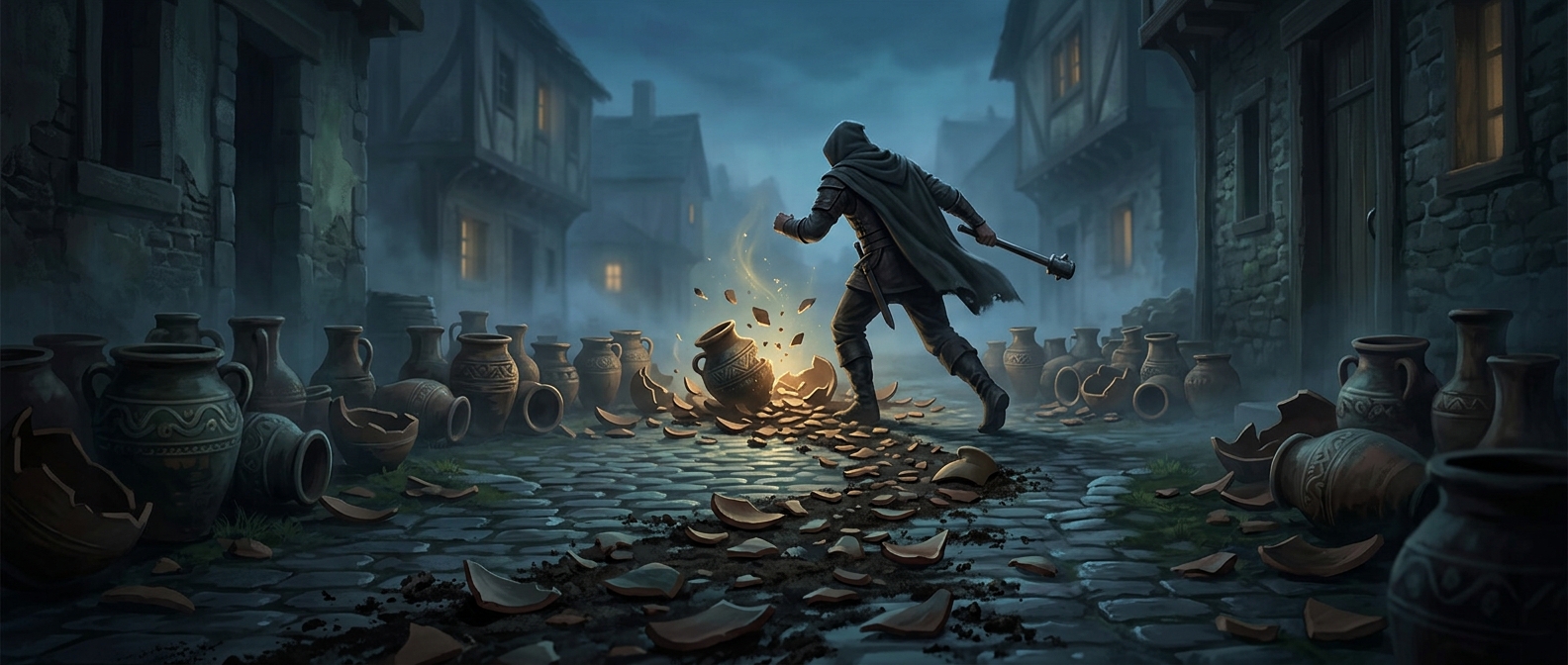
A pot is more than scenery once a game lets you hit it. It becomes a small experiment: the player acts, the object breaks, and the game gives immediate feedback. If coins, health, or another useful item appears—even occasionally—the player learns that similar objects may be worth checking. That lesson can persist long after the first reward.
The design works because the possible gain is visible while the cost seems small. A quick swing or button press takes little time, and a short crash or burst of fragments makes the interaction feel satisfying even when nothing drops. The player is not calculating the odds so much as responding to a simple possibility: perhaps this one contains something.
A tiny reward can change how a room is explored
Breakable containers give designers a way to place optional rewards without stopping the main route. A player who rushes ahead can keep moving; someone who searches every corner gets extra chances at useful items. The objects also make an environment feel interactive, turning a hallway or room into a series of small decisions rather than a static backdrop.
There is a tradeoff. If every container must be tested, exploration can become repetitive busywork. Designers can limit how often rewards appear, make containers easy to recognize, or vary the payoff so smashing them remains a choice rather than a chore. But once a game has taught players that an ordinary-looking pot might conceal a benefit, leaving the next one untouched can feel like risking a missed opportunity. One hidden item can make every similar pot afterward look different.