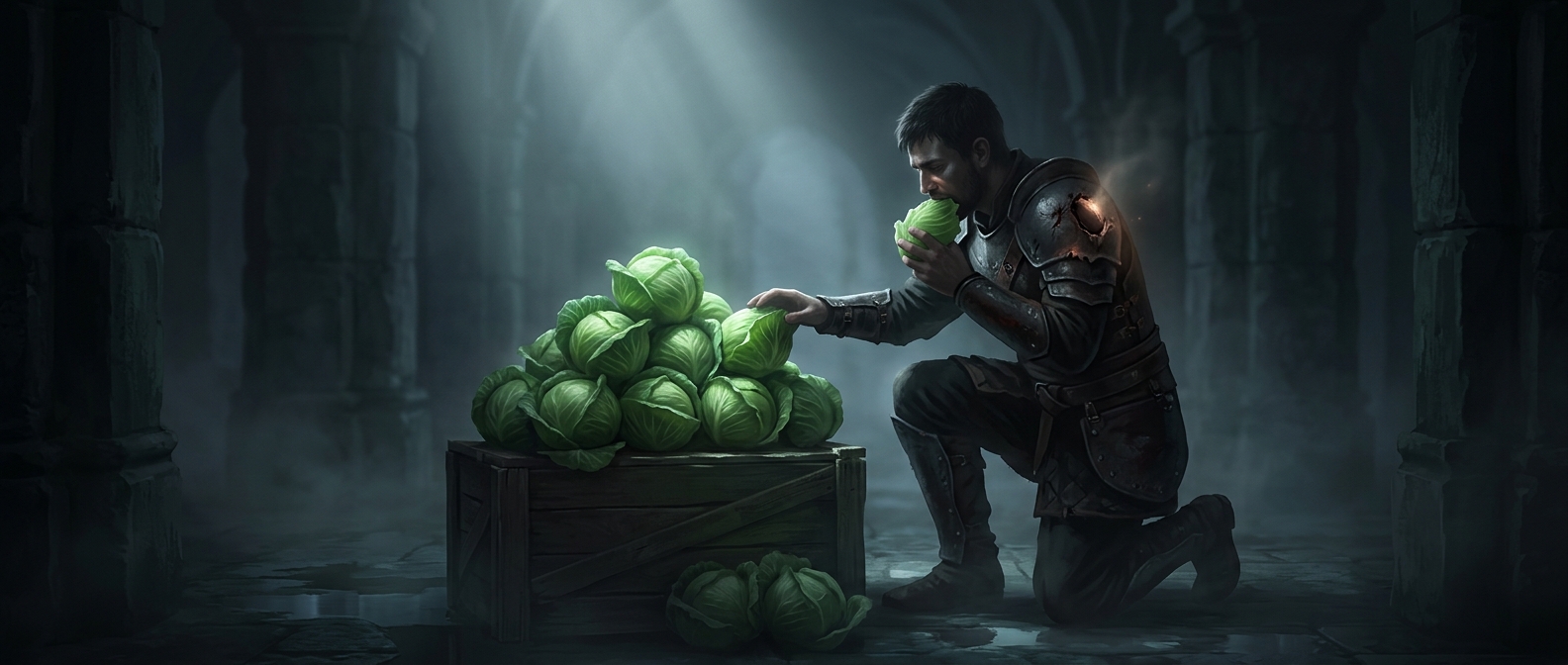
Fresh Food Is a Clear Gameplay Signal
A bright apple in a dark barrel is easy to recognize: it is food, it can be picked up, and it may help the player. That clarity matters in a world crowded with unfamiliar objects. If the apple were brown, moldy, or visually indistinguishable from the barrel’s contents, players might miss a useful item—or waste time wondering whether it could be eaten.
Games often treat food less as a perishable object than as a readable resource. A sweetroll or piece of fruit can stand for a quick, portable boost, while its appearance tells the player what kind of object it is before any menu explains it.
Realistic Spoilage Would Change the Game
Food spoils because time, moisture, temperature, and microbes alter it. Simulating those changes would mean deciding how quickly each item decays, whether storage slows decay, and what happens when a player eats spoiled food. Those rules could add depth to a survival game, but they would also add bookkeeping and make a simple healing item less dependable.
In many adventure games, the world’s age is part of the setting, not a clock that governs every object. A barrel can look ancient while its contents remain useful because the game prioritizes exploration and recovery over food preservation. In a fantasy world, magic can offer an in-world explanation; often, no explanation is needed for the mechanic to work.
The Barrel Is a Promise
Players learn to search containers because they may hold supplies. Putting recognizable food there rewards that habit, and letting the player eat it turns discovery into immediate relief. The apple’s freshness is less a claim about centuries-old storage than a promise: this object is meant to help you keep going.