Why players turn every sidewalk into a sprint
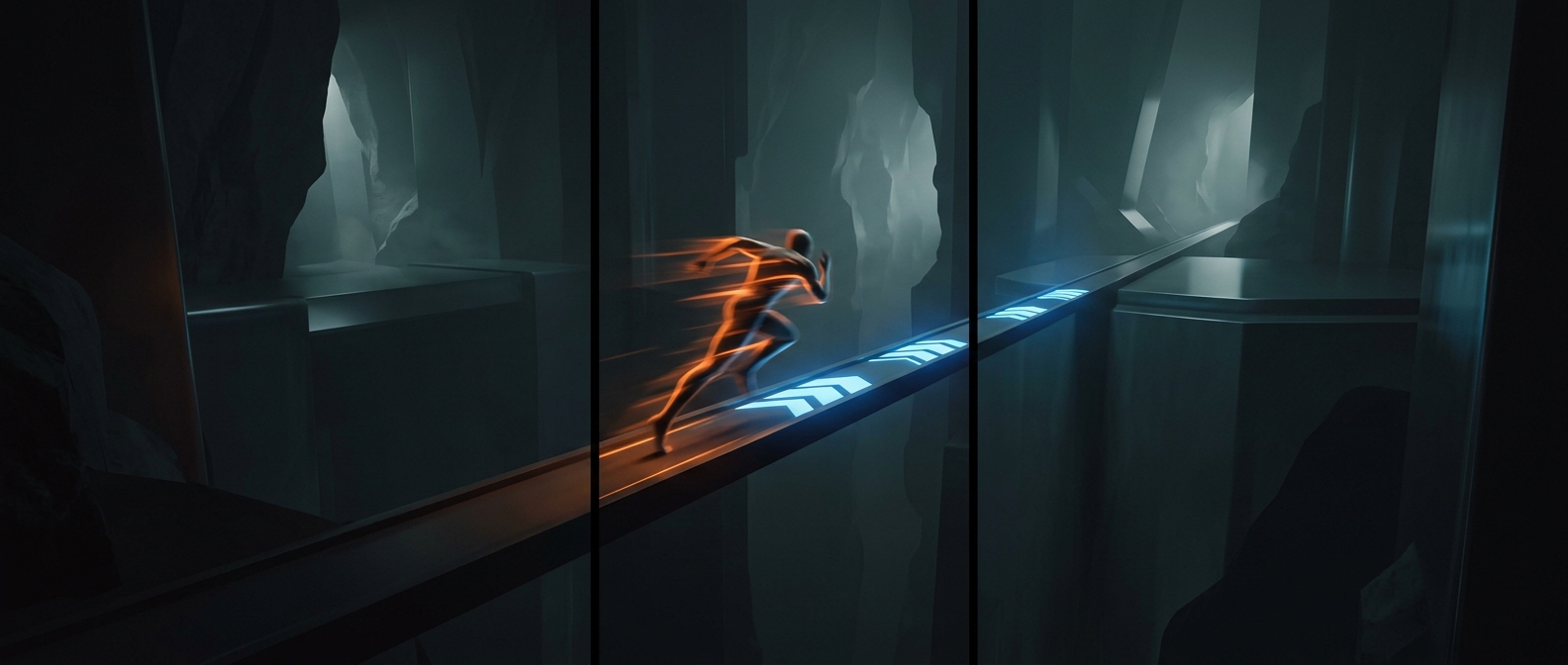
A game character’s pace is usually a negotiation between the player and the game’s controls. In many games, a keyboard or controller button makes the character run, while ordinary directional input already produces a purposeful walk or jog. Once players learn that holding the run button covers ground faster, walking can feel like choosing the slower option—even when the scene is meant to be calm.
The difference is especially clear on a keyboard: movement keys are often treated as on-or-off commands, so they offer less fine control over speed than a pressure-sensitive analog stick. A dedicated walk command may exist, but it takes an extra input. In a quiet neighborhood, players may still sprint because the controls reward speed and the objective is somewhere ahead.
Why jumping joins the routine
Jumping can become a kind of movement punctuation. It may help clear small obstacles, but it also gives players something active to do while crossing familiar ground. If the game lets characters jump without much cost, repeatedly hopping can feel more engaging than simply holding a direction—even if it does not make travel faster.
That habit shapes how movement systems are built. Designers need animations that can transition among walking, running, turning, and jumping without making the character look as if they are snapping between unrelated actions. The game must also keep the camera and controls readable as the character changes pace. A leisurely walk may suit the setting, but a brisk default pace helps players get through spaces they have already explored.
The result is a small mismatch between scenery and behavior: a peaceful street becomes a route to cross as efficiently as possible. The character may be capable of strolling; the player’s hands are simply telling the game that strolling is not the point.