Why a mounted gun can fail after five seconds
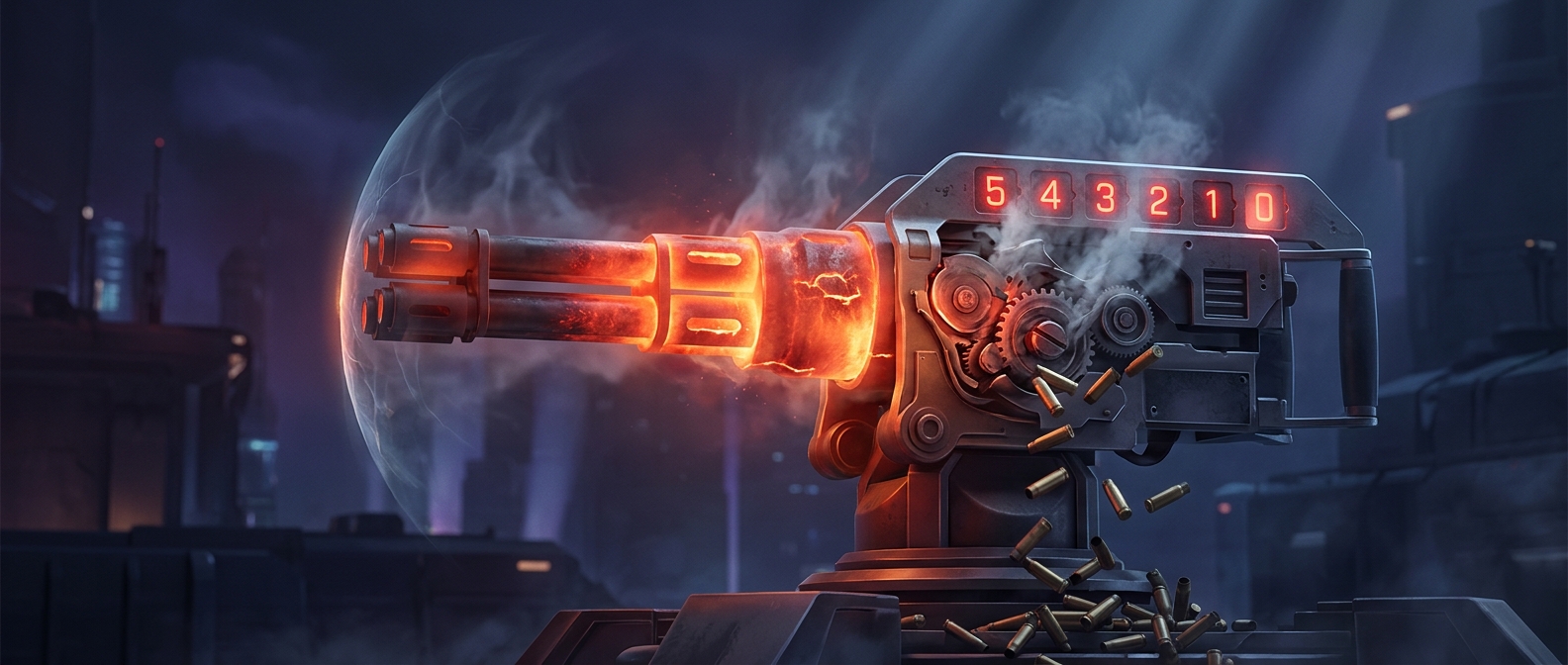
A turret’s heat gauge turns firing into a limited resource. Each burst adds heat; when the meter reaches its limit, the weapon stops firing until it cools. A glowing barrel makes that invisible counter legible, while the sudden jam gives the player an unmistakable signal: keep holding the trigger and you lose control of the gun at the worst moment.
The five-second window is a game rule, not a universal property of mounted weapons. It sets the pace of the encounter: long enough to fire a short burst, but short enough that continuous fire is a risky choice. The player must decide whether to spend the remaining firing time on an immediate threat or save it for what may come next.
Heat makes the position a tradeoff
Mounted guns often offer strong firepower in exchange for reduced mobility. Overheating adds another cost. A player who stays on the trigger can become stuck waiting for the weapon to recover, unable to answer a new threat with it. Firing in controlled bursts can keep the gun available, but may give enemies more time to move or attack.
That pause also changes how the position feels. The turret is powerful, but not dependable without restraint: its heat gauge asks the player to manage a brief firing window while exposed. A few seconds of trigger discipline can determine whether the gun is ready for the next attack—or only glowing and silent.