When a thrown briefcase refused to miss
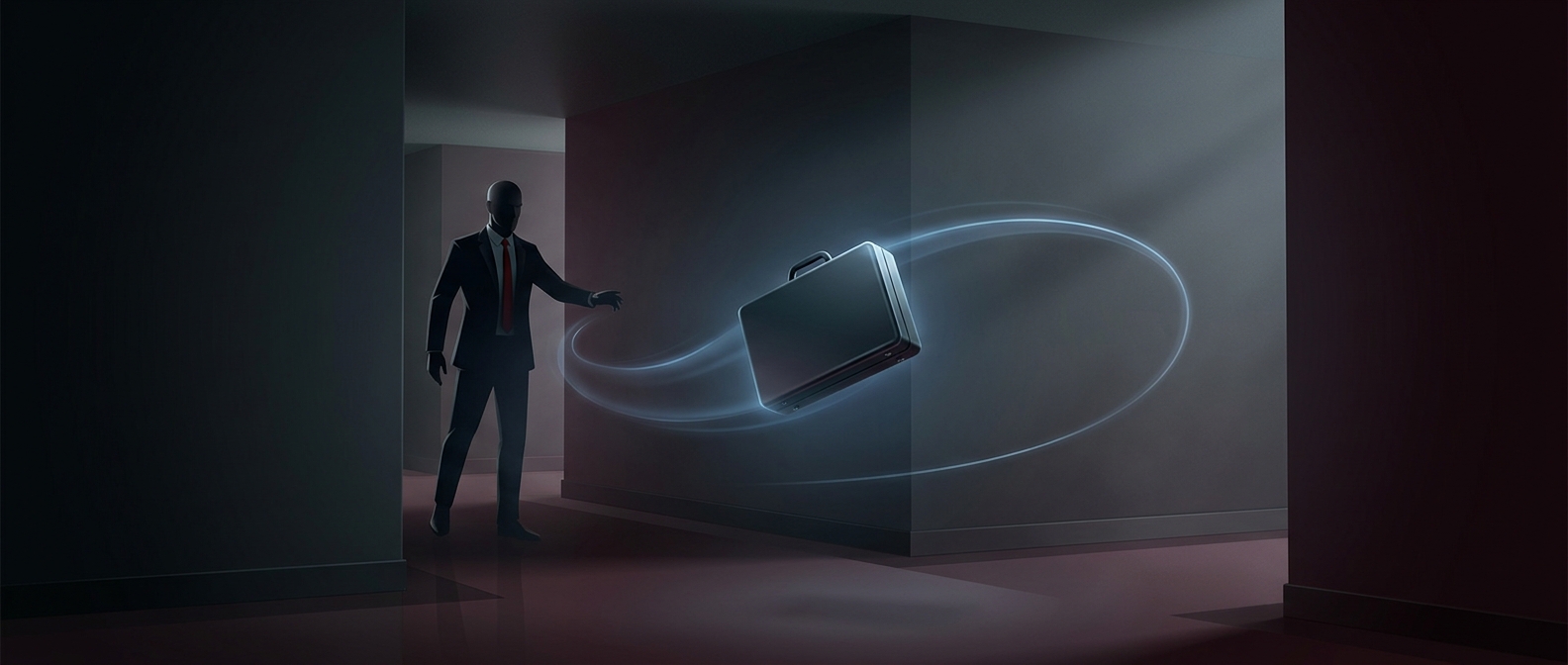
A normal thrown object follows an arc: once it leaves the player’s hand, its route is largely set. The briefcase’s accidental behavior broke that expectation. Instead of simply flying toward a point, it kept correcting course toward a target’s head—even when the target moved around a corner. That made the object seem less like luggage and more like a slow, unmistakable guided projectile.
The important design choice was not just to preserve the odd motion, but to make it readable. Its slow flight gave players time to watch the briefcase curve after someone and see what was happening. A hidden or instantaneous hit would have been harder to understand; the visible pursuit turned a technical mistake into a comic, usable part of the game.
A bug becomes a player’s tool
In a game built around choosing how to approach a target, a bizarre weapon can create a different kind of opportunity. The homing case offered a way to attack that did not depend on a perfectly judged throw, while its conspicuous, gradual chase made the result feel deliberately absurd rather than realistic. Players could recognize the effect, anticipate it, and build a plan around it.
Keeping the bug therefore changed more than the briefcase’s trajectory. It turned an unpredictable piece of game behavior into a consistent rule players could learn. The case still looked like an ordinary object in the agent’s hand; once thrown, it became a slow pursuer that could visibly follow its target around a corner.