Keys turn a hallway into a route
A key is useful to a level designer because it makes progress depend on where the player has been, not just how strong the character is. The designer can place the key beyond a fight, a puzzle, or a detour, then use the locked door to send the player back to a recognizable landmark. The door becomes a simple reminder of an unfinished task: I found the way forward; now I need to find what opens it.
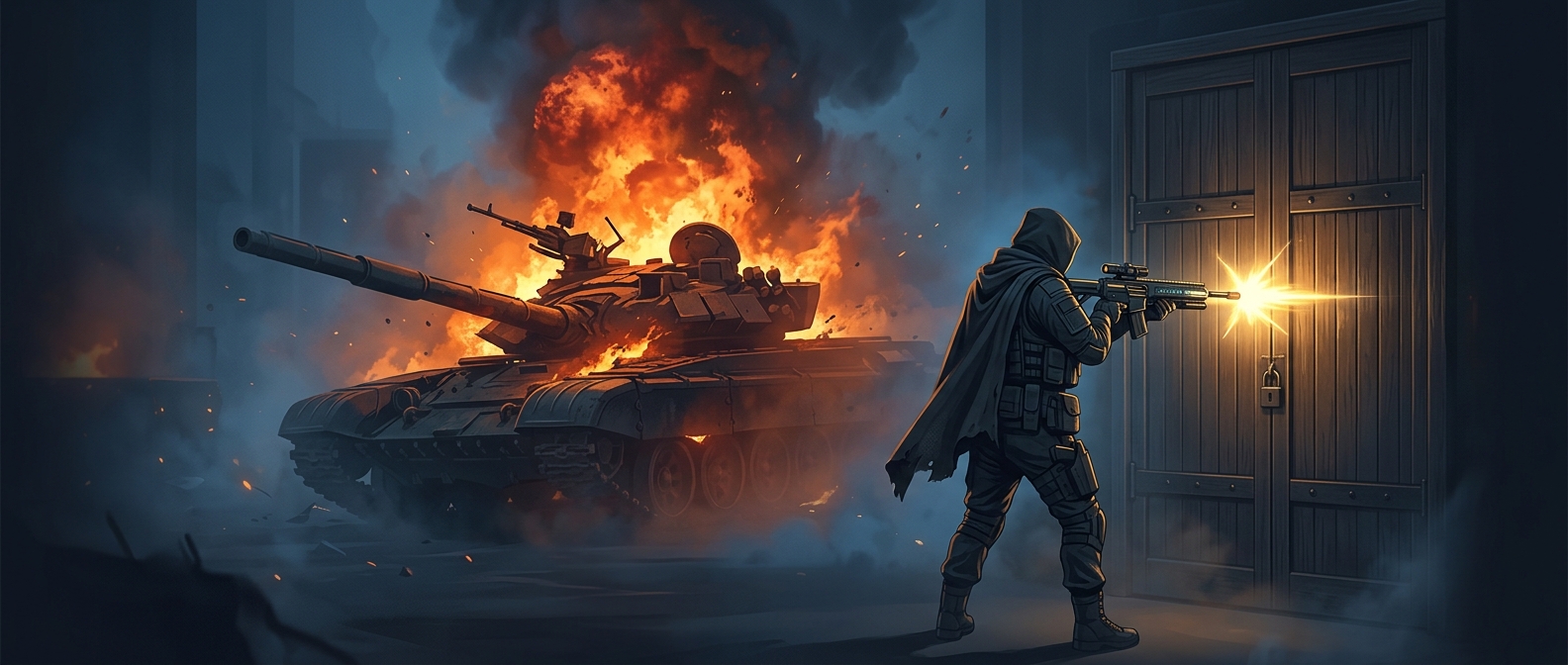
That structure also gives the player a small piece of control. They can explore side passages, notice the locked door, and decide whether to search for its key now or return later. Without that gate, a powerful weapon might let them break through the obstacle immediately, skipping encounters and story beats the level was built around.
A clear rule is easier to read than a realistic one
Games often make doors behave consistently even when the material would not. If some wooden doors splinter under a sword while others require a particular key, players may wonder whether they have missed a tool or misunderstood the rules. A visible lock paired with a matching key communicates the condition plainly: this passage is unavailable until a specific step is completed.
Designers can vary the key’s form—a literal object, a switch, or a permission earned in the story—while keeping the same underlying rule. The obstacle is not really about wood or metal; it is about controlling sequence. The key lets the game preserve a planned journey without making every barrier a fight.