Why a Reload Can Spend More Than the Shots You Fired
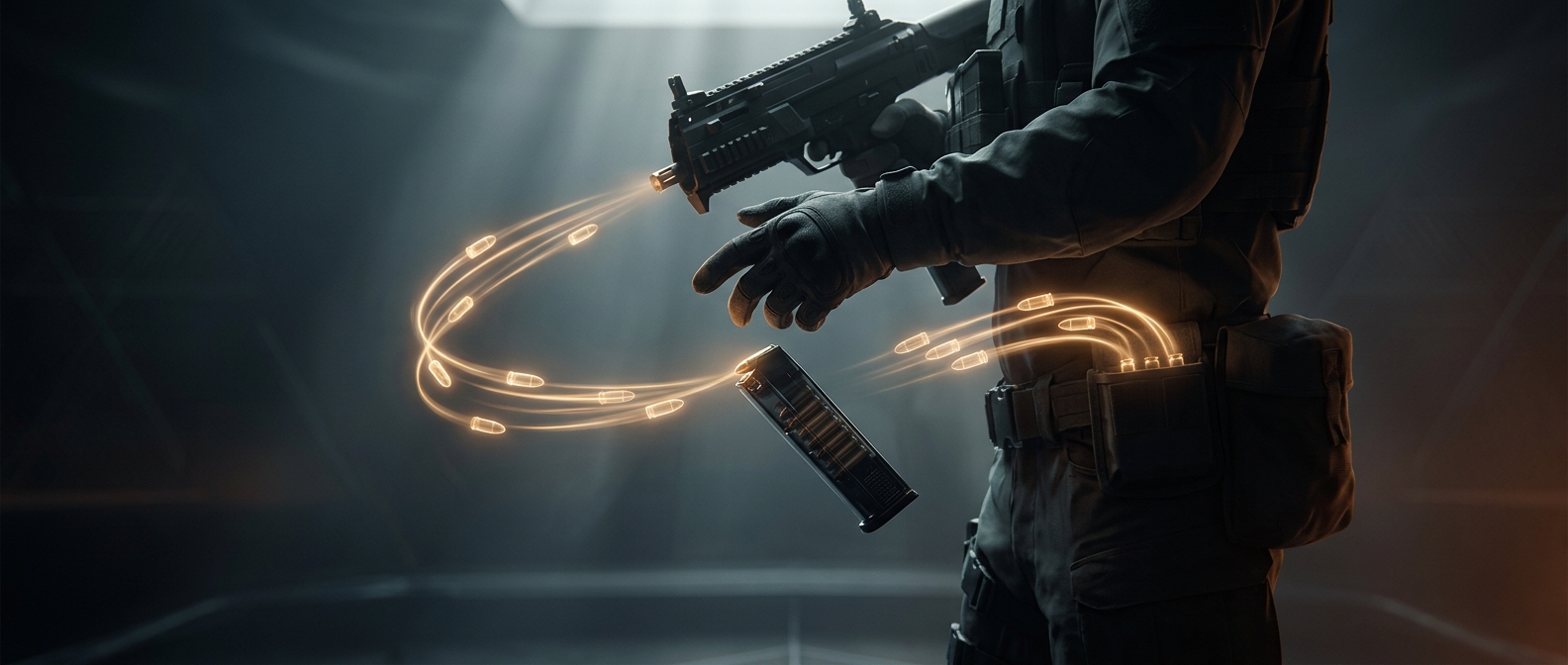
A game that makes the remaining rounds vanish is treating a magazine as a single replaceable object, not as a container whose contents are carefully tracked. When you reload, the game subtracts the rounds in the new magazine from your reserve and sets your weapon to its full capacity. The partly used magazine is simply removed from the simulation.
That shortcut makes ammunition easier to manage. The game only needs to track how many rounds are loaded and how many remain in reserve; it does not have to remember the exact contents of every discarded magazine or let players combine partial magazines later.
The Cost Is a Tactical Choice
This design turns reloading into a decision about timing. Reload after firing only a few shots, and you may sacrifice ammunition that could have been used later. Wait until the magazine is nearly empty, and you risk running dry at a dangerous moment. The player is weighing a cleaner, fuller magazine against conserving every round.
Some games avoid that tradeoff by returning unused rounds to the reserve, or by keeping track of partially spent magazines. Those systems make ammunition feel more literal, but they also add bookkeeping and can change the pace of combat. Neither approach is inherently more realistic for every game; the choice depends on how much the designers want ammunition management to shape play.
A disappearing remainder is therefore more than a visual omission: it makes a quick reload carry a small, immediate price. Before swapping magazines, the player has to decide whether a full load is worth leaving those unused rounds behind.