Why the obvious clue can disappear in plain sight
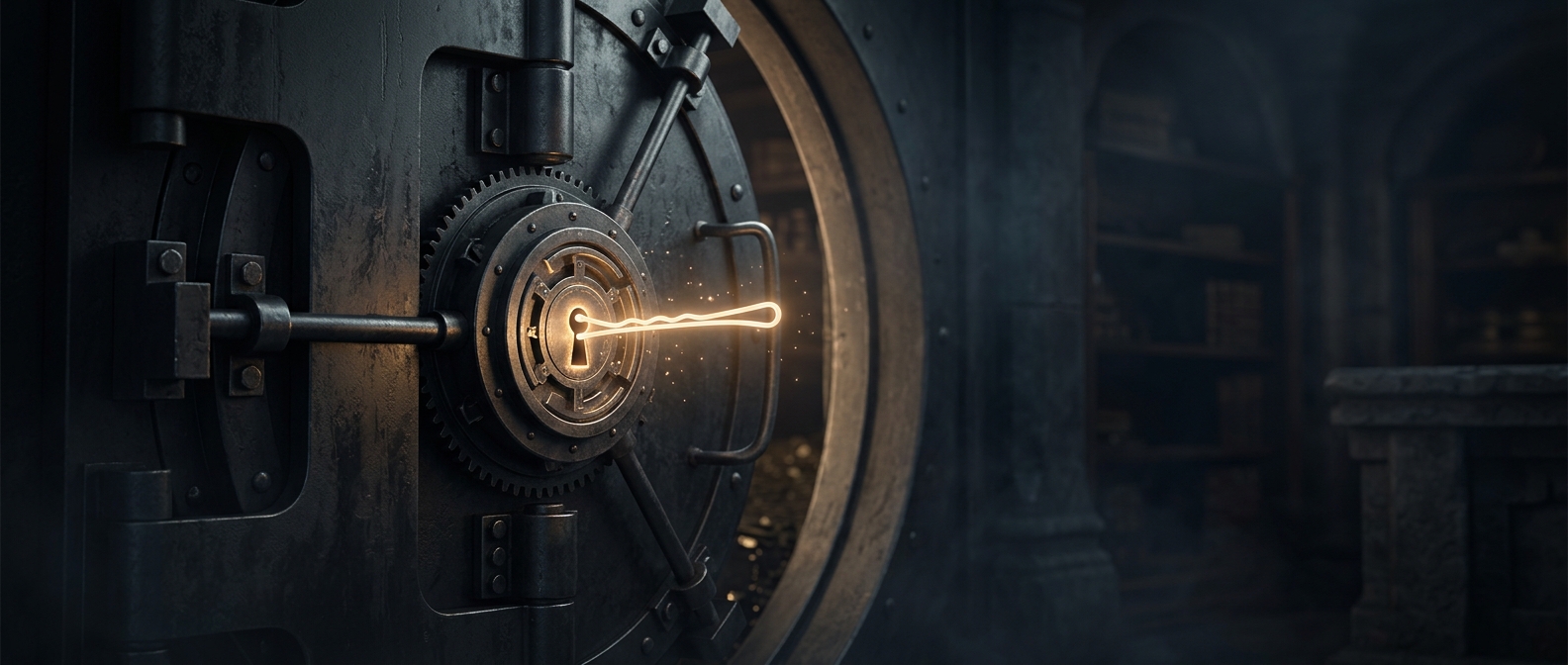
An escape room turns looking into a task: players scan a set, handle props, and try to connect details to a puzzle. That goal can quietly change what counts as noticeable. Once a team expects a clue to be concealed, unusual, or complicated, an ordinary object may register as scenery instead of evidence. The brass key is visible; what gets missed is the possibility that it matters.
How a team’s search narrows
Attention is selective. People tend to focus on details that fit the question they are already asking—“Where is the hidden mechanism?”—and give less attention to things that seem too plain to be intentional. In a group, this can reinforce itself: one person investigates a strange marking, others join in, and the team’s shared attention settles there. A simple object left outside that line of inquiry can remain unnoticed even when several people are searching.
The puzzle-solving impulse can add another layer. Players may assume that progress requires decoding a cipher or discovering a secret compartment, when the next step is simply to try a key in a lock. The elaborate explanation feels more satisfying, so it can attract effort before the basic possibility has been tested.
What designers can do with that expectation
Room designers can use this gap between seeing and noticing to shape difficulty. A clue placed in the open can still be challenging if players have no reason to interpret it as important; conversely, a striking prop may draw attention without revealing what to do with it. The room’s challenge is not only finding objects, but deciding which details belong to the puzzle and how they connect.
That is why a useful team habit is to periodically reset the search: name what has been found, share what each person has already checked, and reconsider ordinary objects as well as conspicuous ones. Sometimes the breakthrough is not a better theory. It is noticing that the key was never hidden at all.